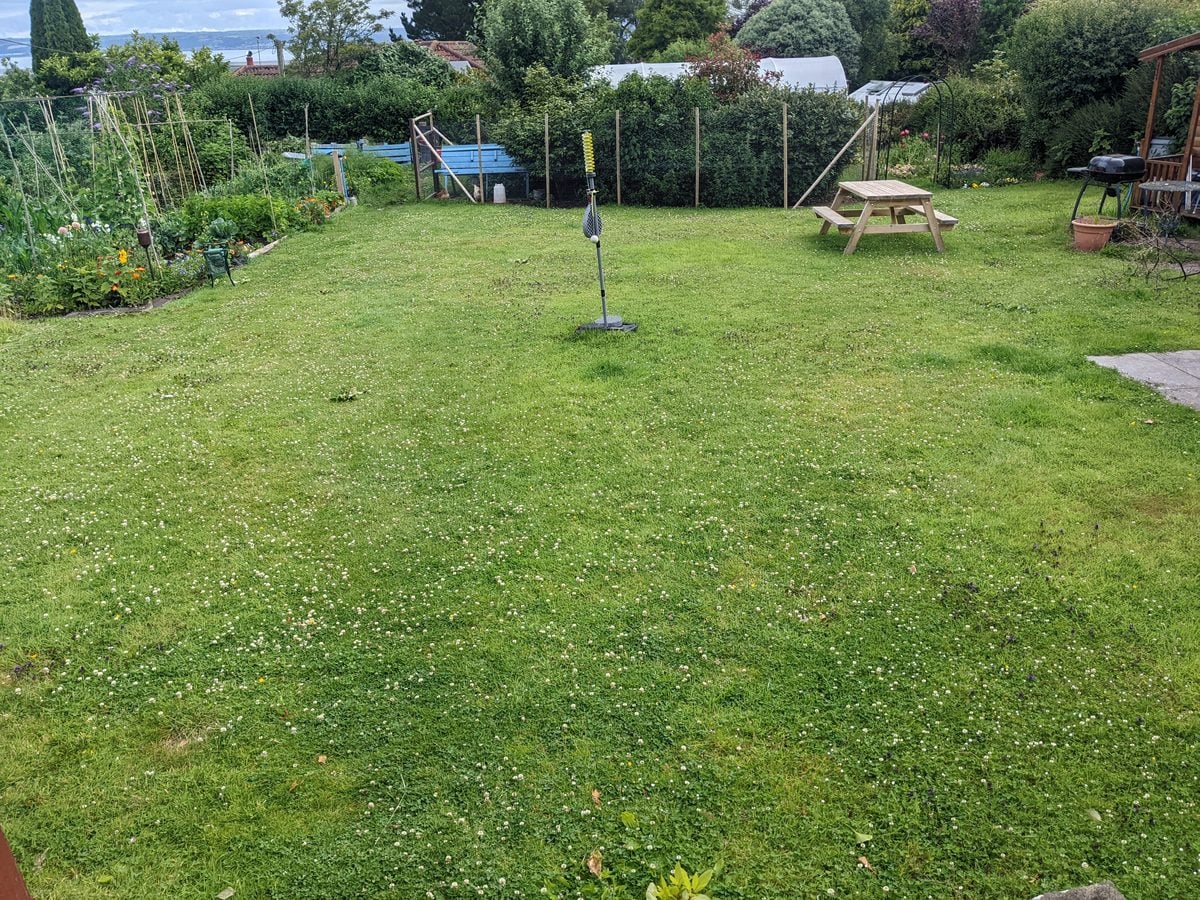
Lying between the back of my house and my chicken run is a large expanse of lawn.
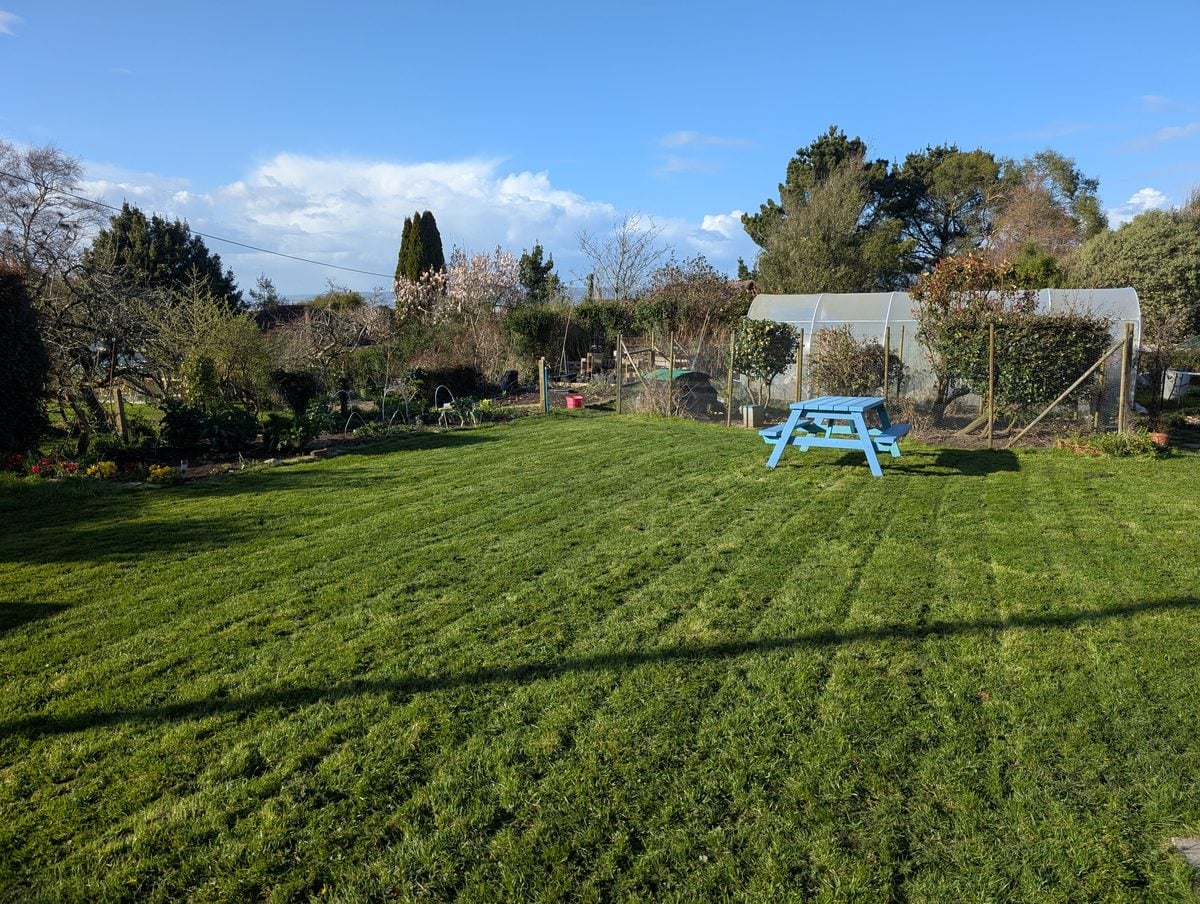
My wife loves it; I always think it’s fairly useless since it doesn’t grow anything I can eat. But in one way, it’s far from useless – it’s a fantastic source of compost material.
In fact, when I combine the clippings from my lawn and my neighbor’s, it becomes the biggest single contributor to my
Despite that, I’ve seen grass mentioned several times on lists of things you can’t compost.
So, after years of grass composting, here’s everything I’ve learnt – including a couple of neat little tricks!
What’s tricky about composting grass?
Grass isn’t the easiest thing in the world to compost on its own. It’s high in nitrogen, packed with moisture, and cut into tiny pieces – a combination which makes it heat up fast and then collapse into a dense, wet, slimy mess.
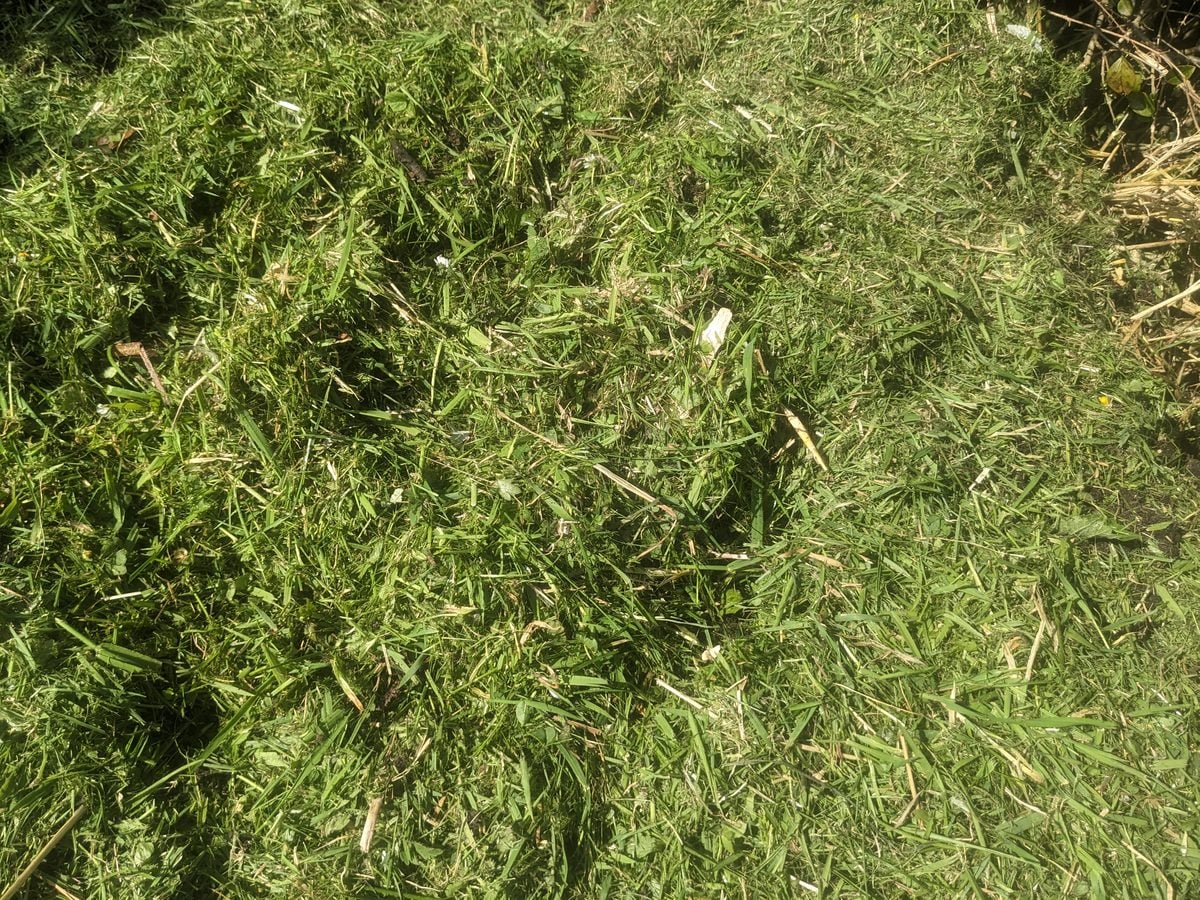
When that happens, airflow is blocked, and the pile turns anaerobic (composting without air). That’s bad news because anaerobic composting takes longer and, according to some studies, produces lower-quality compost.
That said, if you ignore the “rules” and just dump grass in a pile, it will eventually break down. One of my neighbors used to throw his clippings into a corner of his garden every year. After a few years, he had a heap of rich, mature compost – without doing anything.
But if you want to compost grass more efficiently, there are a few tricks to make it work better.
Top tips for composting grass
Mow when it’s dry (if possible). Wet grass is heavier, clumps more easily, and adds too much moisture to the pile. If you can mow it when it’s dry, it’ll be easier to compost. That’s not always possible, at least in my wet climate, but it will make it easier.
Mix it with dry, carbon-rich material. Grass needs bulking agents to stop it from compacting. Shredded leaves are ideal, but straw, shredded paper, or even cardboard will do the job. While layers work, it works even better if you mix the material in directly (if you have time, which I often don’t!)
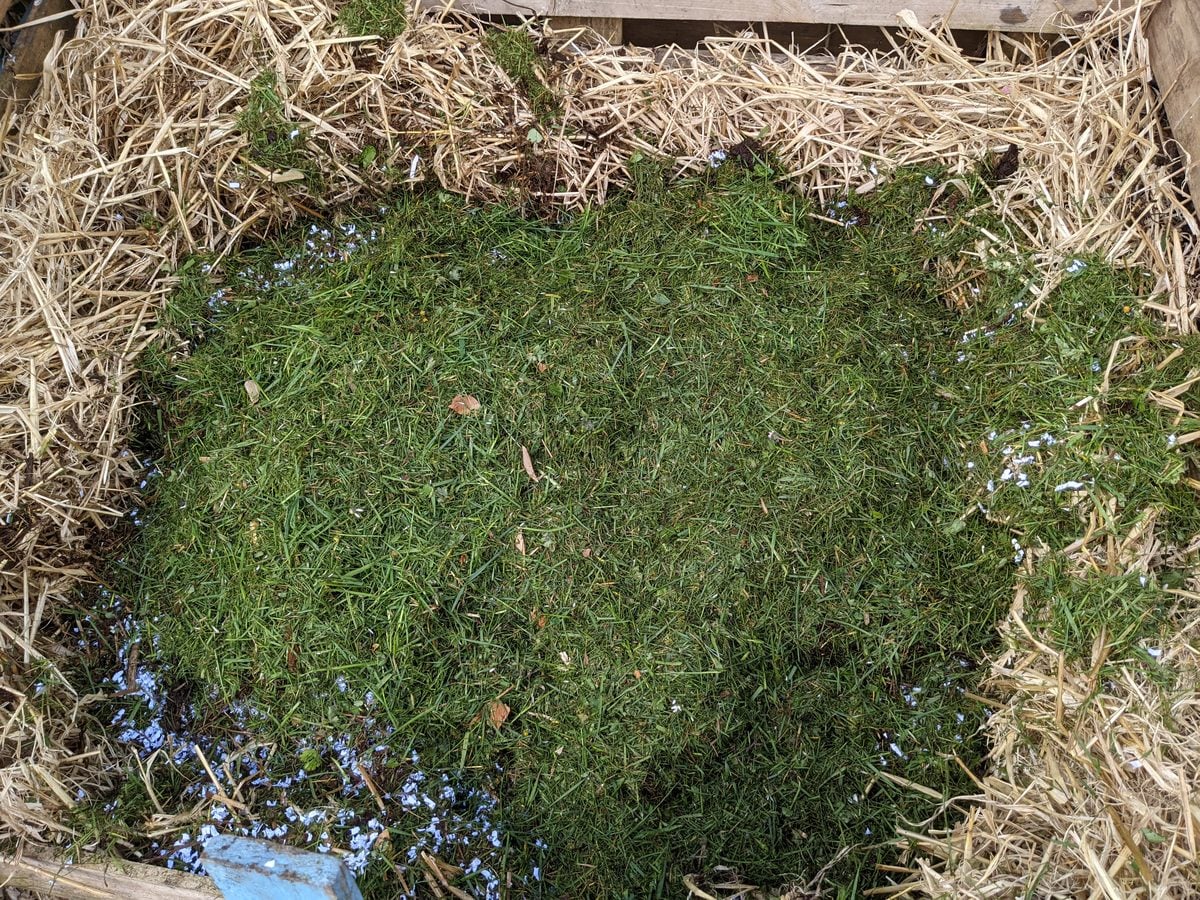
(As a rule of thumb, keep grass to no more than half the pile by volume. If you aerate by turning or using a compost aerator, do so within 24 hours, before they get the chance to mat.)
Watch out for herbicides. Most break down in compost, but not all. I found that out the hard way one year when contaminated compost stunted my plants. If your grass has been treated, it’s worth looking the herbicide up and ensuring it breaks down.
Aerate the pile. This applies to all compost, but it’s especially important with grass since it compacts easily. Aerating the pile keeps oxygen flowing and speeds up decomposition. Plenty of air also helps stop the grass from getting too hot, which can be a real problem with this material. Note that turning is just one option – there are many ways to aerate the pile and not all involve hard work!
If it’s wet, cover it. Too much rain can turn a grass-heavy pile into a soggy, stinky mess. If you’re in a wet climate, I recommend covering the pile to avoid excess moisture, which will fill pores and force oxygen out.
But don’t let it dry out completely. Paradoxically, while grass holds moisture, it can also dry out fast once bacteria get going and use up the moisture in it. Turning the pile will help you spot dry patches – if you find any, spray each layer with water while turning.
The green to brown grass trick
Grass is a green (high nitrogen) material, so what do you do if you don’t have enough browns (high carbon materials)?
In the summer you can spread it out to dry. As it turns brown, it loses nitrogen and can be used as a high carbon material.
You can only do this outside when it is dry and sunny, so I sometimes spread it on my polytunnel floor to dry.
Try not to spread it too thickly, as the grass underneath retains moisture for some time.
Use it as a compost activator
If your compost pile is breaking down too slowly, grass can give it a boost.
I once added fresh grass clippings and some moisture to an old, sluggish
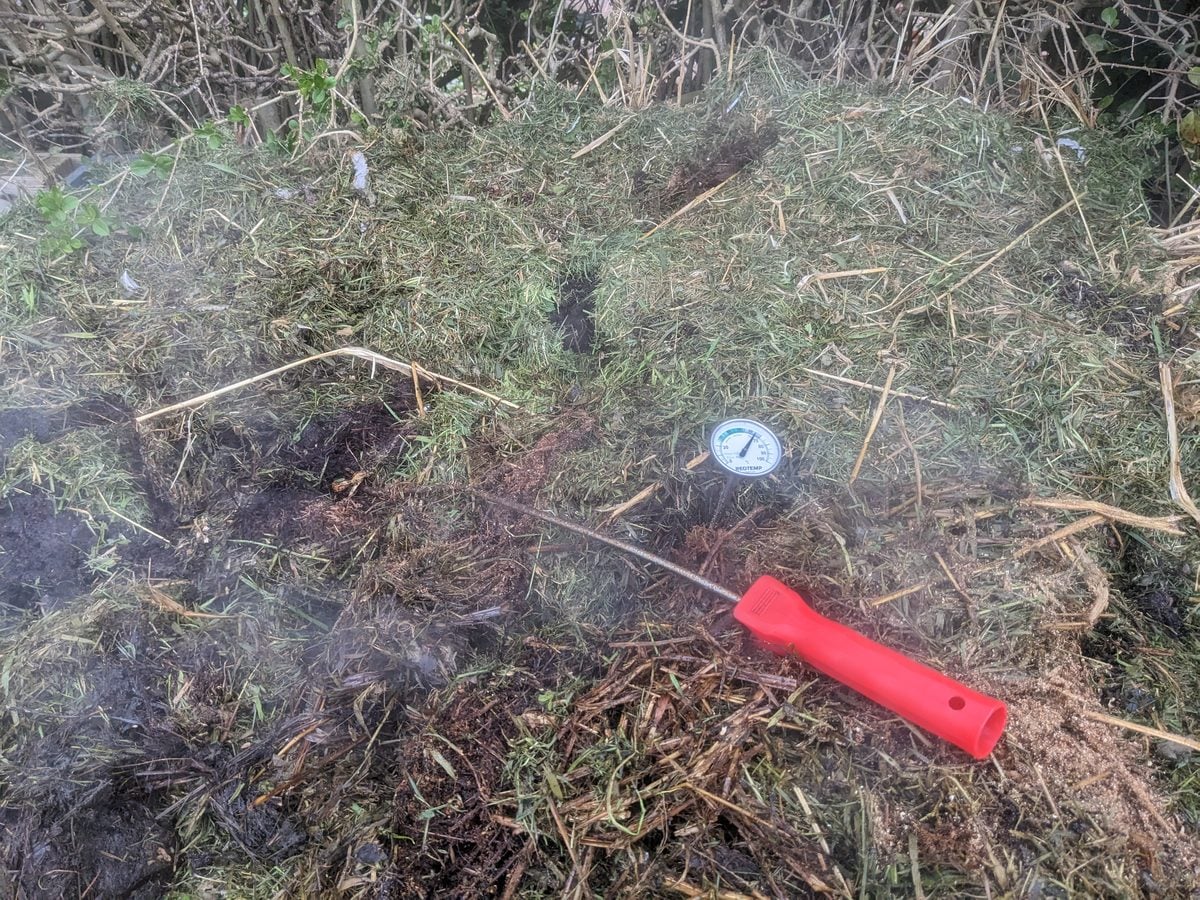
(Note that as I mixed the compost again too, I would have added some air, which may have also helped although the compost was already well aerated with a PVC pipe.)
Another trick is to poke holes in the pile and drop in clippings along with some water—this injects nitrogen, oxygen, and moisture all at once.
Other ways to use grass
1. Leave it on the lawn
I don’t fertilize my lawn because I like the wildflowers that thrive in poorer soil. But if you want lush, green grass, leave the clippings right where they fall.
Research from the University of Connecticut found that by the end of the third year of the study, a third of the nitrogen in the grass came from its own clippings. That’s free fertilizer!
2. Mulch (but only in dry climates)
Spreading fresh grass on soil can help retain moisture, suppress weeds, and add nutrients. You can even cut holes in the grass layer and plant straight through it.
But this method only works in dry areas. In cool, damp climates like mine, it turns into a slimy, slug-infested disaster.
What’s actually in grass?
According to research from the University of Idaho, grass clippings contain:
- Nitrogen: 4%
- Phosphorus: 0.5%
- Potassium: 2%
Worth composting, then!

Related Articles
- Compost Activators: Do They Work? (Plus 6 Free Alternatives You Can Use)
- Carbon to Nitrogen Ratio: The Key to Fast, Healthy Compost
- Compost Bulking Agents: The Key to Faster, Better Compost
- 11 Ways to Aerate Your Compost (Only 1 Involves Turning!)
- Herbicide Contamination in Compost: Risks, Research, Solutions
- What Is Anaerobic Composting?
- Leaf Mold Magic: How to Use Fallen Leaves to Improve Your Garden Soil
- What You (Really) Can’t Compost
Sources
1. Colt, W.M., Rynk, R., Bell, S. and Johnston, W.J. (1994). Don’t Bag It! Recycle Your Grass Clippings. CIS 1016. University of Idaho Cooperative Extension System, College of Agriculture. https://objects.lib.uidaho.edu/uiext/uiext30955.pdf
Supports the nutrient figures (about 4% nitrogen, 0.5% phosphorus, 2% potassium), and is also where the University of Connecticut finding below is reported.
2. University of Connecticut clipping-recycling study, as reported in Colt et al. (1994) above. Nitrogen from grass clippings began showing up in the growing grass within two weeks, and by the end of the third year of the study researchers estimated that about one third of the nitrogen found in the grass came from previously recycled clippings.
For the primary UConn turfgrass work on returning clippings, cite: Kopp, K.L. and Guillard, K. (2002). “Clipping management and nitrogen fertilization of turfgrass: growth, nitrogen utilization, and quality.” Crop Science 42: 1225–1231. https://digitalcommons.usu.edu/psc_facpub/541
Plain-English version from the same university: University of Connecticut Home and Garden Education Center, Organic Lawn Care. https://homegarden.cahnr.uconn.edu/factsheets/organic-lawn-care/
3. Connecticut Department of Environmental Protection (1999, revised 2002). Best Management Practices for Grass Clipping Management. DEP-RCY-GUID-006. https://portal.ct.gov/-/media/deep/compost/compost_pdf/grassbmppdf.pdf
Supports the herbicide section: pesticides were found in low concentrations in the raw materials but none were detected in the finished compost from the same material. Also gives a maximum of 1 part grass to 3 parts leaves by volume for large-scale windrows.
Underlying study: Fulford, B.R., Brinton, W.F. and DeGregorio, R. (1992). The Environmental Impact of Composting Grass Clippings and Other Yard Wastes. Report to the Massachusetts DEP, Division of Solid Waste.