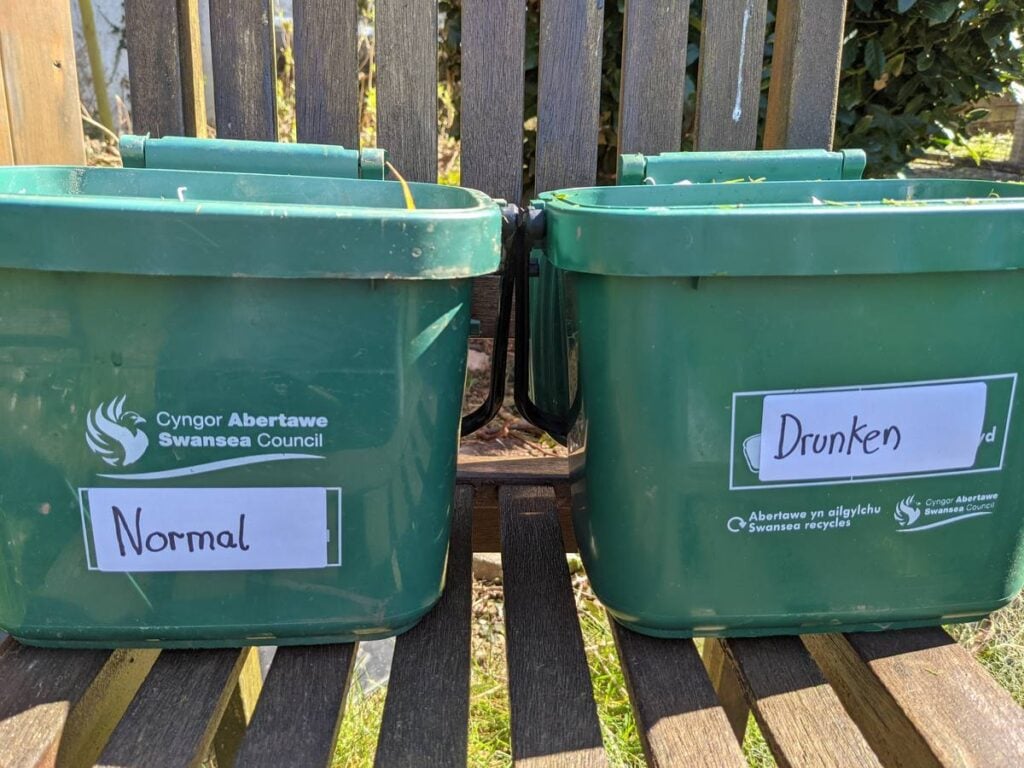
Drunken composting is a fun name for a method which combines alcohol, ammonia and sugar to speed up the composting process.
I first heard of the method in a popular YouTube video which claims it can make compost in just 14 days, and I’ve been fascinated by it ever since.
The full method is shown in the video below:
The drunken composting process
Does it work?
What the research suggests
The video did use grass – which, if you get the moisture right, can turn into compost very quickly anyway (5). So does adding alcohol, ammonia and sugar actually make a difference?
The theory is that the yeast in beer helps break down the compost, feeding on the sugar, while the ammonia supplies nitrogen.
Several studies (1) have found that yeast can improve composting speed – including one which looked at Saccharomyces cerevisiae (2) – the yeast used to brew beer.
Inoculating compost with it raised pile temperatures by 4-14°C and lifted pH from 4.5 to 6.0. That study was aimed specifically at overly acidic food waste, so it doesn’t map neatly onto a heap of grass – but the results are promising.
Ethanol itself may have an impact. A 1972 study (3) found that adding ethanol to soil caused a rapid activation of microbial respiration. One caveat – the effect lasted less than five hours, and stopped as soon as the ethanol was used up.
The evidence for sugar is hopeful too. A 2024 study (4) in Environmental Monitoring and Assessment added brown sugar to agricultural waste compost – and found it pushed the heap into a second thermophilic (hot) stage. However, the sugar made up 10% of the heap – far more than most composters would want to add.
Informal tests
The research is promising but not quite conclusive, but what about tests?
I have noticed before that when I add alcohol to my hot bin, the temperature increases rapidly. However, there are many factors that go into the composting process, so I can’t be certain this is making the difference. I also don’t do this too often either, as most of my alcohol gets drunk, not put on the compost pile!
I’ve also tried testing alcohol (made from nettle beer, brown sugar and urine (for the ammonia)) in home made, micro compost bins.
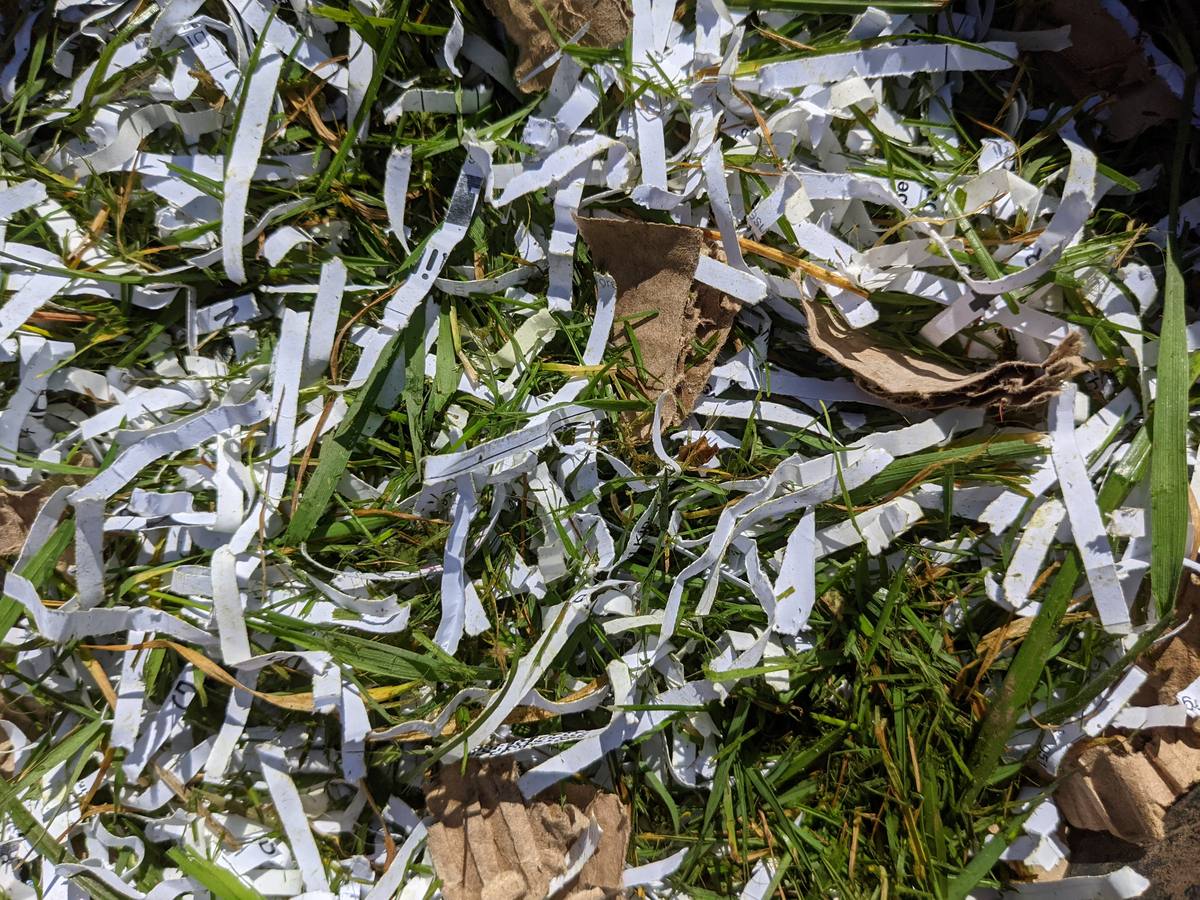
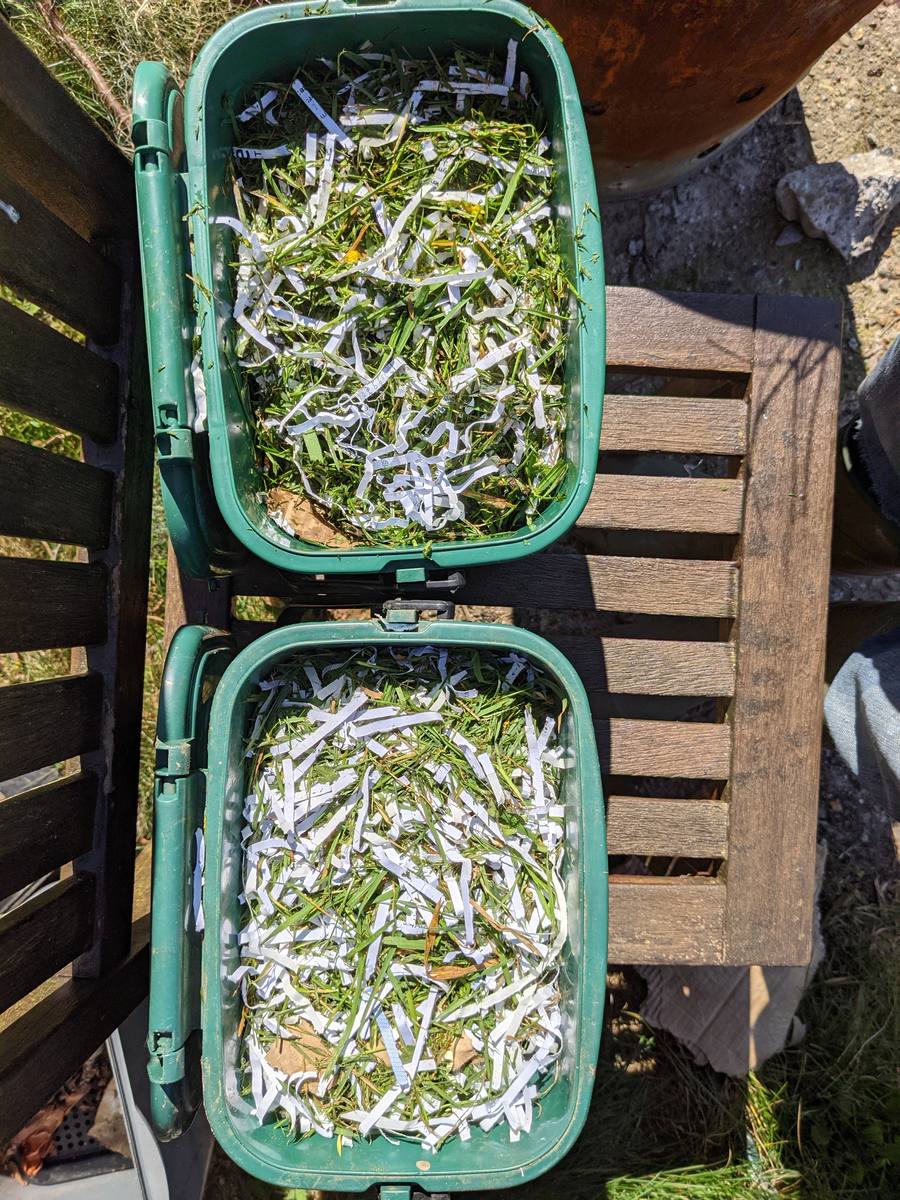
I placed both bins in the greenhouse, raised up to allow air to enter through the bottom holes. I also added a sprinkling of soil to introduce soil bacteria.
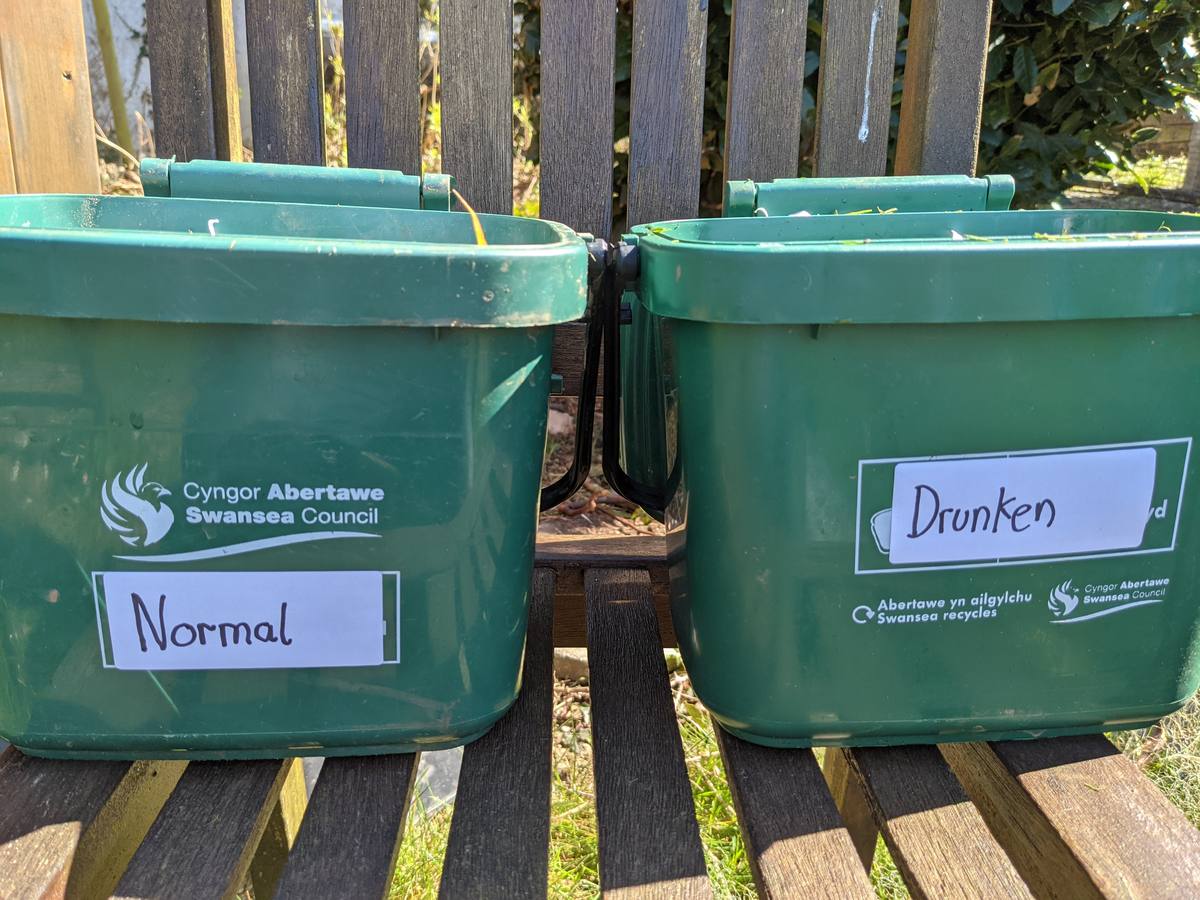
While it would be a great story to say this worked, the normal compost ended up being hotter than the drunken bin.
I would have loved to see how this panned out over time, but unfortunately I had to go away for a few days and came back to two dried out bins.
A single experiment doesn’t prove much though. Plus, I also had a positive experience with some left over mixture I had.
I’d previously been struggling to get my hot bin much above 50 degrees Celsius after a winter cold snap. However, the day after adding the grass and alcohol, the bin reached almost 60 degrees Celsius.
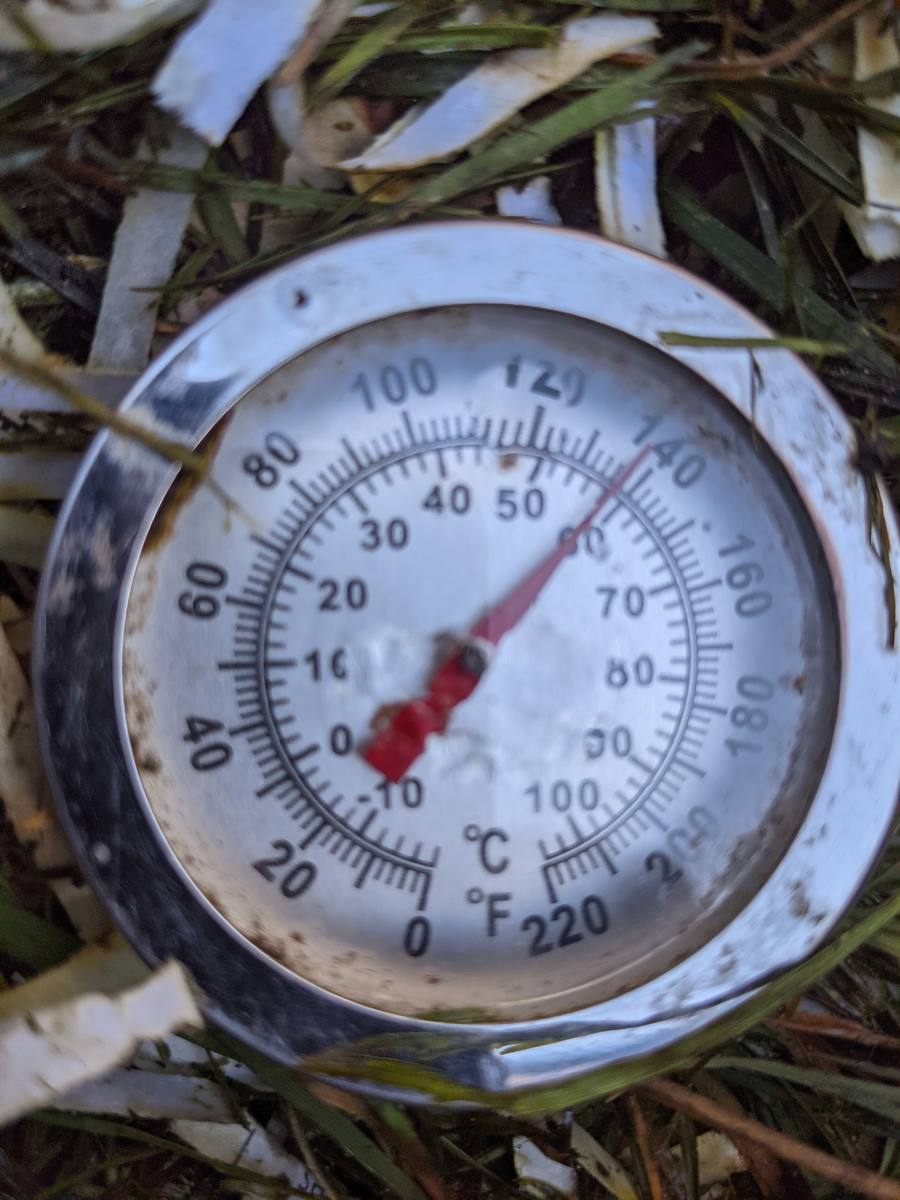
As mentioned before, it’s difficult to be certain of the cause, given there are so many factors in composting. However, as it was colder than the previous day, at least I can rule out air temperature.
Final thoughts
I’m encouraged by the HotBin experiment, and I think the research shows promise – but I think the jury remains out for now. .
However, there are many ways to speed up compost, some of them backed by solid science. If you’d like to try these out, see 14 Hacks to Make Compost Faster & Better.
Related articles
- Compost Activators: Do They Work? (Plus 6 Free Alternatives)
- 16 Easy Ways to Speed Up Your Compost
- 14 Hacks for Faster, Better Compost
- Moisture in Compost: The Complete Guide to Getting It Right
- Can You Micro-compost In Small Bins? We Did An Experiment
Sources
1. Rastogi, Mansi, Meenakshi Nandal, and Babita Khosla. “Microbes as vital additives for solid waste composting.” Heliyon, vol. 6, no. 2, 2020, e03343. https://doi.org/10.1016/j.heliyon.2020.e03343
2. Yi, Puhong, et al. “Inoculation of Saccharomyces cerevisiae for facilitating aerobic composting of acidified food waste.” Environmental Science and Pollution Research, vol. 31, no. 43, 2024, pp. 55507–55521. https://doi.org/10.1007/s11356-024-34876-5
3. Griebel, G. E., and L. D. Owens. “Nature of the transient activation of soil microorganisms by ethanol or acetaldehyde.” Soil Biology and Biochemistry, vol. 4, no. 1, 1972, pp. 1–8. https://doi.org/10.1016/0038-0717(72)90036-3
4. Xu, Peng, et al. “Brown sugar as a carbon source can make agricultural organic waste compost enter the secondary thermophilic stage and promote compost decomposition.” Environmental Monitoring and Assessment, vol. 196, no. 2, 2024, Article 113. https://doi.org/10.1007/s10661-023-12292-5
5. Nakasaki, Kiyohiko, Nobuto Aoki, and Hiroshi Kubota. “Accelerated composting of grass clippings by controlling moisture level.” Waste Management & Research, vol. 12, no. 1, 1994, pp. 13–20. https://doi.org/10.1177/0734242X9401200103