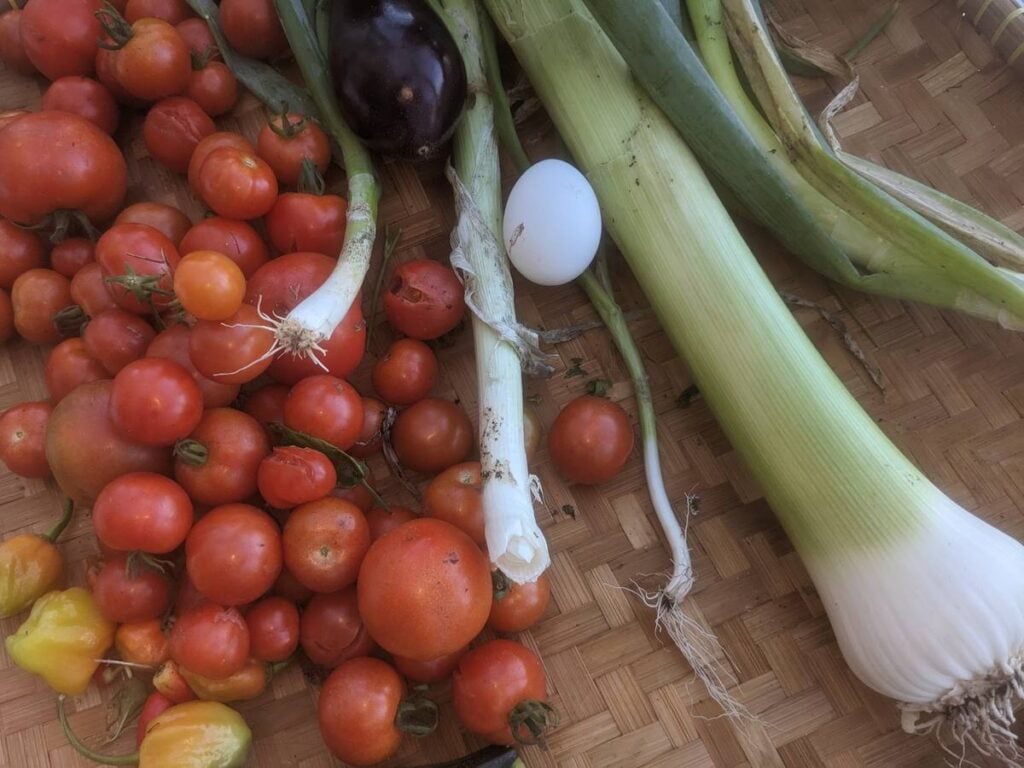
When I started back gardening, after years of living abroad, I wondered if it could help us with our finances.
Back then I had just bought my first house, had two young children and had taken a massive gamble, giving up a full-time job to go all-in on a business that couldn’t yet afford to pay me a proper salary.
But then I wandered into a shop, saw how cheap the vegetables were and laughed at myself, realising that an extra hour of work would pay for the results of ten hours in the garden. (Even so, I may have been too hasty – from both a physical and mental health perspective, those hours in the garden had hidden value.)
In the years that followed, I didn’t go into food shops very often. On weekends I grew and foraged and fished while my wife shopped, which suited both our preferences. So for fifteen years I barely noticed veg prices until my wife was away and the food shop fell to me for a change.
And what a shock to the system that was! What used to cost pennies now costs pounds, and to put the array of vegetables on the plate that our garden provides, every day, would cost a fortune. Little wonder that the average family struggles to eat the recommended 30 plants a week [1]!
The case for food resilience
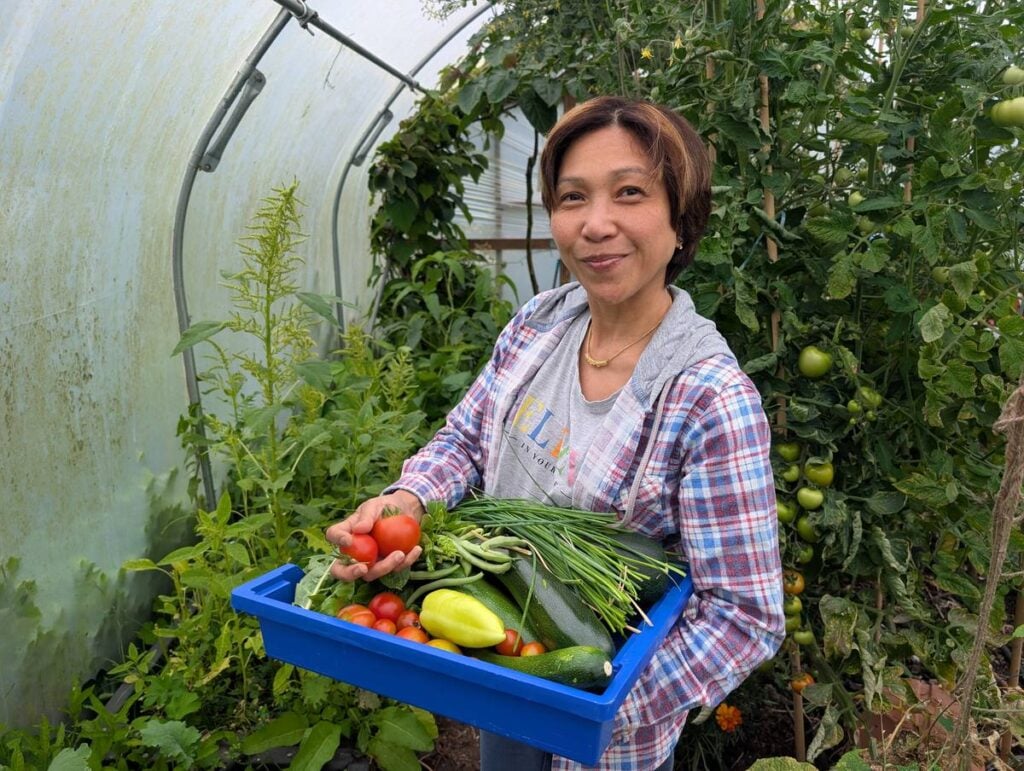
Now this publication is primarily about compost, but we do like to go a bit wider from time to time. And it’s clear from comments on our social media accounts that many of our readers are also concerned about the increasing price of food.
What’s more, we live in uncertain times, when conflict can erupt suddenly, devastating the lives of people involved but also disrupting food and supply lines.
And if you are unlucky enough to ever be in a country at war, past experience – from the Dig for Victory campaign to people in Russian-occupied Oleshky, Ukraine, who had to survive for months on the vegetables and weeds in their gardens – shows that the ability to grow food can be key to survival [2].
Even if your own country isn’t at war, the sudden impact of supply disruption on oil and fertilisers (both essential for many modern farms) can lead to massive food inflation.
Avoiding The $64 Tomato
Of course, it’s perfectly possible to spend more growing vegetables than you would buying them.
One author, William Alexander, totted up his costs and worked out that each tomato he grew had cost him $64 – an experience he recorded in his book, The $64 Tomato.
(A number I still find incredible.
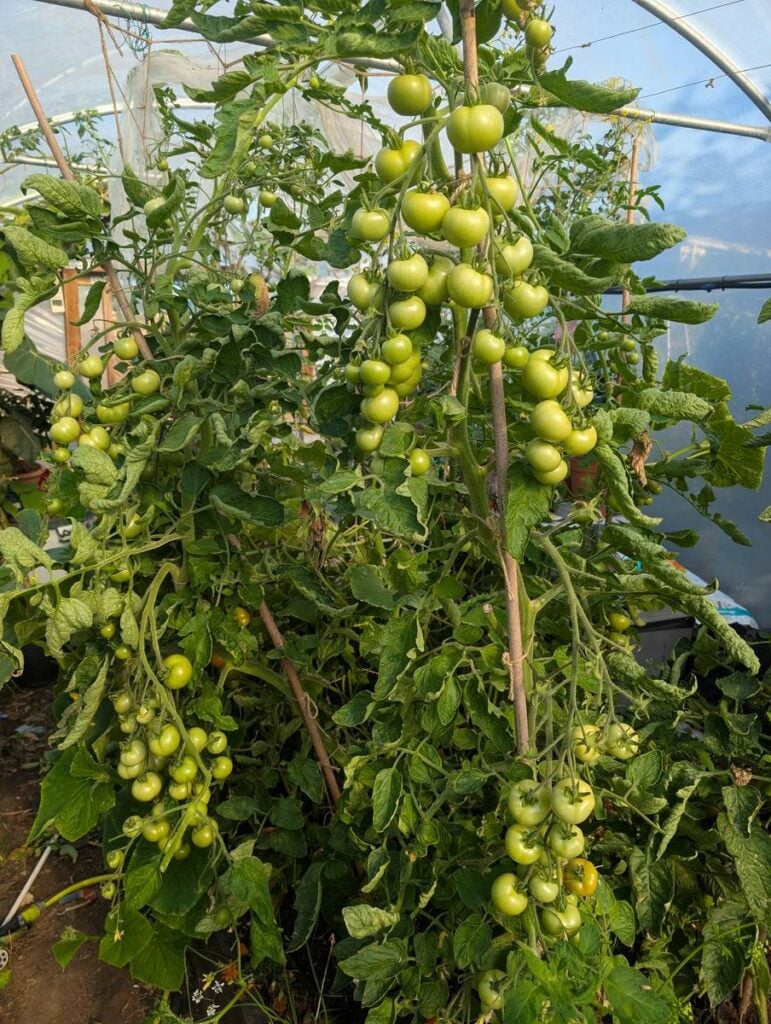
I’ve been harvesting tomatoes for months now from two small beds in my polytunnel, including a grafted cherry tomato plant which has produced a ridiculously large crop.
Even at 10 tomatoes a day (we had far more than that), at $64 a tomato this single crop would cost us $64,000.)
But there’s no need for gardening to be expensive. Our ancestors managed to grow enough food to survive without being able to go to the garden centre and buy Velcro tomato wraps, custom gourmet fertilisers and deluxe tomato ladders.
I don’t consider myself an expert in gardening or self-sufficiency (and you don’t have to be either to enjoy the benefits of year-round fresh food).
But I have developed principles that helped our family have a diverse, plentiful and sustainable diet at a fraction of the price of shop food. I hope you find them useful too!
Principle 1: Create a sustainable, circular garden
The first is to recycle the inputs of your garden, and to do so at a level that meets your time, energy and interest.
Our ancestors couldn’t go to the shop and buy a bag of compost or fertiliser, so they recycled it into the land.
At the same time, they weren’t commuting to a 9-5 job, so it’s absolutely fine to trade money for time sometimes – if you don’t have the time to sift your homemade compost to make perfect potting compost or make a homemade worm bin, it’s absolutely okay to buy them instead!
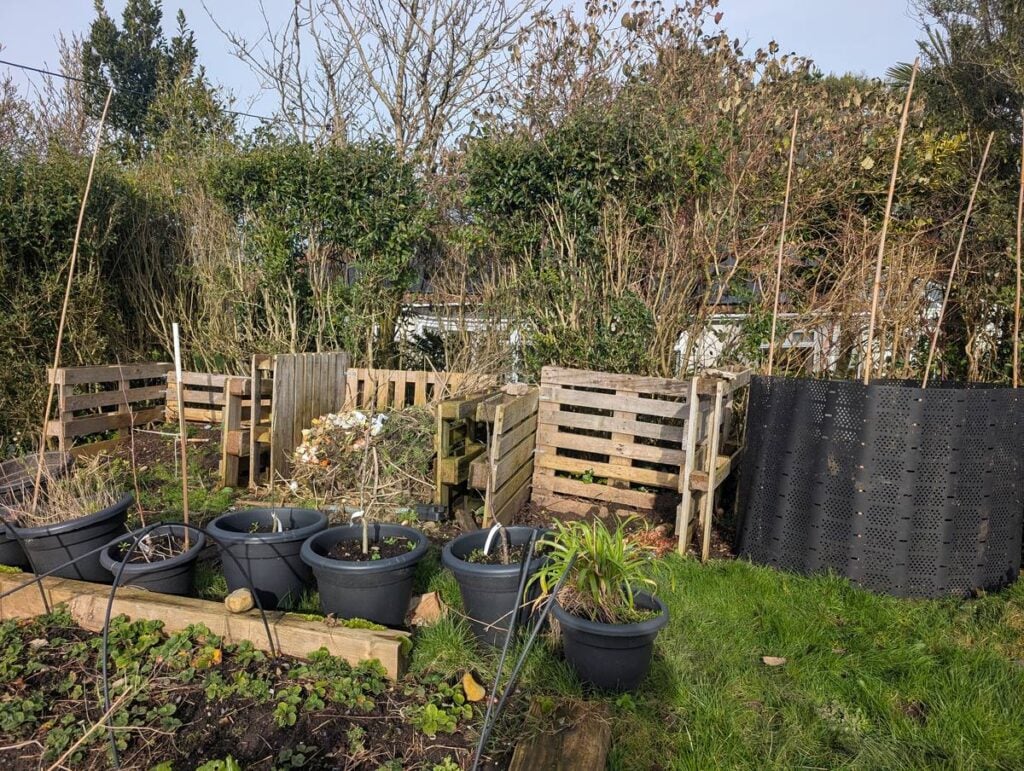
But do create rough compost – at its very basic level, it requires little more (or possibly less) effort than collecting, bagging and discarding your garden waste.
Learn more with our beginner’s guide to composting.
Principle 2: Save (some) seeds
I last bought fava beans almost a decade ago. Ever since, I’ve saved the seeds, keeping the strongest, biggest and tastiest for replanting.
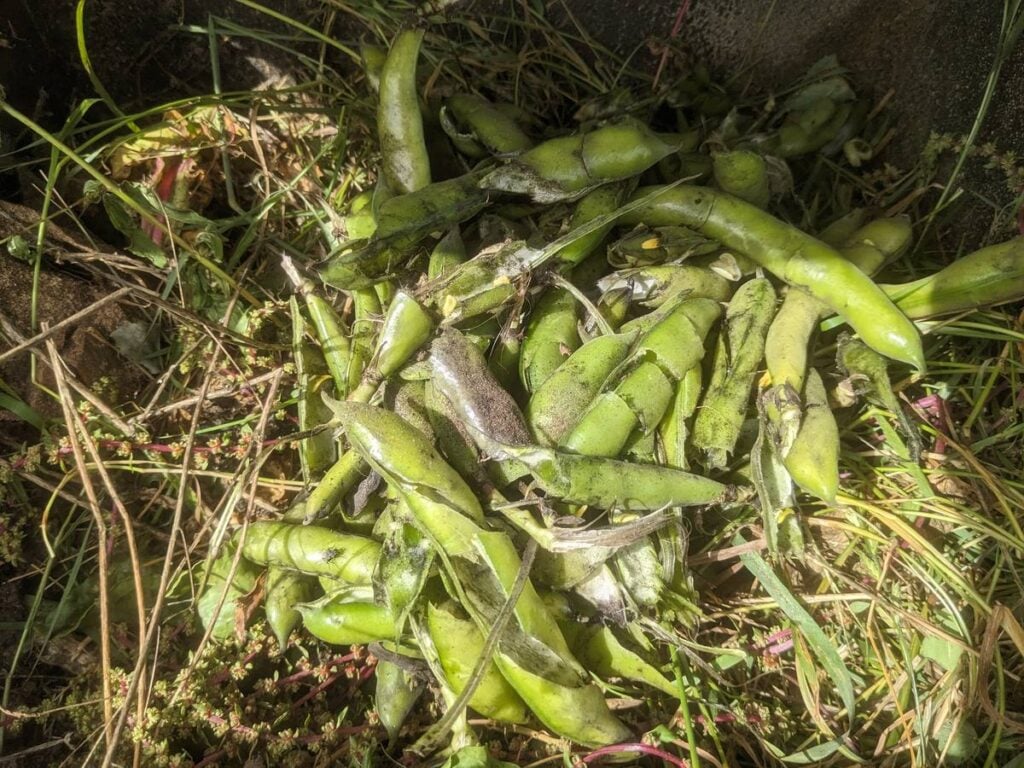
I’d love to save more seeds – like my friend’s father, who brought back seeds from a tomato he loved in Italy 50 years ago and has been growing them ever since. Indeed, it’s one of my plans for when I retire.
However, with limited time I tend to save easier seeds – like runner bean seeds, pea seeds, mangetout seeds and elephant garlic cloves.
These take almost zero time to set aside, and over time you can grow strains that are uniquely suited to your growing conditions.
You might choose to go further, of course, if you have the time and energy.
Principle 3: Allow reseeding
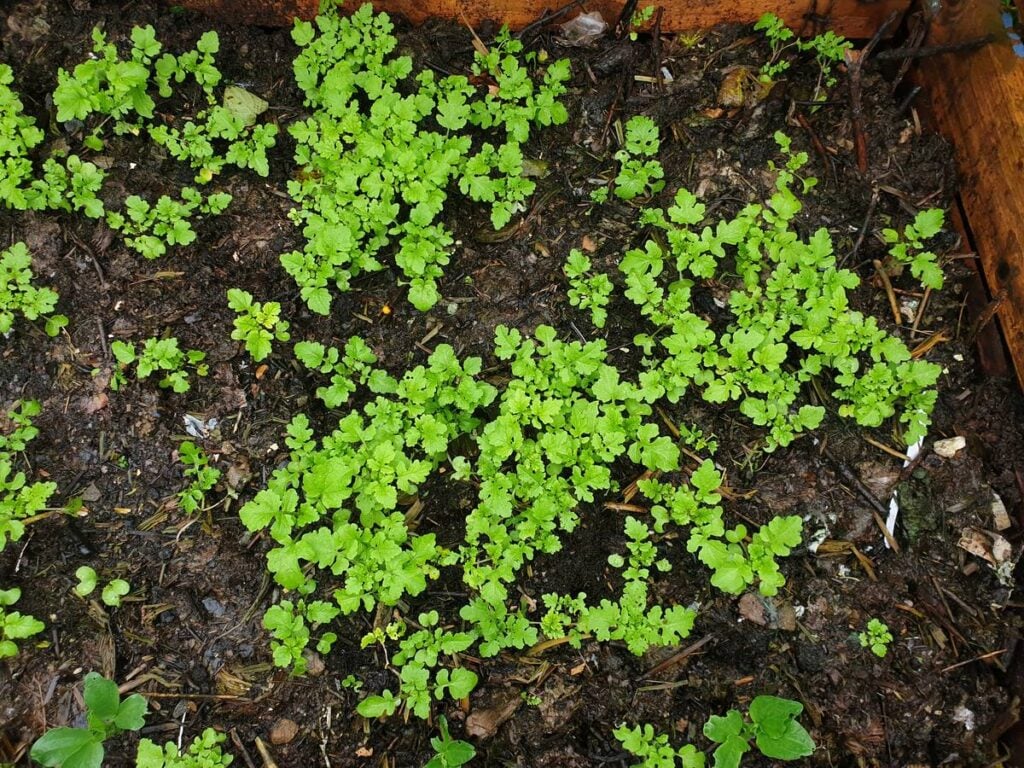
I first discovered the value of allowing plants to reseed by accident. It was kale first – when I let them flower for the insects, some went to seed and then I found kale plants all over my garden.
Every year, now, I find more plants that do this. I haven’t planted parsley or celery for years, and this autumn I am finding little lettuce plants growing in a patch of my vegetable garden.
Principle 4: Grow perennials
There’s a story that in the UK, people used to grow many more perennial vegetables than they do now. Then, in Victorian times, seed catalogues started selling fewer and fewer perennials and more and more annuals in order to maximise profits.
I’ve no idea if this is true, but it is true that many perennials have died out – or almost died out. (You still hear stories of varieties being rediscovered, having been kept alive by a single gardener for decades.)
But now there’s a revival in interest, and while sometimes they can be hard to find, a single investment can often lead to many years of some of the easiest food you will ever grow.
A couple of things I’ve noticed about perennials – first, when they’re not all year round like perennial kale, they are often the first things out of the ground in spring and the last things to disappear in autumn. Also, and with a few exceptions, they usually require almost zero compost or fertiliser – and generally little maintenance, too.
My current favourite perennials include perennial kale, Good King Henry, Egyptian walking onions, asparagus, sorrel and day lilies – as well, of course, as fruits such as raspberries, tayberries, hardy kiwis and Japanese wineberries.

Principle 5: Grow all year round
Around me there are enthusiastic, experienced growers – who just stop in winter.
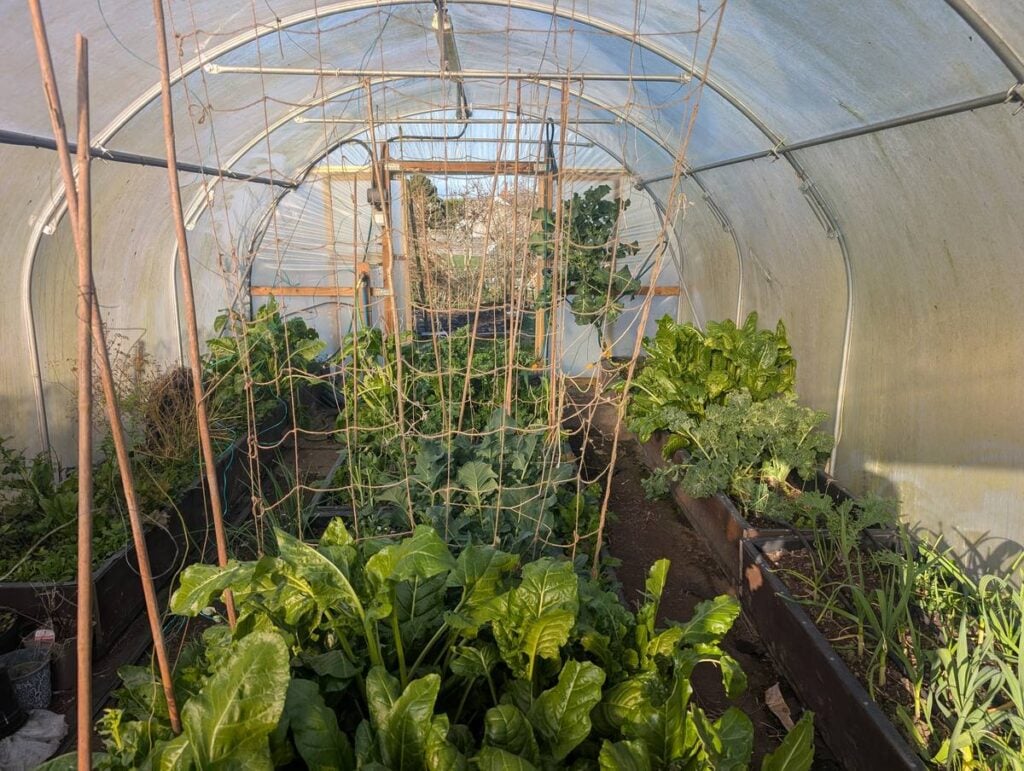
There are some countries where, at least without clever solutions such as walipinis (sunken greenhouses), there is no other option. But in milder climates, especially if you have a polytunnel or greenhouse, there’s no reason to stop growing.
In winter I typically harvest cabbage, kale, chard, claytonia, a little bit of spinach, coriander, parsley, leeks and more. As spring and the hunger gap arrive, my purple sprouting broccoli starts cropping, the spinach goes crazy and is joined by asparagus and fast-growing crops like pak choi and radishes.
Principle 6: Grow what’s expensive or difficult to find
I do grow cheap vegetables simply because I enjoy the process and I enjoy the freshness. But to maximise the benefit of your garden, it’s a great idea to grow things that are expensive or difficult to find.
For example, I was very proud when I grew my first pumpkin. But then I went to the shop and saw a pile of decent-sized pumpkins for a pound each.
What’s valuable will vary from person to person.
For example, my wife is from Indonesia. When we first came to the UK, longer ago than I care to admit, I spent a lot of time driving around different shops trying to find the ingredients she needed for home-cooked food.
Nowadays, instead of driving round looking for those ingredients, I grow lots of Asian herbs and vegetables such as makrut (kaffir) lime (the most difficult thing I’ve ever grown successfully), lemongrass, Indonesian basil and water spinach (easy and prolific, though banned as an invasive weed in countries like the US because it spreads so fast). In the UK it’s fine to grow, though I still keep mine in an enclosed container.
I also grow fruit and veg I love but which I never see in the shops.
Hardy kiwi, when picked at the right stage, is smaller than regular kiwi but prolific – and it’s one of the best things I’ve ever tasted. I also grow a ton of edible flowers (which are ridiculously expensive online) – my favourites are day lilies (not proper lilies!) and Californian poppies.
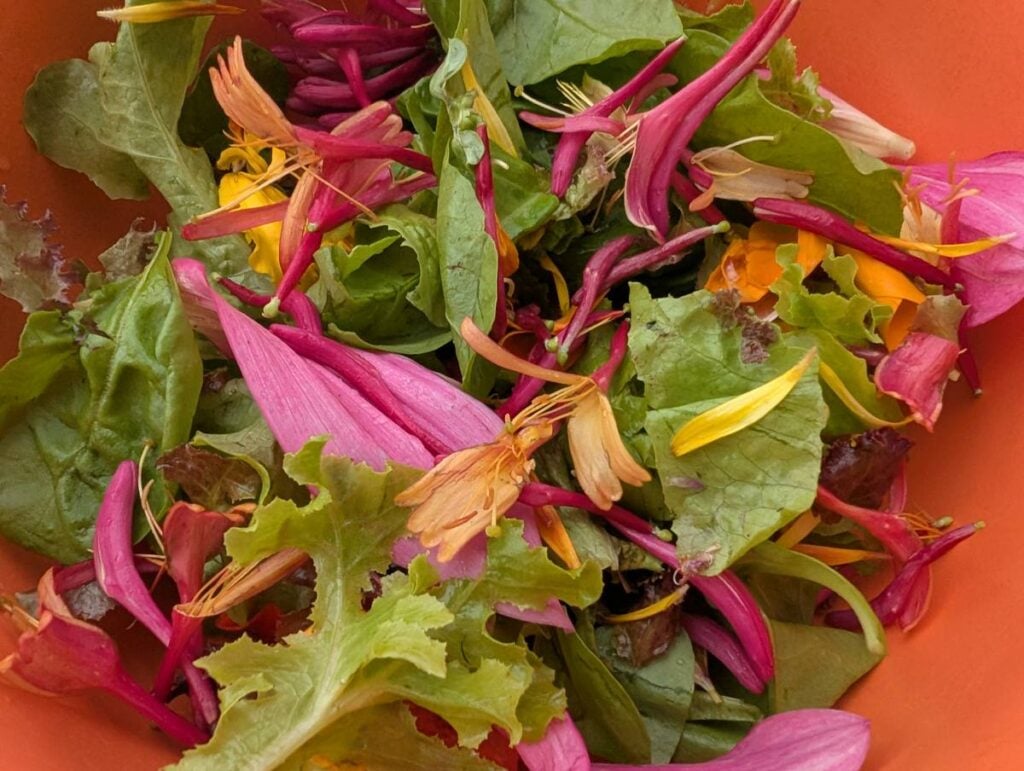
As a side note, we are increasingly being told to eat a diverse range of plants to benefit our microbiome [1]. Some people find it hard to meet the 30 plants a week recommendation, but when you grow a diverse range of plants, you can sometimes find yourself eating that in a day. Especially when you…
Principle 7: Supplement with edible weeds and wild food
Your garden is one of the most diverse sources of wild food you can find. And while it might not always be in huge quantities, it’s also some of the most nutritious food you will ever eat.
Nettles, for example, outpunch spinach on a whole range of nutrients, and taste great in a soup with potatoes.
(It’s always a good idea to have some in your garden, as they are one of the first plants to attract the insects which eat aphids).
I gave hairy bittercress to my Mum and she found it the best cress she’d ever eaten. And wood sorrel grows all over my garden – it’s tiny, but has a delicious lemony taste.
There are more examples than I can name here, but with a little bit of research, you’ll be surprised at just how many ‘weeds’ you can eat. (As always with wild food, though, be certain of what you are eating, and never eat anything unless you are 100% sure of its identity.)
And if you want to go further, it’s incredible how abundant nature can be at times.
Where I live, at certain times of the year we have access to vast quantities of wild garlic, samphire, sea purslane and mushrooms, as well as shellfish like mussels and cockles.
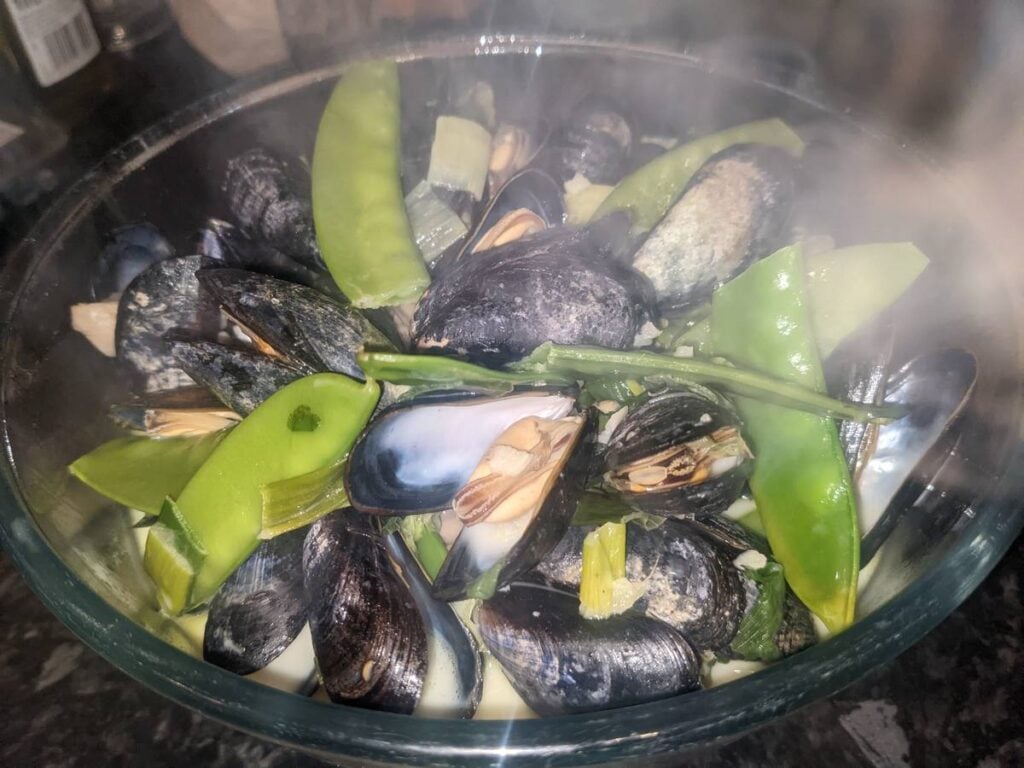
(As with weeds, shellfish and mushrooms need local knowledge before you eat them.)
Principle 8: Grow to your space
Not everyone has much space to grow food in, so for some of us it’s about maximising the potential we have.
For a windowsill or a balcony, herbs are a no-brainer. With just a few square feet, you can easily grow enough oregano, thyme, parsley, bay leaves and coriander to last you all year.
You’ll probably also have enough space to grow at least some salad vegetables all year round.
If you have a little more room, look at vertical gardening. Plants that grow up, such as mangetout, fava beans and runner beans, offer far more yield per square foot than vegetables such as potatoes or parsnips.
Principle 9: Choose continuous cropping plants
Which would you rather have – a plant that crops once, or a plant that you can harvest for weeks and weeks?
That’s why I grow potatoes for fun, rather than to make a serious difference to our budget. However, far more important to me are dozens of plants that I can crop for weeks, months or even years.
For example, when it comes to lettuce, you can choose ones which grow a single head and get cut once or others that you can crop for weeks in summer or months in winter. (Indeed, I plant claytonia (miner’s lettuce) in September, and typically finish cutting it in May.)
With cabbage plants, you can cut the head off for it to grow again, or choose wild cabbage, which – with care – can last two years or longer. Some plants can surprise you – I remember cutting perpetual spinach to the ground when it went to seed, only for it to sprout back weeks later.
Principle 10: Grow what works in your garden
Admission – I cannot grow carrots. (Unless you count the huge, strange, alien-like root I dug up from my garden months after I sowed a neat row of carrot seeds.)
Plants can be the strangest thing, something highlighted to me by Colin, a gardener living down the road with at least 50 years of experience.
Colin also struggles to grow carrots. When he was young, he told me, he copied everything his father did. Despite the fact his father lived two hundred yards down the road, Colin’s carrots still failed.
If you’re like most of us, some things will grow brilliantly and consistently, some things will grow sometimes and other things will consistently fail. If you’ve tried something a few times, it’s fine to give up and replace it with something else (but do try again if you move to another garden).
Principle 11: Intercropping, succession cropping and companion planting
Intercropping, companion planting and succession cropping are three of the keys to a good yield – and they can overlap too.
Let’s take tomatoes, for example. In between my tomatoes I plant chives and marigolds. These deter pests, but the chives are absolutely delicious (try roasting chicken on a bed of them) and marigold flowers brighten up salads beautifully. To me that’s both companion planting (planting vegetables that are mutually beneficial) and intercropping (maximising yield by growing two crops in the same space).
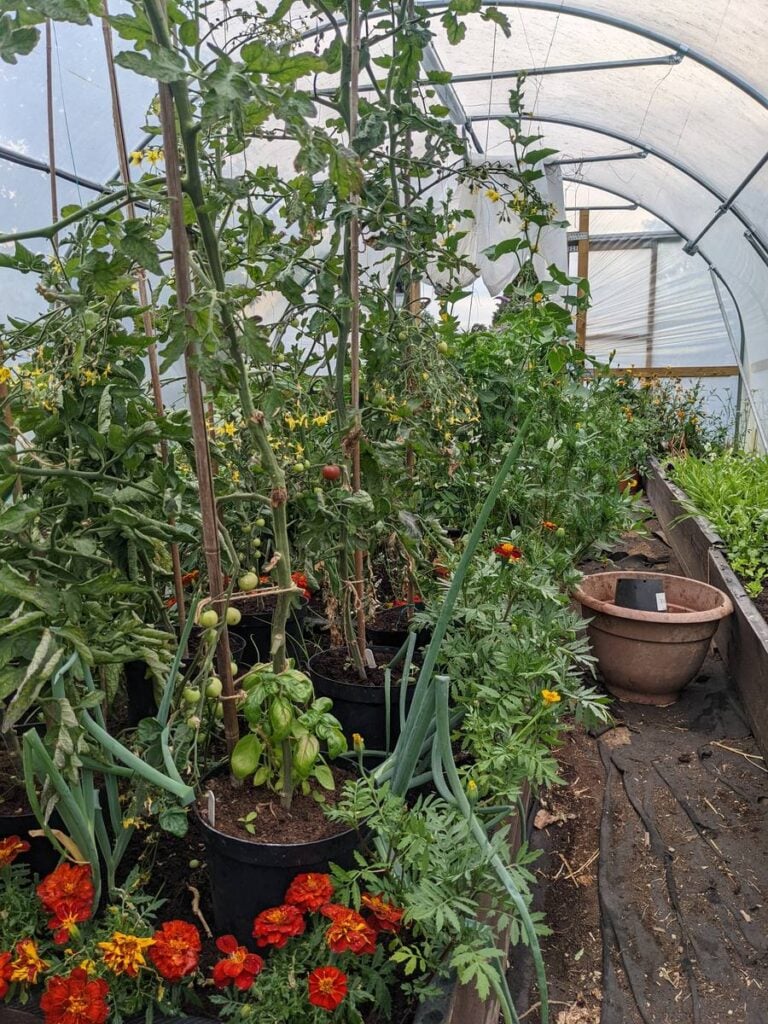
The polytunnel beds are valuable space, so around the edges I also plant marigolds (a great edible companion plant) basil (which allegedly improves the taste of tomato), chives and lettuce.
In August I sow spinach, and as the tomatoes get old, I strip the leaves off the bottom of the tomatoes and plant the spinach in between them.
One thing you do have to watch out for in the gardening world is over-egging the benefits of companion planting.
For example, while marigolds seem to help me with aphids, I believe I have thoroughly disproved the notion that nasturtiums stop caterpillars – I grow nasturtiums every year, and I also battle caterpillars on my brassicas every year!
However, to help prevent some pests and maximise the use of space, these three planting techniques are incredibly beneficial.
Principle 12: Improvise, scavenge and make do
When my best friend was alive I used to love going with him to his allotment.
Everywhere there were structures built from bits of wood and scavenged windows – sheds and greenhouses and compost bins.
I’ve never been as handy as some of those thrifty gardening experts, but even without serious DIY skills there are plenty of ways to avoid spending a fortune at the garden centre.
I’ve cut hazel sticks to use as support instead of bamboo (some have lasted years), built compost bins from pallets and worm bins from storage containers.

As always, work within your time, skills, budget and energy. Improvising is great fun, when you have time, but it’s absolutely fine to buy finished products when you don’t!
Wrapping up
The world is an uncertain and often terrible place, and while we think that food will always be abundant to us, that might not always be the case.
Even in my lifetime, I’ve seen shops empty in times of pandemic, previously wealthy countries see people go hungry after being devastated by war and prices spike up in a matter of weeks.
But while you can’t control the actions of war-hungry despots or the cost of fertiliser, you can take control of one thing – your ability to grow and find food. And that’s one thing no government can take away from you.
Related articles
- How to Rejuvenate Supermarket Pot Herbs
- 4 Productive Vegetables That Thrive Without Compost
- Leaf Mold Magic: How to Use Fallen Leaves to Improve Your Garden Soil
- The 7 Laziest Ways to Compost (Tried and Tested!)
- Trench Composting: The Lazy Gardener’s Secret to Rich, Nutrient-Packed Soil!
- The Three Sisters Garden: Corn, Beans & Squash
References
[1] McDonald, D., Hyde, E., Debelius, J. W., Morton, J. T., Gonzalez, A., Ackermann, G., … Knight, R. (2018). American Gut: an Open Platform for Citizen Science Microbiome Research. mSystems, 3(3), e00031-18. https://doi.org/10.1128/mSystems.00031-18
[2] Malchevska, O. (2026, September 24). Eating garden weeds to survive in Russian-occupied city cut off from food and water. BBC News. https://www.bbc.co.uk/news/articles/c60qxywdx4vvo