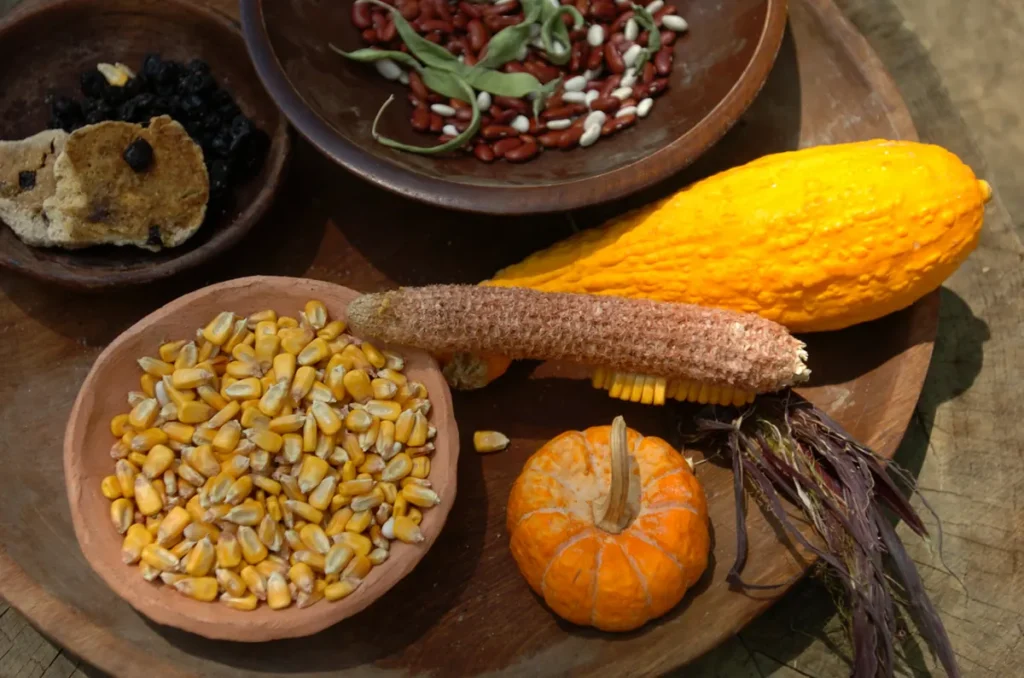
For the last few years I’ve been experimenting with a very traditional form of gardening in my bottom garden bed.
That system is, of course, the Three Sisters. You might have heard of it, and you might even have tried it. I’ve known many people (including me!) fail the first time they try it, and I think that’s largely down to failing to adapt the system to local climates and plant varieties.
But before we dive in, let’s take a look at how it works in its native land.
What is the Three Sisters Growing System?
The Three Sisters is a traditional way of growing crops together that comes from Indigenous farming in North America. Instead of neat rows, crops are grown together in small groups, usually in mounds.
At its simplest, you grow corn, beans and squash together. The corn goes in first and grows tall. The beans climb it instead of needing canes, and provide nitrogen to the corn and squash. The squash spreads out across the ground, shading the ground, preserving moisture and suppressing weeds.
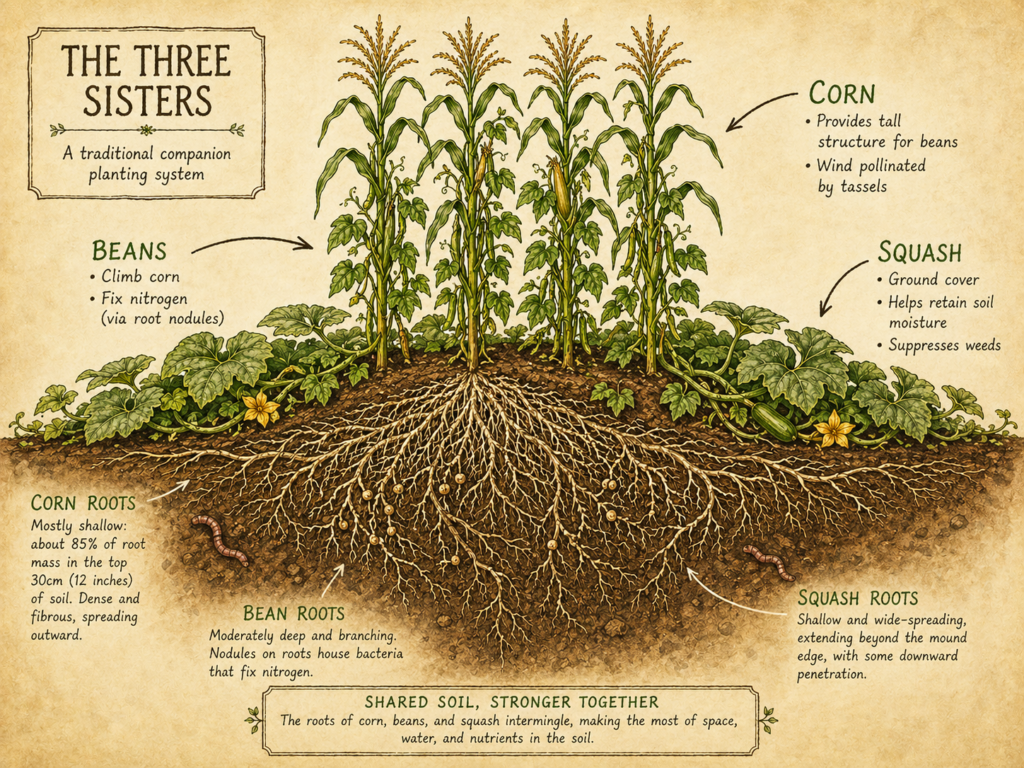
In practice, it was more of a loose system than a fixed recipe. Different communities did it differently depending on their climate and soil. Some added sunflowers around the edges. Others left in plants we’d probably pull out as weeds, but which were actually useful crops in their own right. It was closer to a small, mixed planting than a tidy three-crop system.
The mounds helped with drainage, warmed up faster in spring and helped to concentrate fertility. There are also accounts of people burying fish under the corn. (From experience, if you try it, bury it deep. If not, you’ll be left with a hole and a dug-up plant.)
Two Caveats
I’ve always loved the idea of the Three Sisters, although until recently I’ve been more sceptical of the idea that nitrogen immediately helps the sweetcorn grow.
The traditional idea is that the beans fix nitrogen from the air to feed the corn and the squash. However, when we plant green manure, we typically cut it down before it flowers or fruits, as the plant will otherwise use the nitrogen for itself. When you cut it down, the roots rot in the soil, adding nitrogen.
The conventional view has been that legumes don’t add nitrogen immediately, but in the next growing season.
However, since I originally wrote this article I’ve come across more recent research that suggests that legumes actually share some of the nitrogen they make with the plants around them while they grow.
One claim to be wary of is weed elimination. The squash does partially suppress weeds, but in my experience not all of them.
Plus, with beans, squash and corn I find the vegetation is so dense it’s hard to weed the plants, so I usually end up having a big weeding session when I take it down at the end of the year.
Caveats aside (and even without complete success), I love the system. The visuals are impressive, the maintenance is minimal and my goodness – does anything beat the taste of fresh sweetcorn barbecued with butter at harvest time?
My (Welsh) Three Sisters Version
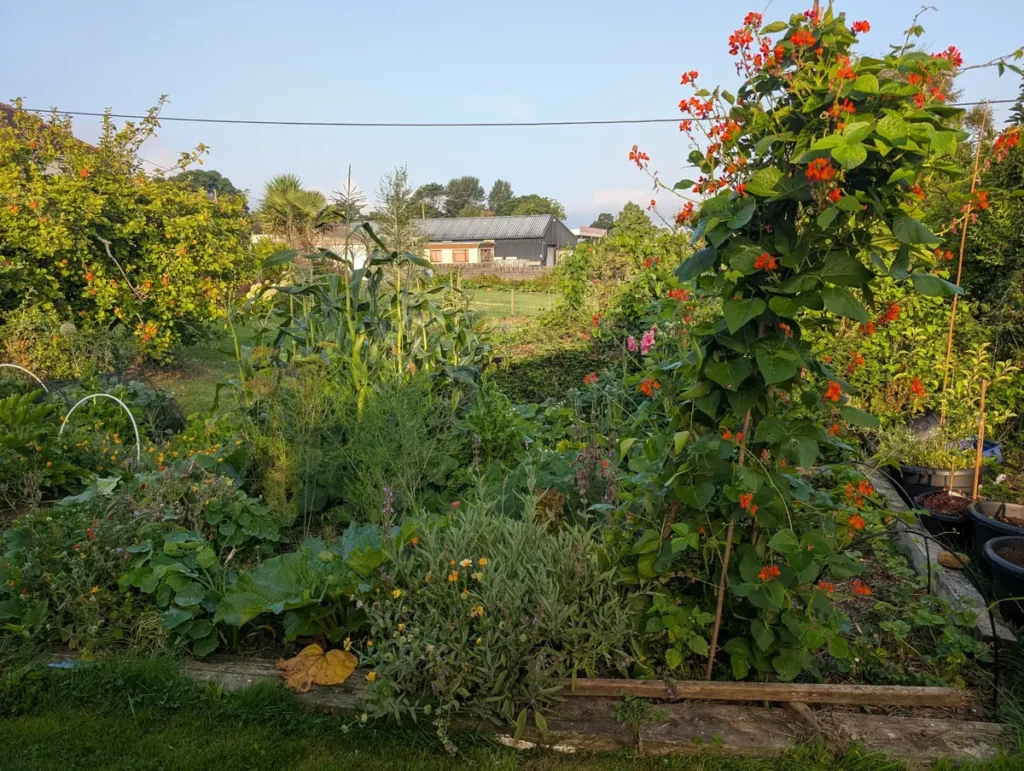
Here’s how I’ve been growing the Three Sisters:
- Plant the sweetcorn first in potting compost.
- When the sweetcorn is about 6 inches high, transplant it into the garden. Remember that because corn is wind pollinated, it’s best planted in blocks.
- Plant two bean seeds next to each sweetcorn plant. I plant two in case one fails. You could start these separately in compost, but they’re fairly reliable unless you have mice, rats or other bean-loving vermin around.
- Mound soil and/or compost up around each sweetcorn plant as it and the beans grow.
I’ve differed here from the original method, where several corn plants are grown in each mound. I stick to one per position as I like to give them a bit more space. Perhaps the original method is better suited to sweetcorn’s native environment.
(Note that I find the biggest challenge with mounding compost up is my huge garden bird population, as they love scratching round in loose compost.) - Around the same time, I start the squash plant in compost in a propagator. When it’s large enough, I dig a hole, add some well-rotted manure, and plant it in.
You don’t need the manure, but I’ve found that when you do this the squash grows massive. One year it grew 20 feet long, then invaded my neighbour’s garden and produced a squash in it.
(I gave her the option of me cutting it back or her taking the squash – she chose the squash.)
I put the squash plant some way off from the beans, and then let it grow into them, as the variety I use is a lot more vigorous than the ones traditionally used.
Many other guides suggest planting the squash when the sweetcorn is 12 inches high, but six inches has worked well for me. This year my first planting failed, and I had to order new seeds and replant my squash. The squash plant produced the worst results I’ve had for years, although this could also be due to a very hot, dry summer. - When the crops are finished, I cut all the plants at the base, compost the tops and allow the base to rot. I have experimented with covering the sweetcorn stalks with compost and leaving them there as a mulch, but the stalks take a long time to break down this way.
I sometimes also plant a mass of wildflowers in the corner of the bed. These look great and create the glorious chaos I love in this part of the garden.
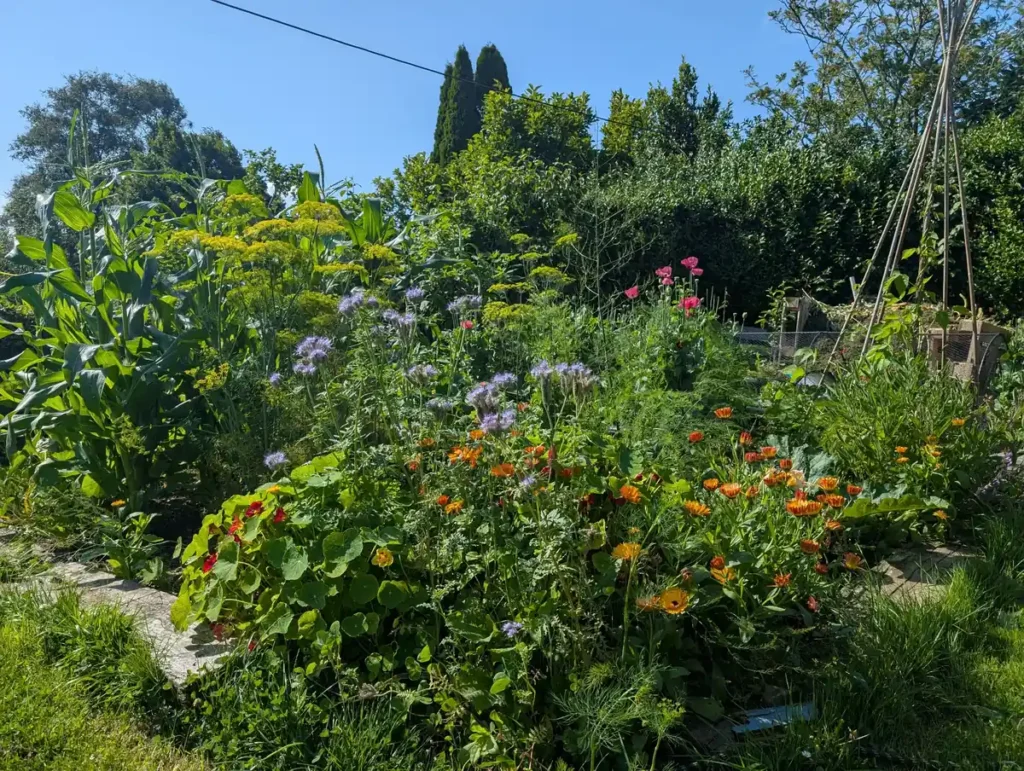
Lessons Learned
I first jumped into this in my usual state of enthusiasm with squash, runner beans and corn.
The corn and the squash performed brilliantly (in fact, they have every time), but the runner beans failed.
Having researched it after the failure (yeah, I know), I found that runner beans are not generally recommended. They’re often too vigorous, can overwhelm the corn, and in some cases even pull the stalks over. In my case, they just didn’t establish properly, which is unusual as I normally find them foolproof.
The next year I planted dwarf borlotti beans, mainly because I had the seeds around. These did better in that they survived, but they didn’t really use the corn and the harvest wasn’t great.
That’s what made me realise the variety point matters more than it first appears. You need a bean that will climb, but not too aggressively, and that seems to suit the conditions you’re growing in.
This year I used two different beans – climbing borlotti beans and Blue Lake French beans. Both performed really well – with the slight proviso that they climbed a couple of the sweetcorn plants so well that they bent them over.
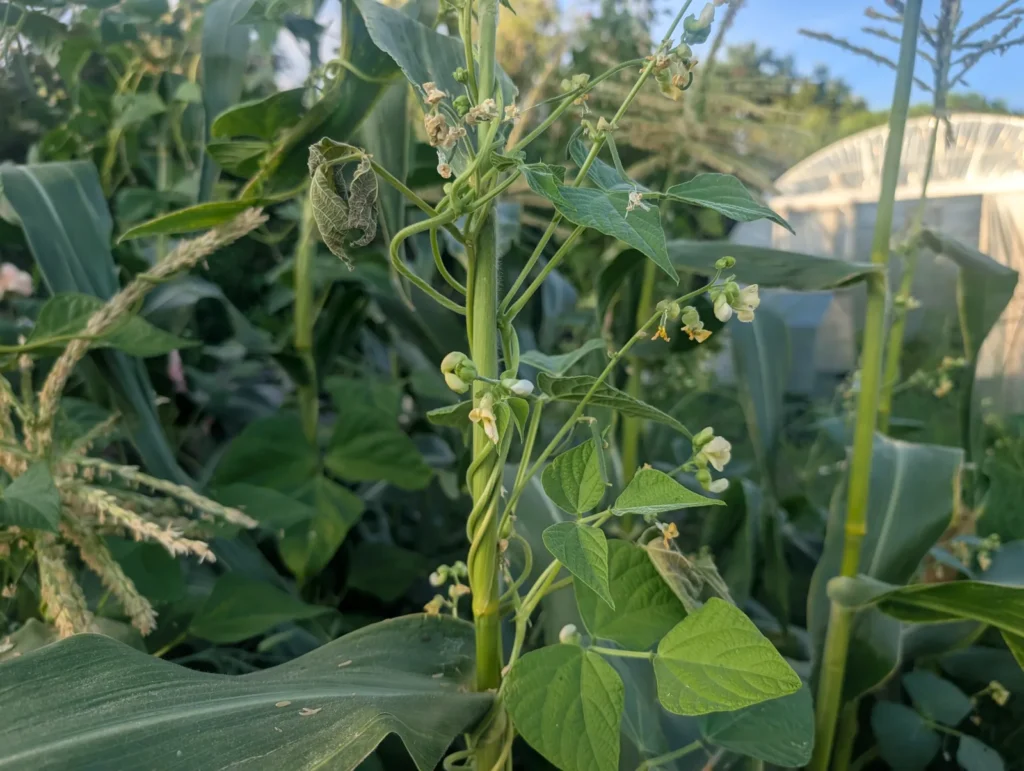
They also really seemed to make a difference to the sweetcorn plants, with the best harvest I’ve ever had and plants twice the height of those in our community garden a quarter of a mile down the road.
Related Posts
- Aztec Composting: The City That Recycled Everything
- 4 Productive Vegetables That Thrive Without Compost
- Carbon to Nitrogen Ratio: The Key to Fast, Healthy Compost
- How to Use Compost For Maximum Effect
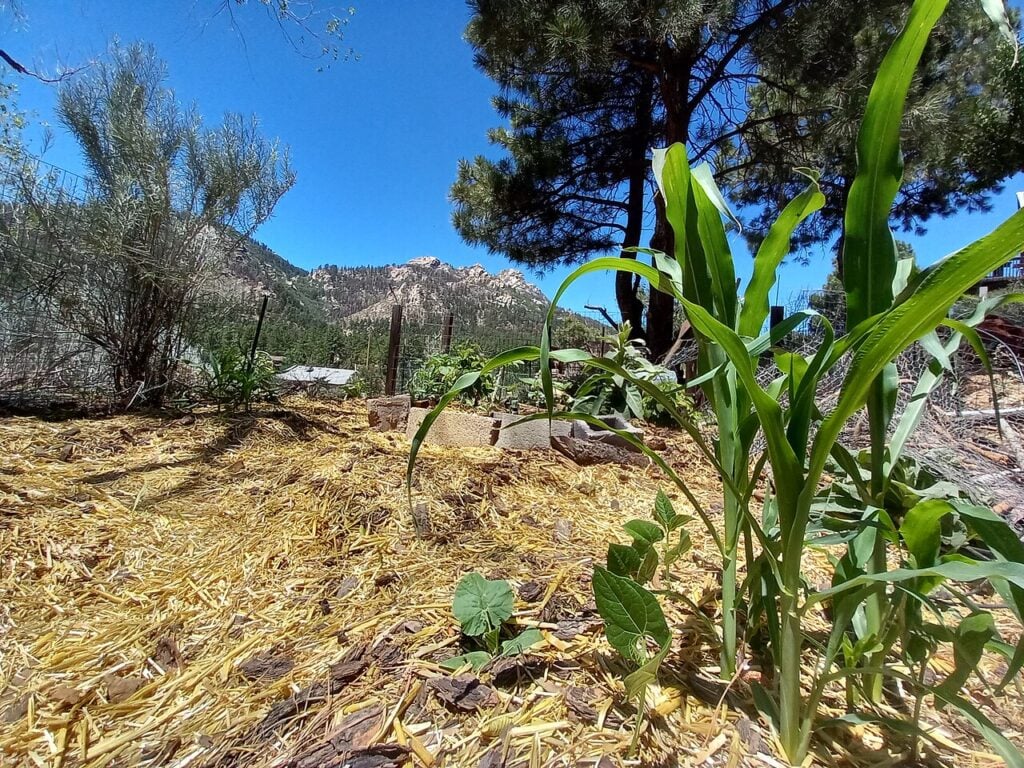
Three Sisters in Arizona image by Spencer-Nägy licensed under Creative Commons.
#/media/File:Three_Sisters_mound_culture_in_Arizona_Mountains.jpg)