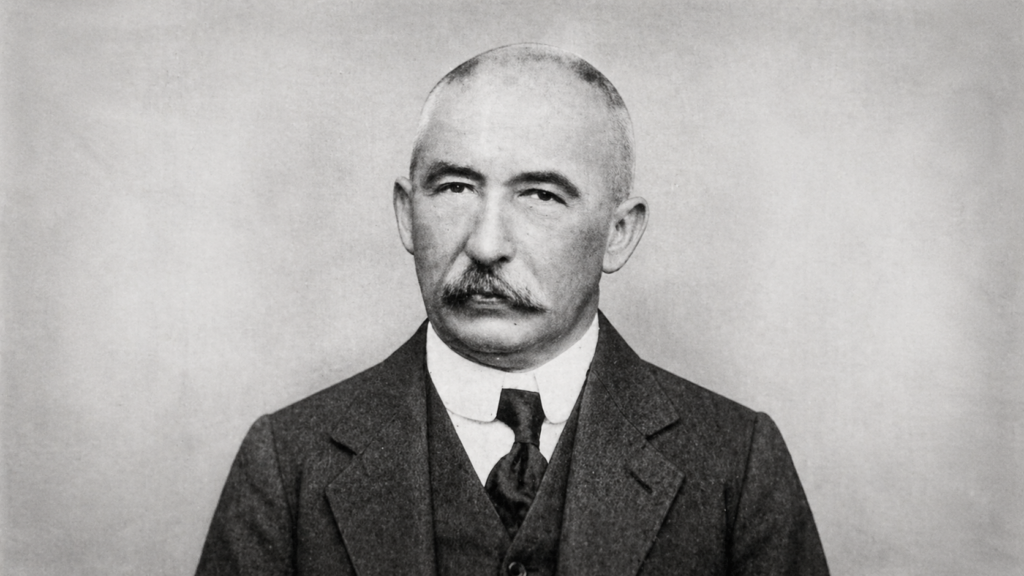
In 1905, the British government sent Albert Howard to India to improve Indian agriculture. He had a Cambridge degree, a diploma in agriculture, and first-class honors in the natural sciences tripos. [1]
Yet within a few years, he’d decided that the farmers he’d been sent to teach knew things he didn’t. As he later wrote:
“I decided that I could not do better than watch the operations of these peasants, and acquire their traditional knowledge as rapidly as possible. For the time being, therefore, I regarded them as my professors of agriculture.” [6]
Their crops may have been grown using peasant techniques, but they were often growing more healthily, offering better yields and resulting in better soils than the modern techniques Howard had been sent to propagate.
He would spend years finding out how. The answer, he decided, was compost.
King’s influence
Howard wasn’t the first to write about this.
In 1909, an American soil physicist named F.H. King had traveled to China, Japan, and Korea to document how traditional Asian farmers had cultivated the same land for thousands of years without exhausting it.
The book he wrote, Farmers of Forty Centuries, was meticulous – covering cucumber trellises, hand-transplanted rice and, crucially, the deliberate return of every organic scrap back to the field. [2]
King’s book heavily influenced Howard, and he realised that what King had documented in East Asia mirrored what Howard was seeing in India: farming systems that had persisted for centuries without destroying the soil succeeded simply because they fed the soil.
Indore, 1924
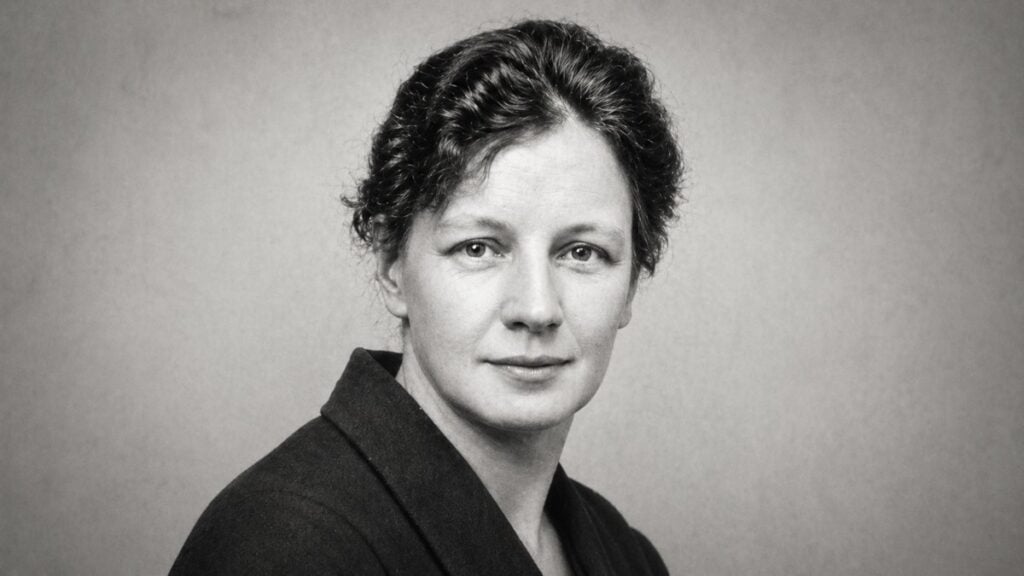
In 1924, at the age of 51, Howard was given permission to found the Institute of Plant Industry in Indore, Madhya Pradesh.
His wife Gabrielle, a botanist in her own right, who’d come to India the same year he did and co-authored research papers with him since 1907 [1], worked alongside him.
Their colleagues described their partnership as inseparably joint. Indeed, the Oxford Dictionary of National Biography would later compare them to Sidney and Beatrice Webb. [1]
Over the next seven years, they developed what Howard called the Indore process.
How It Works
You start with a base layer of coarse brush material. This keeps the pile off the ground and allows drainage and airflow.
Over that goes a 6-inch layer of green or dry vegetable matter, such as crop residues, weeds, leaves, kitchen waste, hay, straw.
You then add a 2-inch layer of animal manure and a sprinkling of soil, and repeat until it gets to around five feet high. [3]
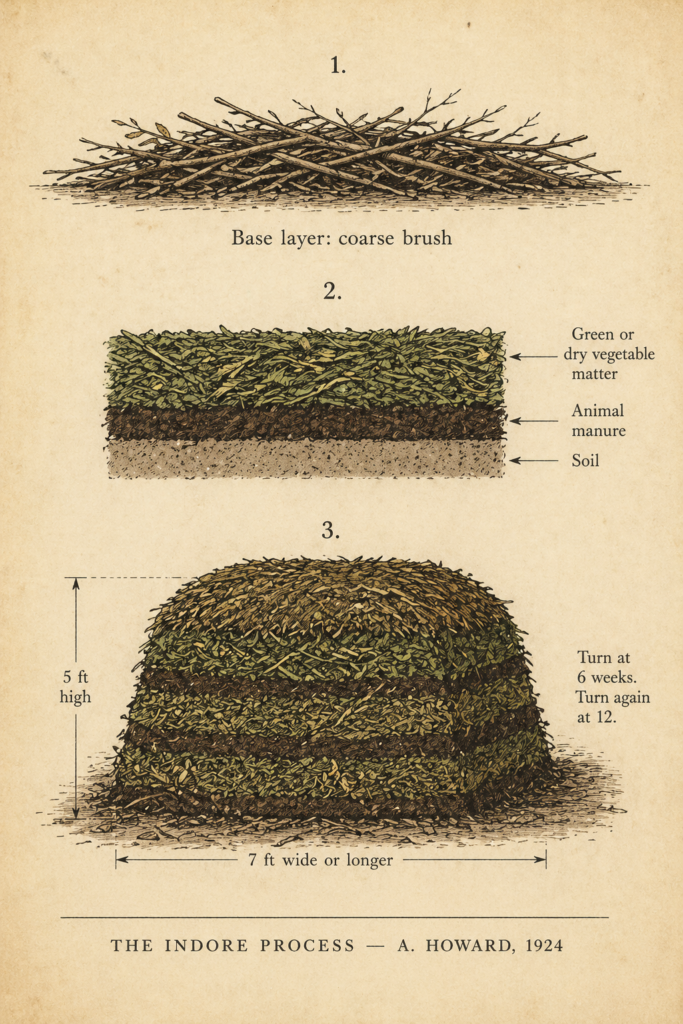
For the material, Howard recommended using 3 to 4 parts vegetable matter to 1 part manure by volume. He also recommended adding lime or chalk between layers, and always a sprinkling of soil. [3]
(Note for composters – lime is no longer often recommended for home composting, and is certainly not necessary to make good compost.)
For larger scale farms, the method involved creating piles 10 by 5 feet. Alternatively, material might be placed in a pit 2 or 3 feet deep or in windrows 10 feet wide (and any practical length). [3]
The compost is then turned twice – once at 6 weeks, and again at twelve weeks. The timing wasn’t precise, as it varied with conditions.[3]
Howard’s Indore process wasn’t purely hot aerobic composting. Harold Gotaas noted that the piles were aerobic briefly after piling and after each turn, but largely anaerobic in between. [4] But it still produced great compost.
The forgotten co-author
Howard’s Indian chemist colleague at Indore, Yeshwant Wad, handled the chemical analysis throughout the research. He co-authored The Waste Products of Agriculture: Their Utilization as Humus (1931), the first full technical account of the Indore method. [5]
His name is on the book but it rarely appears anywhere written about it afterward, and I have been unable to find a confirmed photo of Yeshwant to give him the recognition he deserves in this article.
Gabrielle
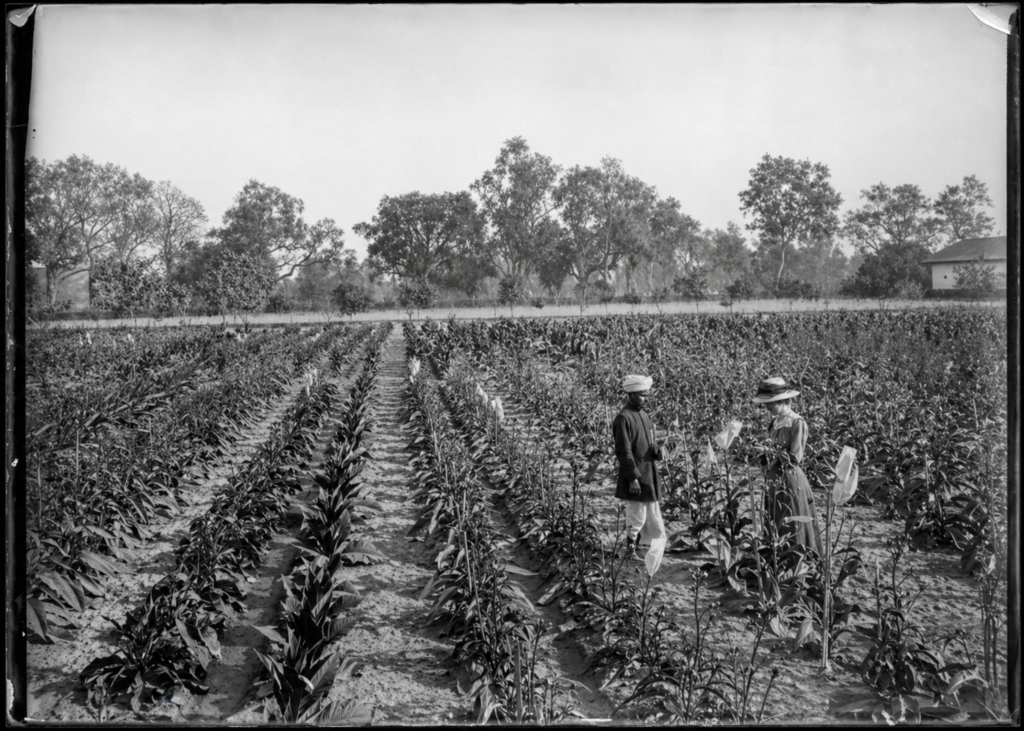
In 1930, with the work largely complete and The Waste Products of Agriculture nearly ready for publication, Gabrielle Howard died suddenly. [1]
Howard was devastated. He left India in 1931, returned to England, and as far as he was concerned his scientific career was over.
Inspiring the organic movement
Back in England, Howard married Louise Matthaei – Gabrielle’s sister, also a botanist. [1] Louise helped him shape his ideas into something larger than a technical agricultural report. Together they worked on what became An Agricultural Testament, published in 1940. [6]
That book went beyond describing the Indore method, arguing for an entirely different way of thinking about food, soil, and health.
Readers included Lady Eve Balfour in England, author of The Living Soil (1943) [8] and co-founder of the Soil Association.
In the US, JI Rodale was inspired by the book, and went on to found the Organic Farming and Gardening magazine (1942) [7] and the Soil and Health Foundation.
While the book was inspiring a new generation of organic farmers, Howard himself refused to join the new associations, arguing that his scientific work should not be left in the hands of laypeople.[1]
What happened to the Indore method?
The Indore process spread.
By the mid-20th century it was being practiced across India, Sri Lanka, Malaya, China, South Africa, Costa Rica, and East Africa.
Its adaptations included the Bangalore method, still widely used in India today, variations using night soil and sewage sludge and even a version that used only animal bedding and fresh green material under black plastic and was done in three weeks without any turning at all. [3]
The University of California method, developed in the early 1950s and one of the most clearly articulated rapid composting systems ever written down, was explicitly built on Howard’s foundations. [3]
And when my parents visited Goa in 2025 they saw composting taking place in the gardens of their hotel – a windrow covered against the weather with a little wooden sign saying Indore.
Much of the compost advice you read now traces its origins, directly or indirectly, to seven years of work in a city in central India by Albert and Gabrielle Howard and their forgotten Indian co-workers.
But perhaps if Howard was here today, he’d remind us that he didn’t invent the work. He’d perhaps tell us that the real experts were the Indian farmers he called his professors, and that his achievement was to capture and explain an expertise built up over millennia.
In his own words: “At the end of five years’ tuition under my new professors – the peasants and the pests – the attacks of insects and fungi on all crops … became negligible.” [6]
References
[1] Oxford Dictionary of National Biography: Howard, Sir Albert (1873–1947). Oxford University Press. https://www.oxforddnb.com/display/10.1093/ref:odnb/9780198614128.001.0001/odnb-9780198614128-e-56157
[2] King, F.H. (1911). Farmers of Forty Centuries, or Permanent Agriculture in China, Korea and Japan. Madison, WI: Mrs. F.H. King. (Posthumously published)
[3] Martin, D.L. & Gershuny, G. (eds.) (1992). The Rodale Book of Composting. Emmaus, PA: Rodale Press.
[4] Gotaas, H.B. (1956). Composting: Sanitary Disposal and Reclamation of Organic Wastes. WHO Monograph Series No. 31. Geneva: World Health Organization.
[5] Howard, A. & Wad, Y.D. (1931). The Waste Products of Agriculture: Their Utilization as Humus. Oxford: Humphrey Milford & Oxford University Press.
[6] Howard, A. (1940). An Agricultural Testament. London: Oxford University Press.
[7] Rodale, J.I. (1942). Organic Farming and Gardening. Emmaus, PA: Rodale Press.
[8] Balfour, E.B. (1943). The Living Soil. London: Faber and Faber.