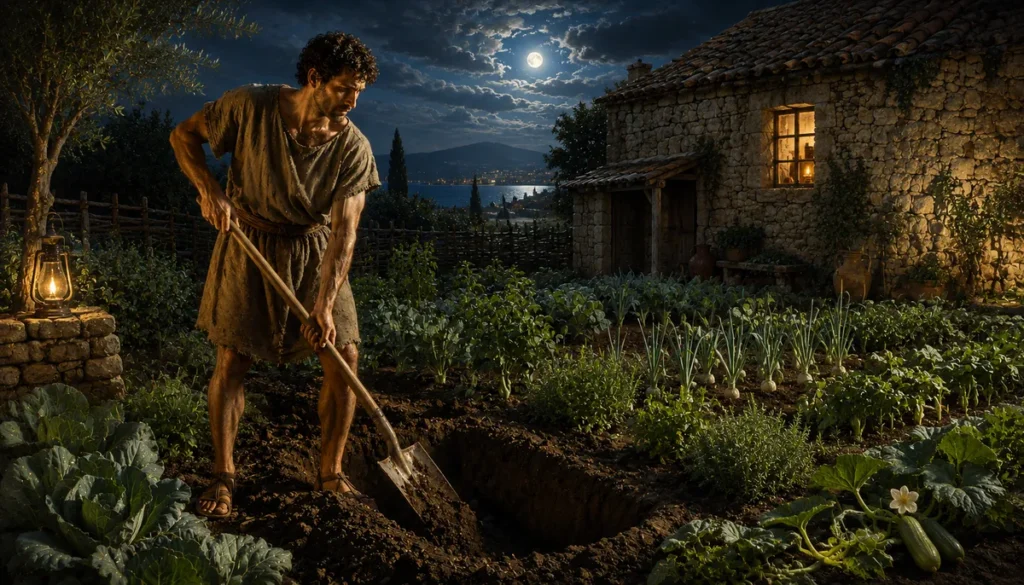
It was the middle of the night, and Phocas was digging a grave in his vegetable garden.
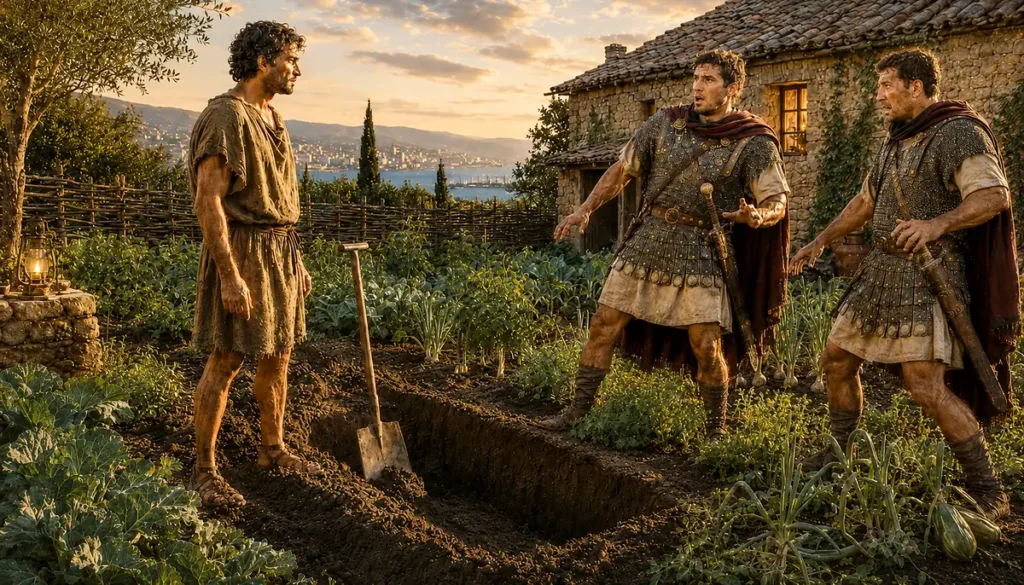
Inside his house Roman soldiers were asleep. They had come to Sinope to find and kill a man named Phocas. That evening they had knocked on his door asking for lodging, not knowing they were asking the man himself.
He had fed them from his garden and given them beds, and listened while they explained their errand over dinner. Now he was quietly preparing the hole they would put him in.
To understand why a man would do that, you have to know who he was. Phocas kept a market garden by the city gate of Sinope, a port on the Black Sea, around the year 300. By all accounts the plot did well. It gave him a decent living, and whatever it produced beyond his own needs he gave away: vegetables for the poor, a bed and a meal for travellers passing through.
Alban Butler, writing much later, said Phocas “found in his garden itself an instructive book and an inexhausted fund of holy meditation.”
The trouble was the timing.
This was the Diocletian persecution, Phocas was a Christian, and his name was on a list. The strange grace of the story is that the same open door he gave to every stranger, he gave to the men sent to end him.
In the morning he told them who he was and walked them out to the grave. They hesitated, the old accounts say, reluctant to kill the host who had just fed them. But he told them to go ahead, they did it, and they buried him there, in the garden, in the soil he had worked his whole life.
The possible exception was the bones. Famous martyrs don’t get left in peace, and within a century his cult had spread around the Mediterranean, with churches as far apart as Antioch and Vienne in France claiming to hold pieces of him.
But even if those claims were true, most of his body went, as planned, back to nourish the garden he had so cherished.
Sources
- Phocas the Gardener – Wikipedia
- Phocas, Bishop of Sinope – Wikipedia
- Asterius of Amasea, Homily IX on Phokas – Oxford Cult of Saints database
- William Bryant Logan, Dirt: The Ecstatic Skin of the Earth (Norton, 1995) – where this story first caught my eye