You’ve probably been told to keep cooking oil out of compost – probably because of the fear that it will clog up the compost, stop oxygen from reaching compost material and/or attract pests.
But a while back I came across a study that suggested it could be beneficial in multiple ways.
Japanese researchers found that by adding cooking oil to compost material, they could dramatically increase temperature while reducing emissions and nitrogen loss.
My informal experiments suggested that it worked (and my write-up of the study became one of the most popular articles on this blog!) but I’ve been waiting to see if more studies backed this up.
And I’ve found one that I missed – with a new twist.
What the research tested
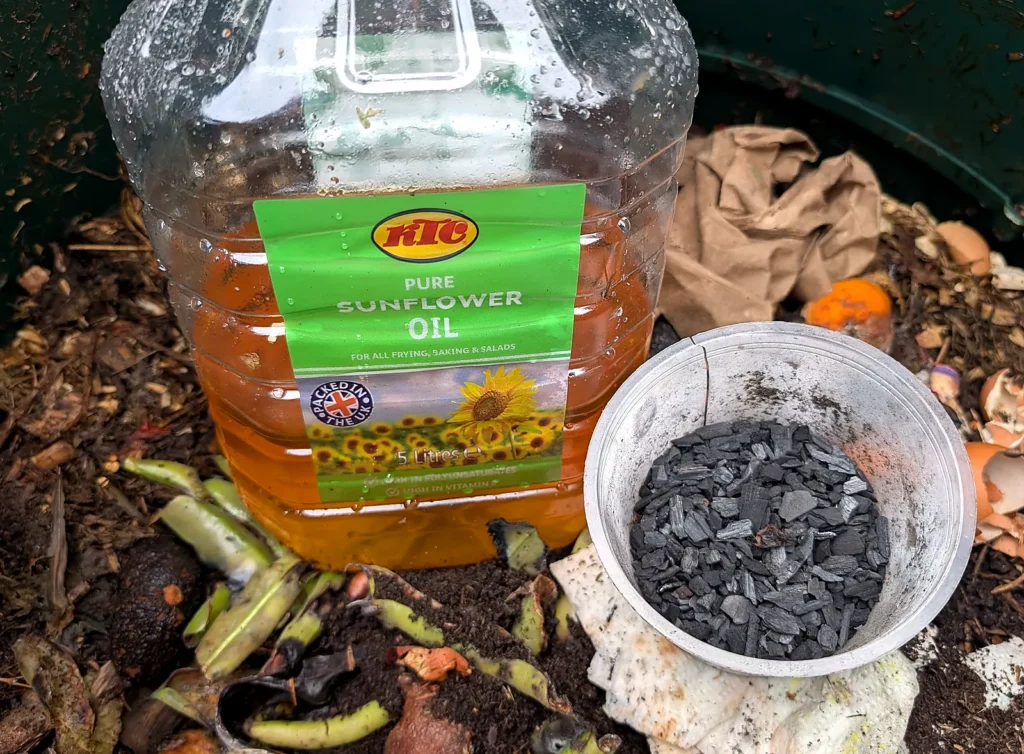
The study was published in Scientific Reports, a peer-reviewed journal, and looked at composting in a controlled, aerated system. The researchers used a mix of manure and vegetable waste, then tested different combinations of additives, including:
- Used cooking oil
- Biochar
- Compost inoculum (a microbial starter)
- Controls (no additives added)
They monitored temperature, decomposition, and gas emissions throughout the process, comparing how each treatment performed.
Compost in 10 days!
The study was published in Scientific Reports, a peer-reviewed journal, and looked at composting in a controlled, aerated system. The researchers used a mix of manure and vegetable waste, then tested different combinations of additives.
The most striking result came from combining biochar (added at around 10% of the mix) with used cooking oil (200ml per batch of roughly 3–3.5 kg of compost material).
That led to:
- Significantly increased temperatures (peaking at over 66°C)
- A prolonged thermophilic (hot) phase
- Extremely low methane emissions once biochar was added
- Pathogens were fully killed in one week
- Compost “maturity” in around 10 days (more on that in a bit)
There are clear similarities with the earlier Japanese study, particularly the increase in temperature and the reduction in emissions.
Some caveats to the results
I think there’s a lot for us to learn from this study, but there are some caveats.
First, the researchers’ definition of compost maturity is different from how most home composters think about it. In the study, maturity is based on process indicators like temperature – whereas most of us care about when compost is actually ready to use.
Secondly, the batch size was tiny (around 3–3.5 kg), which makes the conditions very different from a typical compost heap.
Finally, the composting took place in a controlled, aerated reactor – very different from the more variable conditions in a home
Lessons for home composters
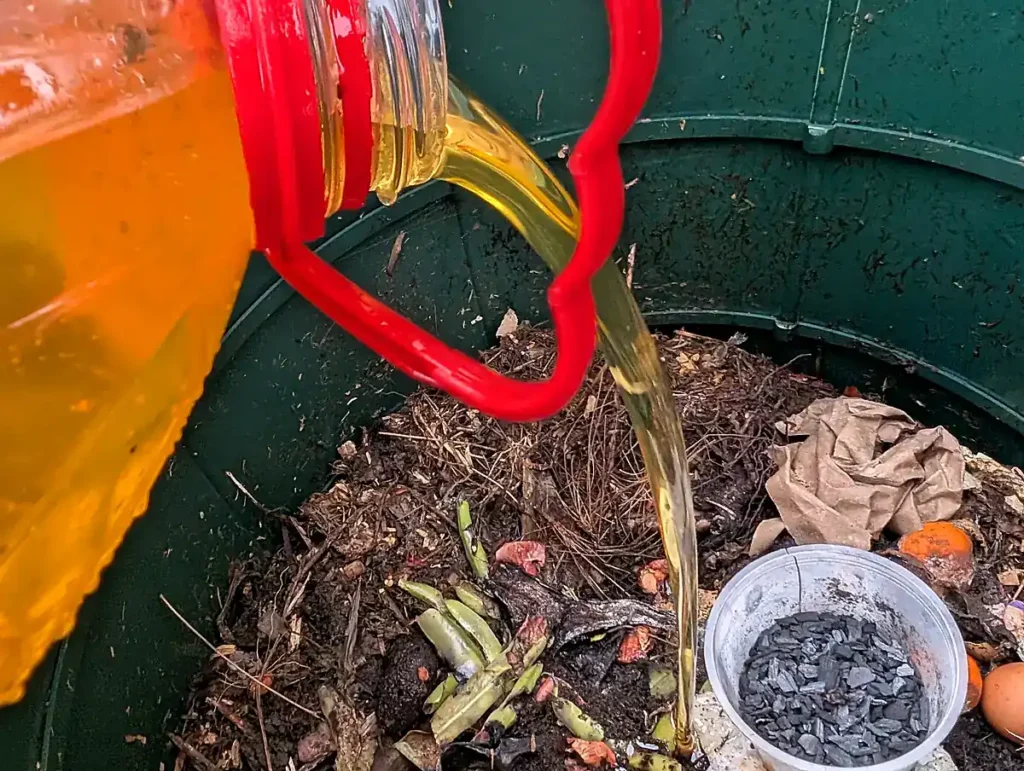
That said, the experiment builds on existing research. Here are my takeaways
1. Cooking oil isn’t necessarily the problem it’s made out to be
This study adds to the idea that small amounts of oil don’t automatically ruin compost – and may have benefits under the right conditions. I’d still be cautious about adding large amounts – but small quantities are likely better composted than thrown away.
2. Biochar may work well with cooking oil
We already know about the benefits of biochar with compost – it’s well researched and widely used in composting systems. That doesn’t mean you have to rush out and buy or make some – you can make perfectly good compost without it. But if you do want to optimise your composting, it’s a good ingredient to include.
3. Conditions matter too
The study utilised careful control of conditions such as moisture and mixing to encourage airflow and bacterial breakdown.
There’s no point experimenting with cooking oil or biochar unless you have the basics right first. Without good airflow and balance, they could just as easily make things worse.
Source
Mitigating greenhouse gas emissions and enhancing composting efficiency using biochar, used oil, and compost inoculum amendments. Scientific Reports (2025) https://www.nature.com/articles/s41598-025-21144-w