Affiliate Disclosure: GEME sent us the Terra II free of charge to test. They had no say over what we wrote, and everything here reflects our own experience with it. This review also contains affiliate links. If you purchase through these links, we may earn a small commission at no extra cost to you. This helps support our testing work.
I didn’t always have a large garden. For five years I lived in a high-rise apartment – a frustrating time for someone who loves gardening but had little opportunity to do so. Needless to say, composting was also out of the question.
However, if you live in an apartment, or a house without a decent garden, you’ll find that’s no longer the case. Modern composters promise to quickly and efficiently break down waste – and a handful even produce usable compost.
For the last few weeks I’ve been testing one of these – the new GEME Terra II. While it’s early days (a full test takes months, not the four weeks I have been using it), here’s what I have found so far.
Prefer to watch? Here’s my full video review:
The GEME Terra II works fast, makes actual compost and has lower running costs than competitors. It performed well in our tests, handling kitchen waste including meat and thick sauces. It could even handle small bones - although this took a while.
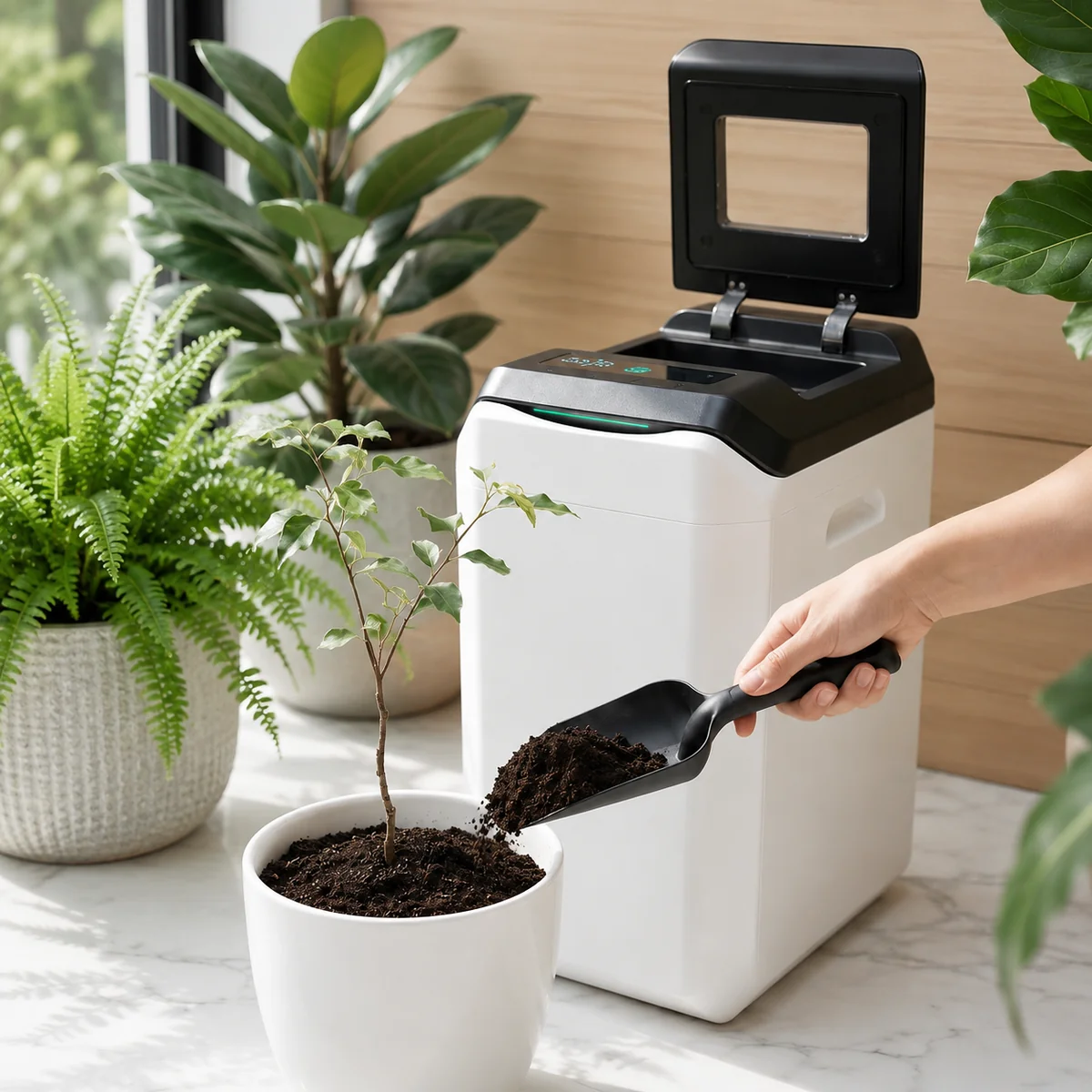
Buying one? We blagged Compost Magazine readers 5% off. It comes off automatically at checkout when you use our link.
Key specs
| Daily capacity | Up to 2kg/day |
| Chamber | 14L, continuous-feed (add waste anytime) |
| Cycle time | 6–8 hours (manufacturer claim) |
| Operating temperature | 45–55°C |
| Noise | ≤35–40 dB (manufacturer claim); we measured 50.3 dB |
| Dimensions | 11.7″ x 17.2″ x 22.3″ (W x D x H) |
| Weight | 13kg / 28lbs |
| Voltage | 110V (US/CA) or 220V (EU/UK/CH) |
| Filter | Permanent metal-ion (no charcoal refills) |
🌱 You’ll love this if: You’re fed up with leaving food waste in a box for a week waiting for it to be picked up. Instead, you want a clean, efficient (and worm-free!) way to deal with kitchen waste. You also like the idea of making actual compost which you can use with house plants or in a very small garden.
Skip this if: You’re on a budget – after all, there are cheaper ways to make compost such as using a worm bin or cardboard box composting. (Note that you can buy a lot of compost for the price of a GEME.) Also skip if you’re looking for a system that can make enough compost for a proper veg patch – the GEME won’t make enough to make a difference.
How does it work?
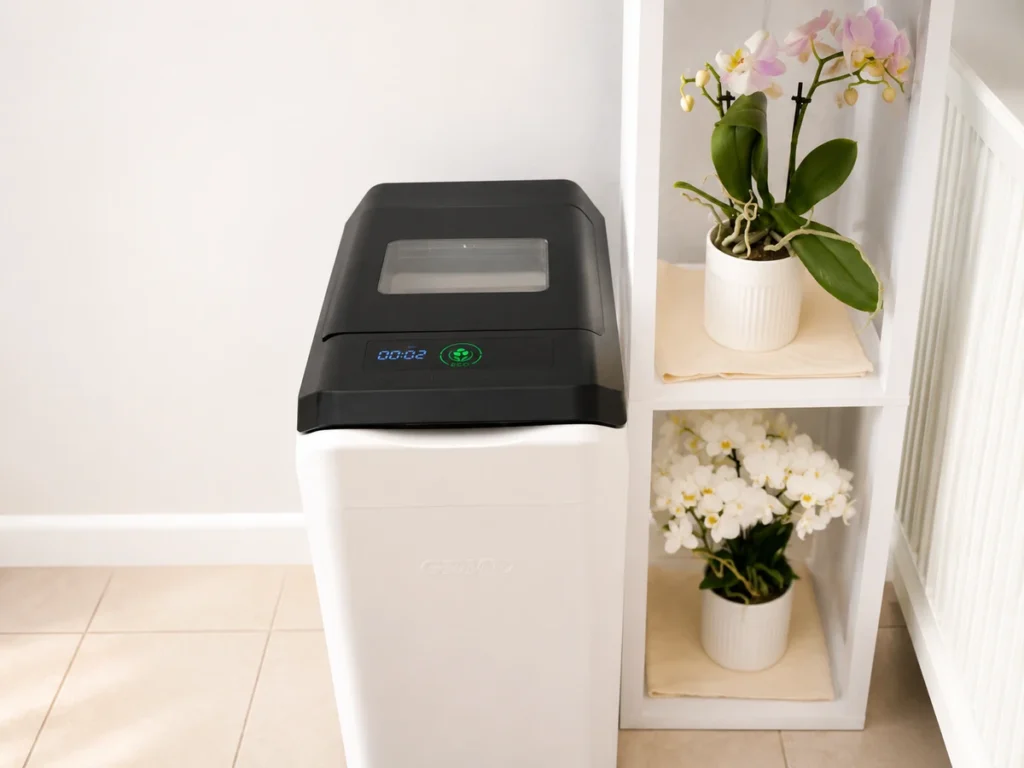
Effective composting requires a number of elements – aeration (often introduced via mixing), a warm environment, the right moisture levels, microbes etc. I have since interviewed GEME’s Chief Environmental Scientist about what happens inside the machine, in what is really happening inside an electric composter.
The GEME Terra II uses technology to recreate this perfect environment. An internal, insulated chamber provides warmth, a paddle constantly stirs the material, and starter material (called Kobold) provides a balance of microorganisms to aggressively break down material.
The starter material also contains high-carbon, high-lignin material. These provide the essential balancing component to high-nitrogen kitchen waste, while the lignin ensures the material doesn’t break down too quickly. GEME tell me that the starter material also contains moisture-regulating elements which help avoid the material getting too dry or too wet.
A key differentiator is the use of sensors to vary the environment depending on the conditions. When you drop in a large amount of waste, the GEME rapidly increases the temperature to reduce moisture and to activate the heat-loving bacteria in its mix. As the moisture stabilises and the material breaks down, the heat reduces to its 45–55°C incubation baseline.
And does it work?
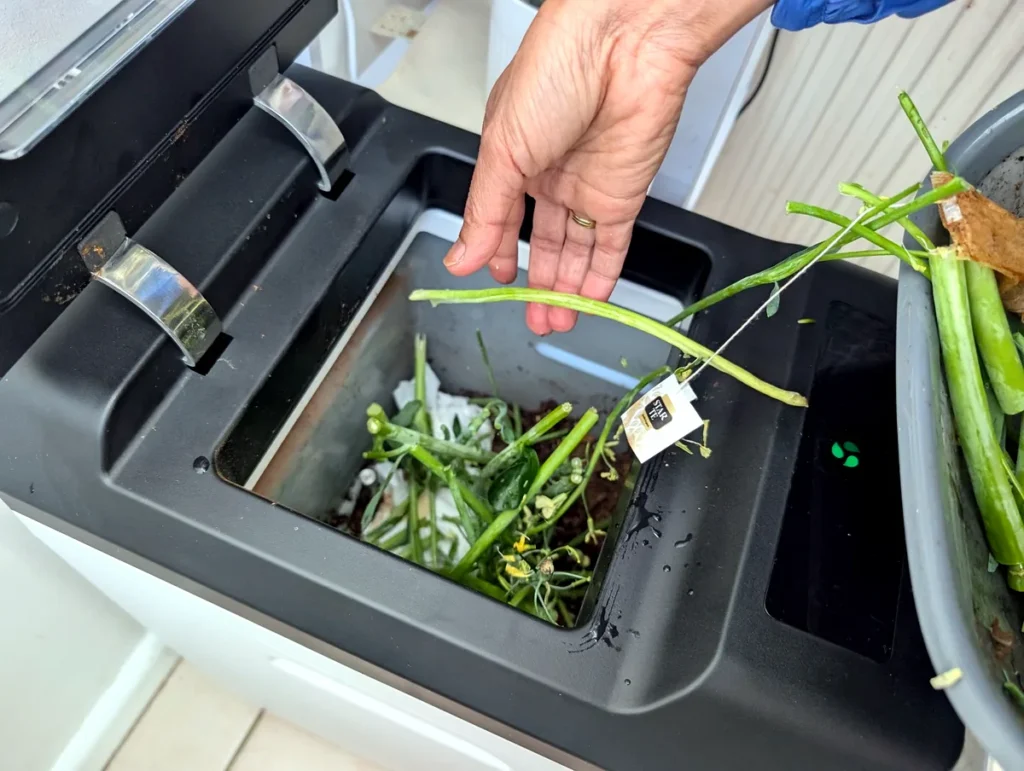
Yes, the bin quickly and effectively breaks down most food waste material. Typically I added material in the evening after dinner – when I checked in the morning, the material was usually indistinguishable from the rest of the compost material.
When I made a more deliberate test, I added virtually all of our kitchen compost bins’ material to the bin, and four hours later the material was mostly indistinguishable from the rest of the material.
That said, note that while GEME states it can break down material in 6-8 hours, the exact time depends on what you are composting.
A whole apple, for example, was still just visible 24 hours later – albeit much diminished in size and changed in colour. Paper towels seemed to take a few days, probably because of their high lignin content.
I found leftover veg and meat broke down quickly. Small bones were the longest to break down, still visible days after composting. Note, however, that bones are one of the most challenging things to compost.
Here’s what the full process looked like after I added 1.7kg of mixed food waste – including a whole sweetcorn!
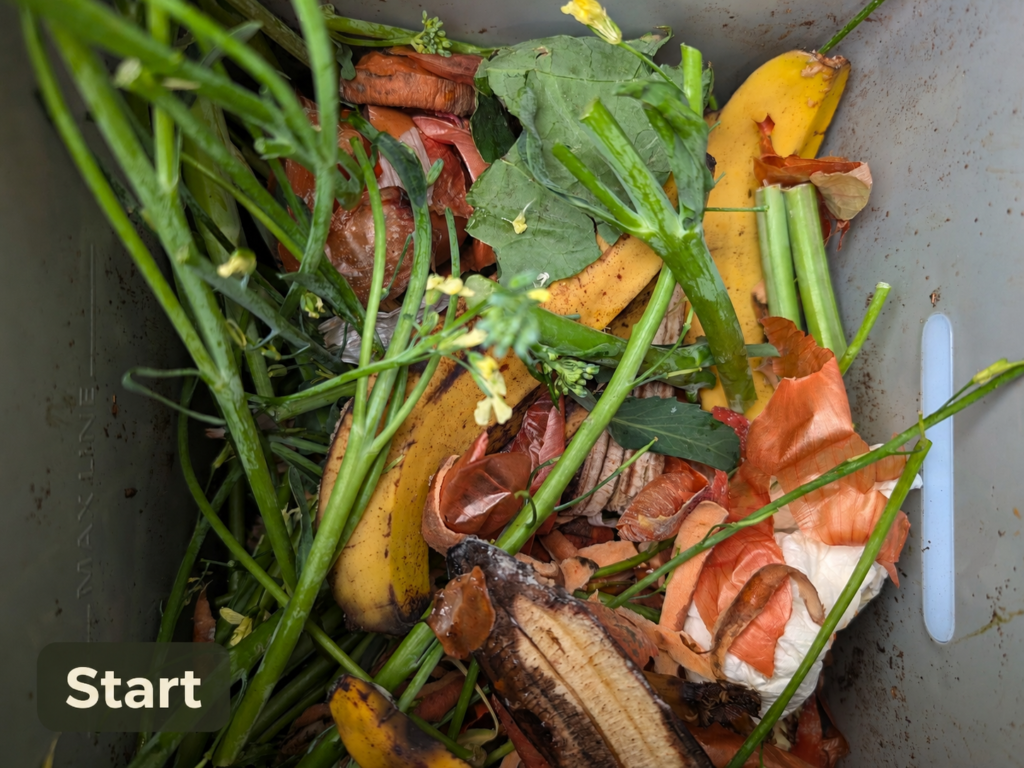
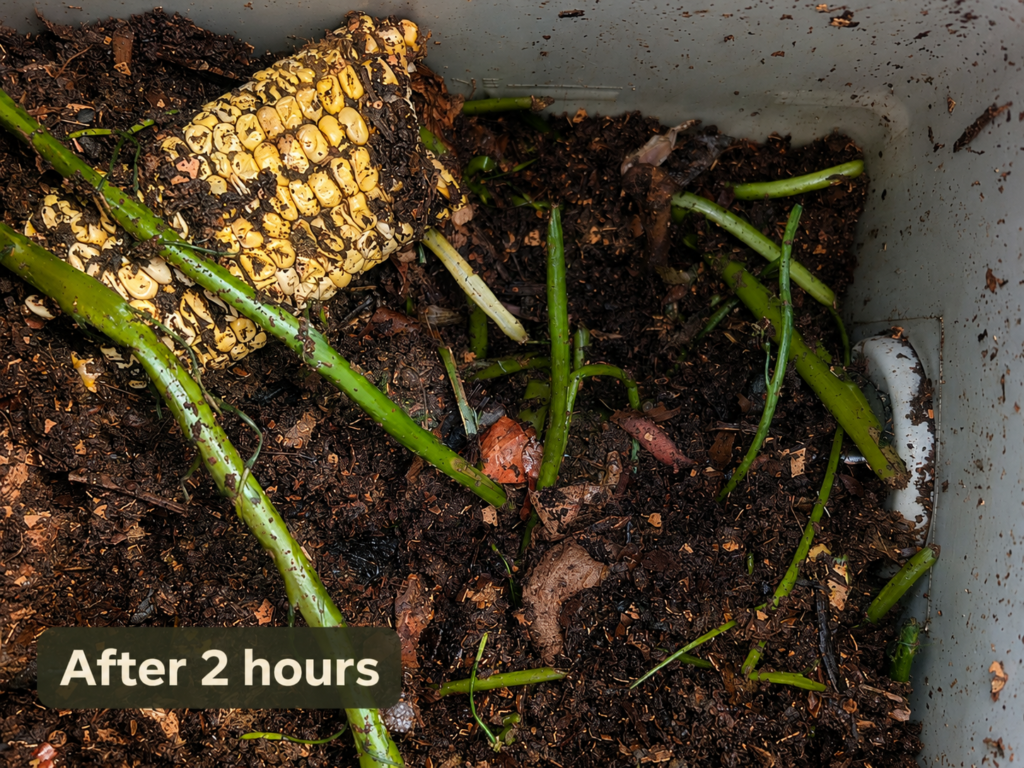
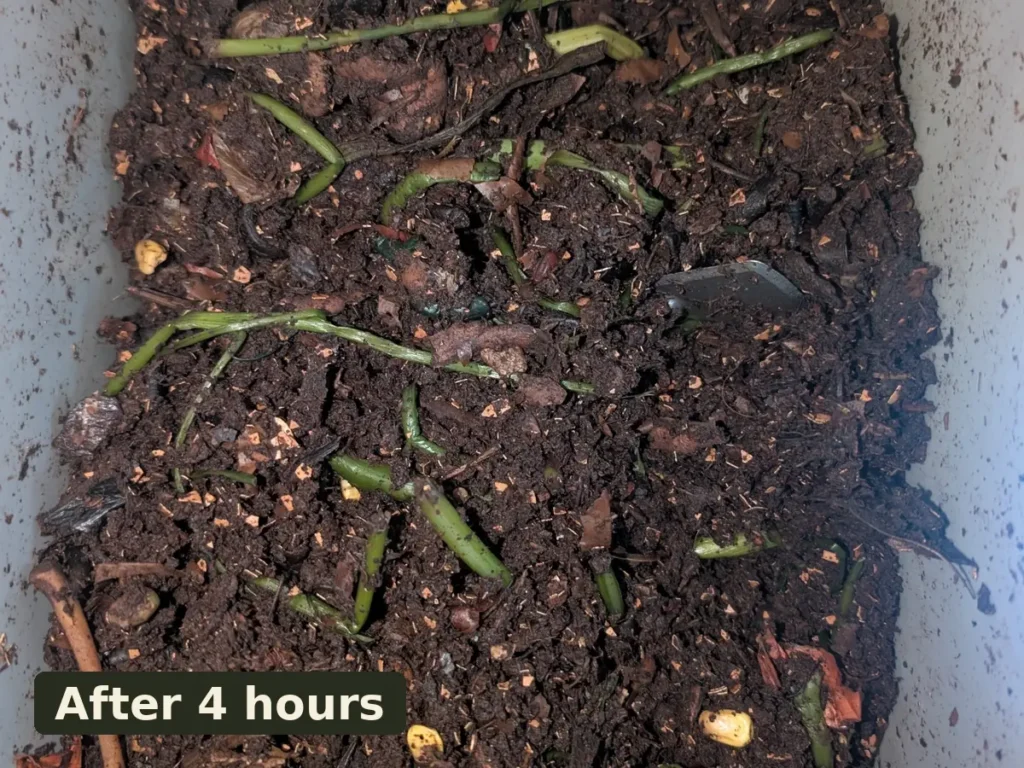
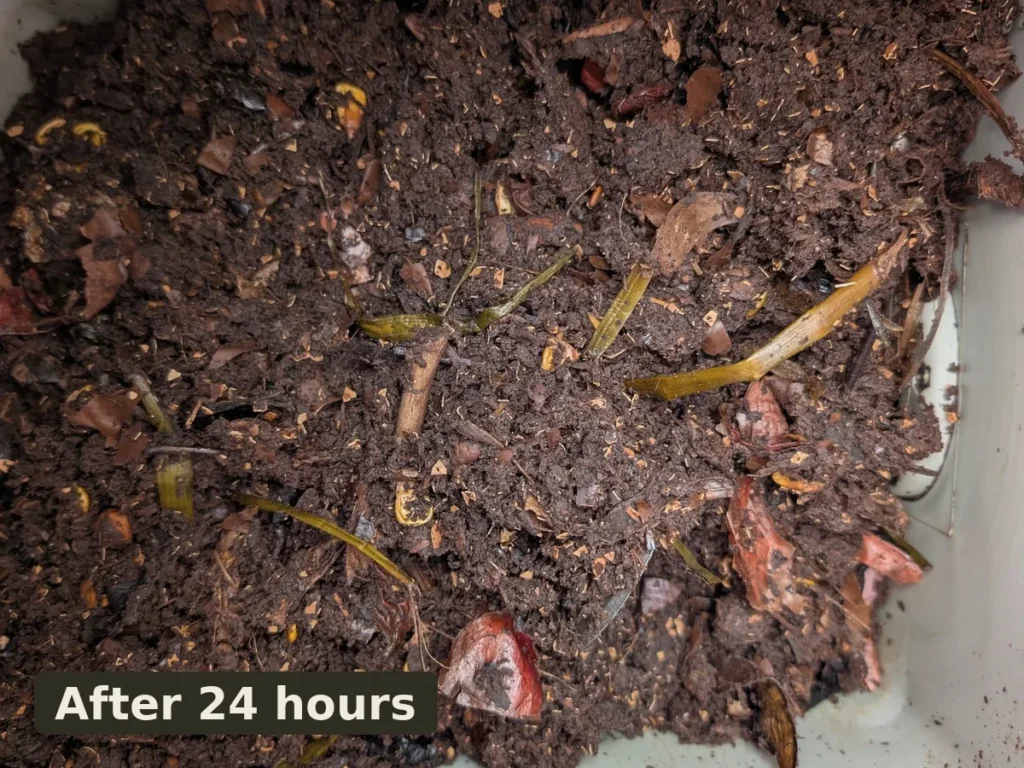
The finished output looks like compost, and GEME have had samples analysed by Eurofins, who classified the output as compost under the relevant Dutch Fertilizers Act composition requirements. Key reported values included high organic matter content on a dry basis, measurable N-P-K nutrient content, and a mildly acidic pH.
That said, do see the warning at the bottom of the article about using fresh compost.
How much electricity does it use?
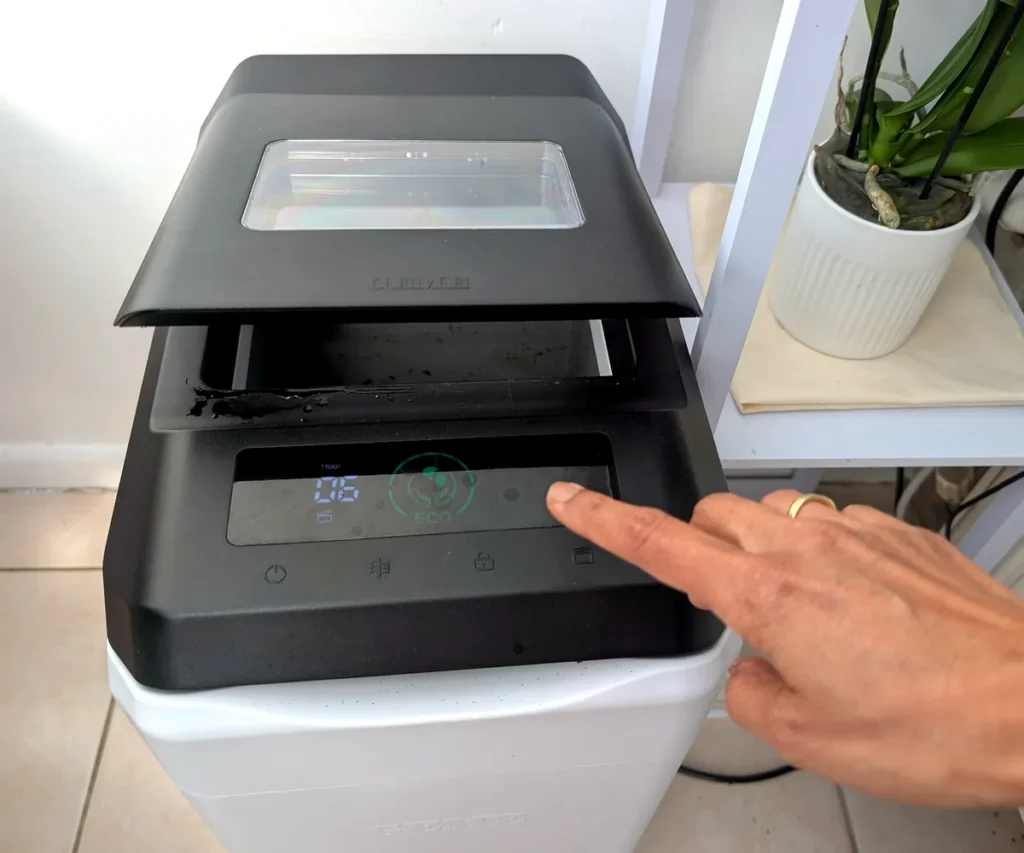
Because it doesn’t run on high heat all the time, but instead uses sensors to maintain temperatures that are ideal for bacteria, the Terra II is more efficient hour-per-hour than dehydrators. But on the other hand, dehydrators can be turned off, whereas the GEME would ideally be left on constantly.
Under normal conditions, GEME tells me, the device will use around 1kWh per day. That’s similar to running a laptop continuously for 24 hours, or running a typical microwave for around an hour.
Where I live in the UK, with our sky-high electricity costs, that works out at roughly 26p a day (assuming about 26p per kWh) – or around £8 a month. In the US, where prices vary hugely by state, it would cost you an average of about 17¢ a day.
(Do note this is just to give you an example. Electricity rates constantly change – ours are going up again later this year 🙁 so treat this as very rough.)
If you’re looking to reduce your impact on the environment, and your energy is not from renewable sources, you should look at other methods of composting.
What other ongoing running costs are there?
If you want to use more of the starter material, which contains the microorganisms, you’ll need to pay out £29.90 for a pack – or £89.90 for a year’s supply.
Now, that’s substantially cheaper than some other electric composters. What’s more, as we mentioned in the pros, the filter is washable and removable, which significantly reduces long-term costs.
However, I’m the sort of gardener who repurposes yoghurt containers as plant pots and pallet bins as
Buying one? We blagged Compost Magazine readers 5% off. It comes off automatically at checkout when you use our link.
Will it fit in a small kitchen?
I first tried to put the GEME on our counter, but at 22 inches tall its height meant that would make it awkward to tip waste into it. We eventually had to move things around on the floor to make room for it.
(Note the photos here are not its actual place – we only moved it there because the lighting was better.)
The verdict
Would I buy it?
No. Not now. I have a large garden and use multiple compost methods, and I have multiple, lower-cost ways to create large amounts of compost.
But if I didn’t have a garden, I did have the budget, and I wanted a quick, efficient way to get rid of food waste – AND have the added bonus of getting actual compost instead of the dry, dehydrated waste created by many other electric ‘composters’?
Then yes, I absolutely would.
The GEME Terra II works fast, makes actual compost and has lower running costs than competitors. It performed well in our tests, handling kitchen waste including meat and thick sauces. It could even handle small bones - although this took a while.
Buying one? We blagged Compost Magazine readers 5% off. It comes off automatically at checkout when you use our link.
Still weighing it up against the Reencle? I’ve compared the two side by side in our guide to the best electric composters.
Own one of these? Tell us what it's really like →
Full pros & cons
Usage tips
- Getting started. After adding the compost starter and 500ml water for the first time, the sign indicating it needs water may come on. You don’t need to actually add more at this stage – just allow time for it all to mix in, and the water message will blink off.
- Usage. When you need to open it, just tap the open button. If you hold it longer, it won’t do anything. That’s not an error – the product is designed to change modes when you long-press the button.
- Finished compost. All electric composters seem to promise you can use your compost immediately. However, fresh compost is phytotoxic, meaning it can damage plants. That’s why you typically leave compost to mature for several months before using it with plants. GEME claims their compost is fully ready, but recommends mixing it with eight parts soil rather than using it directly. If you follow their instructions your plants will probably be fine, as the fresh compost will be too diluted to cause any harm, and it will add long-term benefits. If you want to use it as pure compost, I’d still leave it to mature first.
Technical details & specifications
See the full specs
What’s in the box
- 1x Terra II bio-composter unit
- 1x GEME-Kobold microbial starter pack
- 2x custom soil scoop
- Permanent filter (pre-installed)
- Power cable with regional plug
- Quick start guide and user manual
Technical
- Dimensions: 11.7″ x 17.2″ x 22.3″ (W297 x D437 x 566mm)
- Daily capacity: Up to 2kg/day
- Weight: 13kg / 28lbs
- Voltage: 110V (US/CA) or 220V (EU/UK/CH)
- Purification: Metal-ion oxidation, no filter replacements
- Acoustics: ≤35–40 dB (vibration optimised)
- Cycle: Continuous; clean every 2–6 months
- Regional plug options: US, EU, CA, UK, CH
- Warranty: 12 months
Related posts
- Are electric composters worth it?
An honest look at whether these machines earn their high price tag – and when a cheaper method makes more sense. - Reencle Food Waste Composter review
Another continuous-feed electric composter with a live microbial culture – see how it compares. - Kitchen composting guide
Everything you need to know about dealing with food scraps indoors, electric composter or not. - DIY worm composting bin
The low-cost, low-energy alternative I mention in the review – build your own for a fraction of the price.