Finding a
Then it gets complicated. I mean, do you want an insulated bin or a budget plastic model? Are you thinking about indoor or outdoor? If indoor, do you want to make actual compost or just store it to take outside?
And what about the promises? Some bins promise compost in 21 days – a claim which is just not true. Others claim to be rodent proof – a claim which is only sometimes true.
After decades of composting – and seven years of testing and writing about compost bins for CompostMagazine.com – I hope that I’ll be able to steer you through the minefield and help you choose the best bin for your budget and needs.
Quick Comparison
| Type | Best For | Price Range | Our Top Pick |
|---|---|---|---|
| Budget Outdoor | Large volumes, tight budget | ~$40 | GEOBIN |
| Wooden Outdoor | Natural design, aesthetics | ~$100+ | Greenes Cedar |
| Hot Composting | Year-round hot composting | ~$100+ | Green Johanna |
| Kitchen Bins | Daily scrap collection | $20–60 | Utopia Kitchen |
| Tumblers | Accessibility, bad backs | $100–600 | Joraform JK270 |
| Worm Bins | Apartments, indoor use | $60–150 | VermiHut |
Best Outdoor Compost Bins
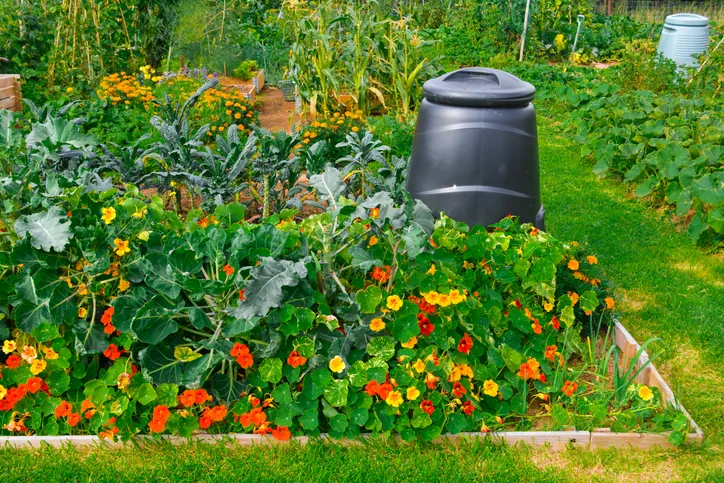
Outdoor compost bins are where real composting happens. My favourite compost bins are insulated and ensure good airflow, as these help heat compost material up faster. However, you usually have to pay extra in order to afford these.
Budget Option: GEOBIN
Simple, affordable, and great for big batches of yard waste. Adjustable size up to 246 gallons, ideal for leaves and grass clippings.
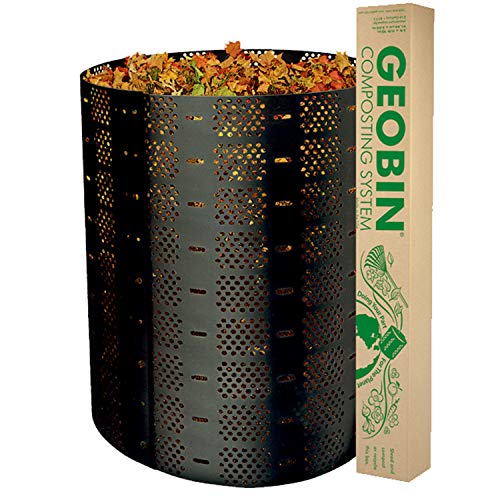
If your priority is capacity and price, the GEOBIN is hard to beat.
I put mine together in about five minutes thanks to the keyhole slots which you just slot in and twist. (One tip: stretch the material out flat first to make assembly easier.)
The heavy-duty plastic holds up well, and I love that you can adjust the size to match your needs. (Hint: A smaller, full bin composts faster than a big half-empty one, so this flexibility is genuinely useful for managing seasonal volumes of leaves and garden waste.)
It’s not insulated and it won’t win design awards, but for a cheap, no-fuss bin that handles large piles, it does exactly what it promises.
You’ll love this if: You need to compost large batches of yard waste on a tight budget.
Read our full review of the Geobin.
Greenes Fence Cedar – Natural Wooden Design
A natural cedar compost bin that looks great and breathes well. Rot-resistant, easy to assemble, and expandable for larger composting setups.

Why we chose this bin
The Greenes Fence Cedar
Cedar’s natural oils resist rot and insects, so it stands up well outdoors for years. A quick coat of wood oil or sealant each season helps preserve its color and longevity. If you want a
You’ll love this if: You want a
Green Johanna – Great Hot Composting Option
A Swedish-designed, award-winning hot composter with excellent airflow and a conical design that promotes heat. Capable of hot composting through cold winters when used with the optional insulating jacket.

Why we chose this bin
The Green Johanna comes with thin walls compared to some of its competitors – but don’t be fooled. Designed in Sweden and made from recycled HDPE plastic, these walls can withstand freezing conditions in winter, hot sun in summer – and in my testing, compost materials reached 60°C (140°F) in two days.
The compost jacket is a neat idea, allowing extra insulation to be added in winter and removed in summer – although I don’t like the fact you have to buy it separately. The bin is designed to be rodent proof, and so far my test bin has been rat free, despite the addition of some tempting food.
The only reason I haven’t added this to my top picks is the price – which seems on the pricey side for a plastic bin, particularly in the USA. The performance justifies it for serious composters, but it’s worth knowing before you buy.
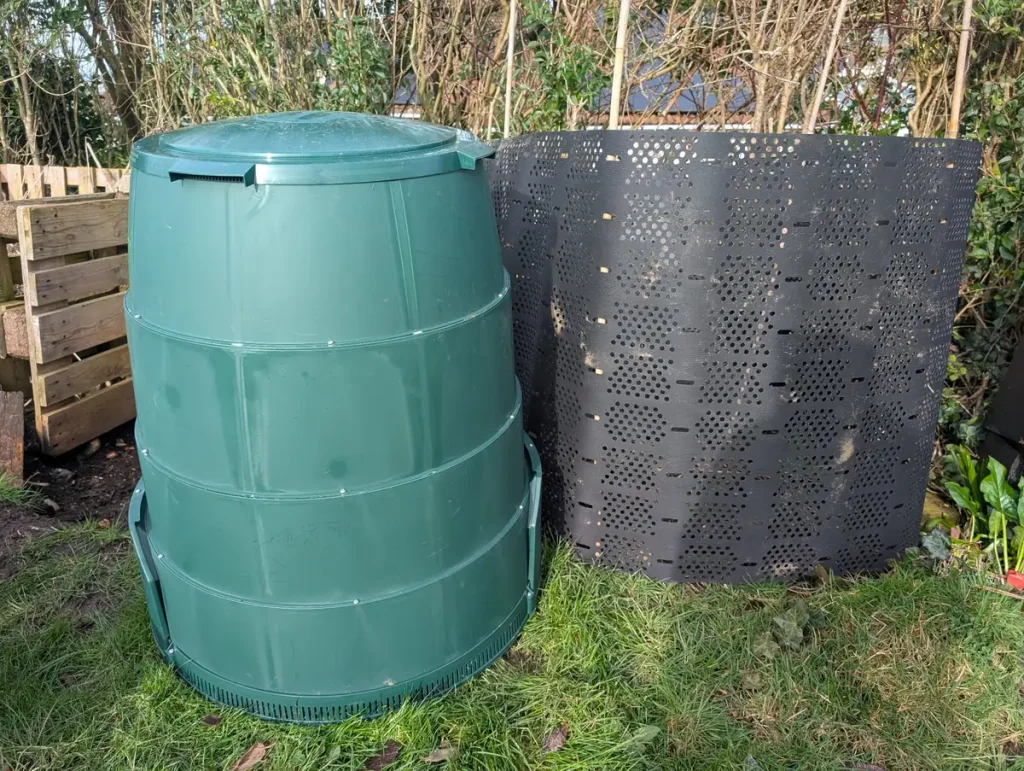
Want to know more? See my full Green Johanna review.
You’ll love this if: You want to hot compost material that would be challenging in a regular bin – even if it’s snowing outside!
Want More Options?
See our complete guide to outdoor compost bins with full comparisons and alternatives.
DIY Budget Alternatives
Want to save even more? You can build effective outdoor bins from common materials:
Pallet bin: Free materials if you can source pallets. Takes 1-2 hours to build. Great airflow. See our pallet compost bin tutorial.
Wire mesh bin: Under $30 in materials. Fastest composting due to maximum airflow. Best for garden waste. Build a wire bin in 30 minutes.
You’ll love this if: You’re handy, on an ultra-tight budget, or dealing with large volumes of garden waste.
Best Kitchen Compost Bins
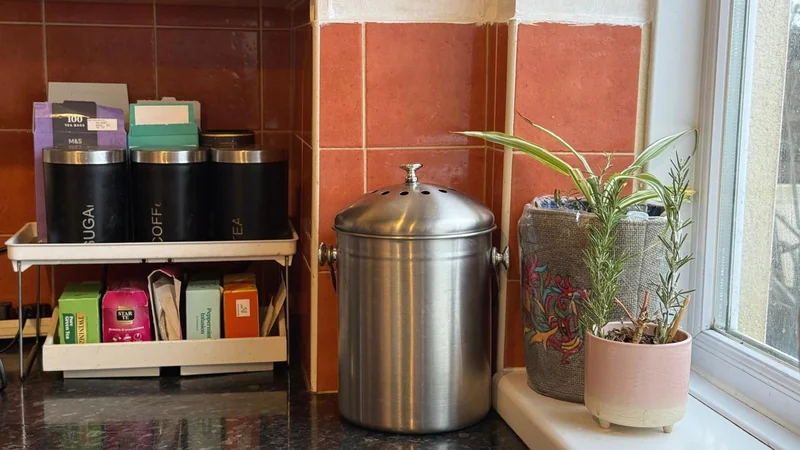
Most kitchen compost bins don’t actually make compost.
They collect your daily food scraps before you take them to an outdoor bin, municipal pickup, or worm system. Because they sit on your counter, odor control matters. So does appearance.
Most hold 1–1.5 gallons and use charcoal filters to manage smells.
Our Favorite Overall: Epica Kitchen Compost Bin
Solid stainless steel countertop compost bin with excellent odor control, a clean, attractive design, and an effective charcoal filter that copes well even with cooked food scraps.

We originally featured the Utopia here, but we’ve switched over to the Epica due to repeated out of stock issues.
Like the Utopia, this caddy looks fantastic comes with an effective charcoal caddy for odor elimination – and in contrast to the Utopia, our stainless steel option went through the dishwasher unscathed.
Capacity: 1.3 gallons
Material: Stainless steel
You’ll love this if: You want a countertop bin you don’t have to hide.
Best Value: OXO Good Grips Easy-Clean Compost Bin
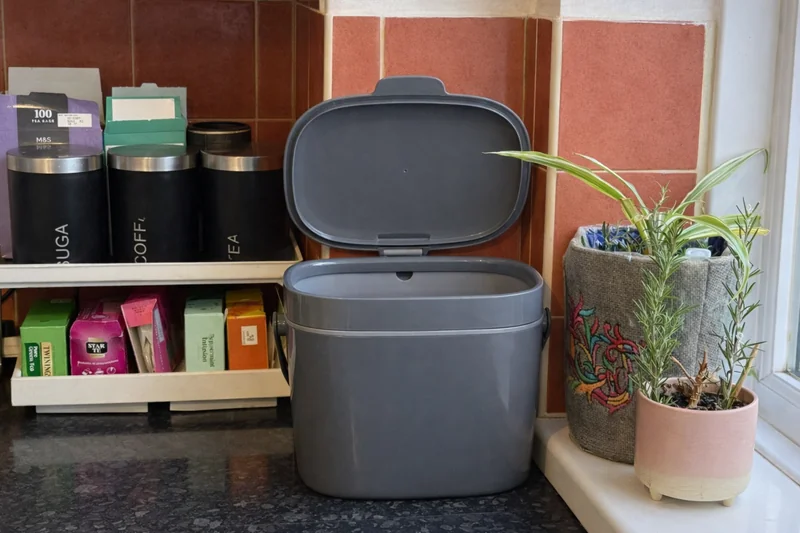
When my wife or I are cooking at speed, we care more about usability than looks! And the Oxo won us over with its always open lid.
Unlike the Utopia, it doesn’t have a charcoal filter, so you’ll want to empty it more frequently in summer — but it’s sturdy, practical, and well designed. (Plus, you don’t have to replace the charcoal filters!)
You’ll love this if: You want everyday convenience at a sensible price.
Want More Options?
See our complete guide to the best kitchen compost bins.
Best Electric Composter
Most kitchen bins are just collectors.
If you actually want to produce compost indoors, that’s a different category entirely. The Reencle Electric Composter is the only one we’ve tested that produces real compost rather than just drying waste — but it’s significantly more expensive.
Read our full Reencle review here.
Best Compost Tumblers
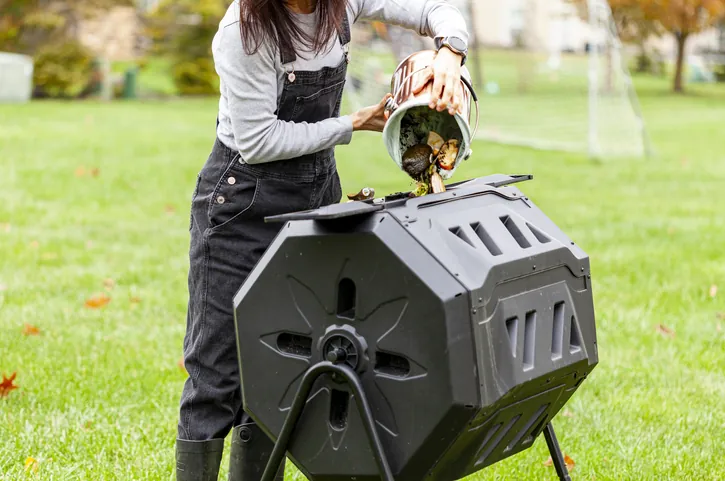
It’s often claimed that tumblers create compost faster than compost bins or heaps because they introduce more air.
That’s usually an exaggeration, as testing has shown that a regularly turned bin or compost heap beats a
That said, if you do find forking over a compost heap or bin a pain, a good
Joraform JK270 – Best Premium Insulated Tumbler
Premium Swedish-designed dual-chamber tumbler with thick insulation for hot composting. Galvanized steel construction built to last. Ideally use with weather protection.
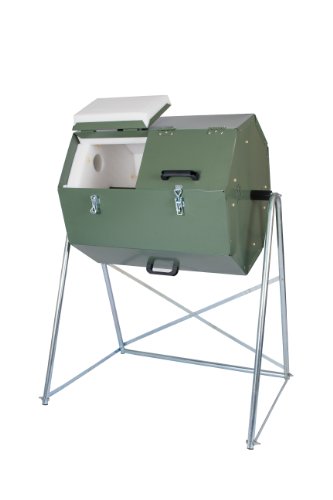
For those seeking premium performance, the Joraform JK270 is the standout.
This Swedish-designed
It’s expensive. But it’s built to last.
Capacity: 9.5 cubic feet (dual chamber)
Material: Insulated galvanized steel
You’ll love this if: You want serious hot composting performance in a sealed, rodent-resistant unit.
More Affordable Alternative
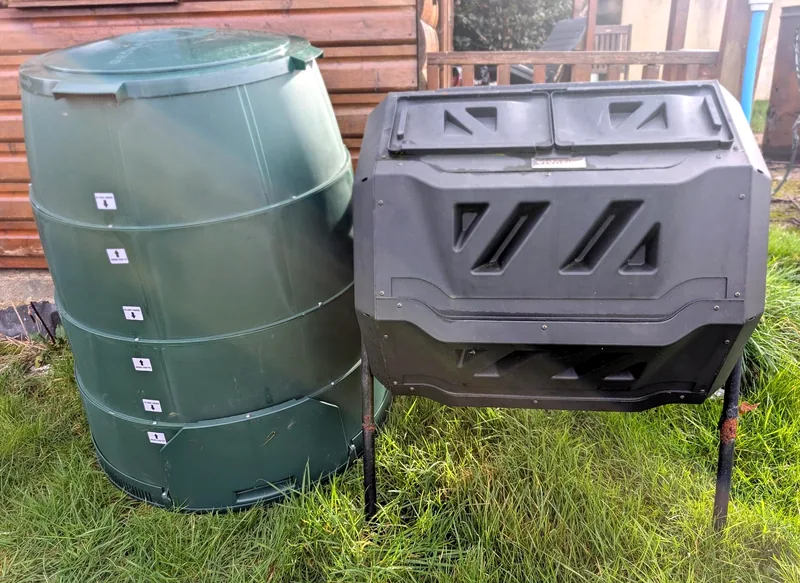
If the Joraform feels like overkill, a dual-chamber plastic
See our full Vivosun tumbler review.
Best Worm Composting Bins
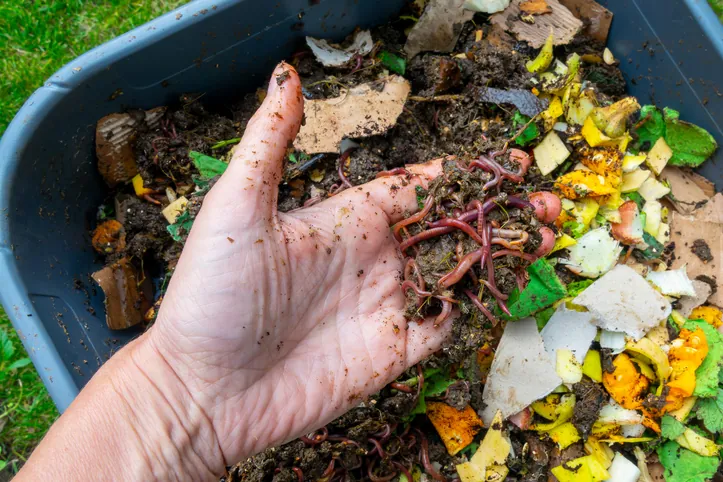
Strictly speaking, worm bins don’t produce compost – they produce worm castings. This is not the same as compost – it’s a powerful amendment which is best mixed with regular soil or compost. I’ve actually split tested worm compost against regular compost and the results have been amazing – but don’t use it for seeds, as it’s too strong.
It’s easy to make your own worm bin, but if you prefer to buy one, here’s what I recommend:
Top Pick: The Vermihut
Needs to be used under shelter. However, has excellent airflow, is exceedingly easy to use and can be put together in minutes.
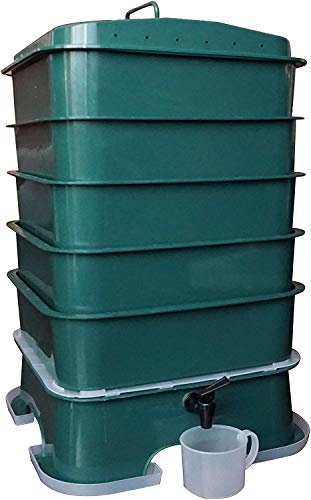
Kept in a sheltered spot, such as a a garage or shed, the VermiHut Plus is an excellent option. The airflow is noticeably better than my homemade systems, which makes moisture management much easier. I also like the ant-prevention leg design and the stackable trays, which are lighter and simpler to manage than a basic tub setup.
That said, this isn’t a bin for exposed outdoor conditions. The walls are thin and there’s no insulation — it needs protecting.
You’ll love this if: You want an easy-to-assemble system with excellent airflow, kept somewhere sheltered like a garage or shed.
See our full VermiHut review.
What we’ve dropped – and why
HotBin: I’ve used the HotBin for years now, and it is an effective hot composter. However, I’ve been disappointed with the durability of the bin – the outer panels now have chunks missing out of them. Full review.
The Utopia: I love the aesthetics of the Utopia — it came with two charcoal filters instead of one, which is a nice touch. But it keeps dropping in and out of stock, and the paint on ours chipped in the dishwasher.
The Epica looks and performs much the same, and the stainless steel version passed our dishwasher test — so we’re recommending that instead. If the Utopia is in stock and you don’t mind hand-washing it, it’s still worth considering.
The Algreen: The Algreen is a great hot composting option for the USA (sadly, it’s not available in the UK) but it seems to be in and out of stock like a yo-yo. We’ve removed it for now to reduce frustration for readers but if it is available, it’s worth considering.
What we’ve recently considered:
simplehuman Compost Caddy: I love the minimalist design and superb engineering of the simplehuman, even if it does look a bit over-designed for my messy country kitchen. However really it’s designed to be attached to a full simplehuman bin, and the aperture is a bit narrow for throwing food in at speed. If you already have a simplehuman bin and/or a super-smart kitchen, this could be worth considering. Full review.
MBillion: My wife asked me if we could try a hanging compost caddy – and she loves it! It easily attaches to the back of a cupboard door, and it comes with a neat design that allows for one-handed opening – and then drops neatly down to the front of the bin. The only thing putting me off adding is that Amazon labels it as having high returns. Full review.
Budget DIY Alternative

Not ready to invest in a commercial system? You can build a simple, effective, multi-stage worm bin for under $20 very cheaply using plastic storage containers.
Drill ventilation holes, add bedding and introduce red wigglers. Setup takes about an hour.
See our full DIY tutorial.
You’ll love this if: You’re on a tight budget or just getting started.
To understand why worm castings are so powerful, read The Magic of Worm Castings and How to Use Them.
Meanwhile, these options will get you started with successful worm composting. The principles are the same regardless of which system you choose.
How to Choose the Right Compost Bin
Quick Decision Guide
Apartment/balcony? → Kitchen bin + worm bin
Small garden? → 30-40 gallon bin or tumbler
Large garden? → Three-bin system or 80+ gallon bin
Speed priority? → Jora JK270 or Algreen Soil Saver (insulated)
Budget priority? → DIY pallet bin or Geobin
Limited mobility? → Tumbler or lazy composting
By Living Situation
Apartment / No Outdoor Space
Choose a kitchen
Small Garden
A 30–40 gallon outdoor bin works well. Tumblers are great if you want convenience. A submerged DIY worm bin can also work.
Pair with a kitchen bin for convenience.
Large Garden
Choose 80+ gallons or multiple bins.
Many serious composters use a three-bin system – one filling, one cooking, one finished. Here’s my three bin system for a combination of effectiveness and ease.
By Priority
Speed Matters
For fast compost, you need the right mix of materials, correct levels of air and moisture and good insulation.
While many bins and
Insulation: In large compost piles or bins, the outer layers insulate the inner layers. For smaller quantities, insulated compost bins or tumblers can replace this. They can also enable hot composting to take place in cooler temperatures.
Aeration: A good bin will help funnel air through the compost, while a
Protection: By keeping out water, tumblers and bins can avoid compost getting overly wet, which can lead to slow decomposition and bad smells.
In short, for speed choose a good insulated bin like the Jora or the Algreen.
Full breakdown: How Long Does It Take to Make Compost?
Budget Matters
Expensive insulated bins and tumblers may be the best option for speed, but you don’t need to spend a lot of money to make compost.
Kitchen bins: If looks don’t matter and you can empty regularly, any plastic container will do at a pinch.
Compost bins: Choose the Geobin, or make your own pallet or wire fence bin.
Physical Ability Matters
I’ve always thought that a good compost turning session beats the gym! (At least, until I injured my shoulder!)
That said, turning is not essential, as you can:
- Use a well aerated bin with added bulking material.
- Use a compost aerator to introduce oxygen with reduced effort.
- Or use a compost
tumbler .
Here are some more ideas for low-effort composting.
Pests Are a Concern
Compost bins are warm, dark and full of food, which can attract rats.
Still, the reality is that we’re never that far from a rat – and the good news is that the composting process is very good at destroying disease and pathogens. But if you’re concerned about a rat infestation, try:
- Hot composting
- Wiring off any gaps around and under your bin
- Using a compost
tumbler
For more information, see: Rats in your compost? Here’s what to do?
By Material Preference
Plastic bins: Affordable, lightweight and weather-resistant. Look for UV-stabilized plastic to prevent cracking over time.
Wooden bins: More attractive and breathable. Cedar and redwood last longest. Typically more expensive, unless you make a pallet bin. See our wooden compost bins guide.
Metal bins: Very durable and often rodent-resistant. Can heat up significantly in full summer sun. Usually the most expensive option unless you buy a metal garbage bin and adapt it your needs.
Conclusion
As we’ve seen, there’s no single right bin for everybody. Instead, choose the system that fits your space, budget – and back!
And if you’re just getting started, don’t feel you need to go big. A small, full, well-managed bin will perform better than a large, half-empty neglected one.
Whichever bin you choose, don’t forget to come back and peruse our free guides to ensure you get the most out of it!
FAQs
What is the best
There isn’t any single best
The best bin is the one that fits your habits.
Do compost bins smell?
They shouldn’t smell much if they are treated correctly.
Outdoor bins usually smell earthy, as long as you use the right mix of materials and avoid it getting overly wet. Kitchen bins can smell if left too long – empty every 2–3 days in summer, or use one with a charcoal filter for extra protection.
Worm bins should not smell if properly managed.
Learn more: How to Stop Compost Smelling
Where should I put my
Ideally, put your bin in partial shade. Try to site away from your house if possible. Use level ground with drainage. Think about where the bulk of your gardening activity is, and place it close by.
You usually can’t meet every important factor for siting, but the more you can meet the better.
Full siting guide: Where to Put Your Compost Bin
Can I compost in winter?
Yes. Things usually slow down a lot unless you have a large heap or an insulated bin, but even in freezing conditions some breaking down can take place.
Active composting continues if you keep adding material. The center of a large bin can stay surprisingly warm even in freezing weather.
Worms do suffer in the cold – although I do find some of mine will survive a mild winter. Ensure they have plenty of bedding to escape into, and place under cover if possible. Remember, cocoons are tough and WILL survive freezing conditions, so don’t chuck the contents of your bin if you have no worms left at the end of winter!
More information: Composting in Frozen Winter Conditions
Related Articles
Detailed Buying Guides
- Best Kitchen Compost Bins – 5 top-rated options with detailed reviews and comparison
- Best Outdoor Compost Bins – Full roundup covering all sizes and budgets
- Wooden Compost Bins Guide – Attractive options plus durability considerations
- Best Compost Thermometers – Monitor your compost’s temperature for optimal results
DIY Options
- Build a Pallet Compost Bin – Free materials if you can source pallets, takes 1-2 hours
- Build a Wire Compost Bin – Under $30, built in 30 minutes
- DIY Worm Bin Tutorial – Make a multi-stage worm bin for under $20
Composting Guides
- Three-Bin Composting System – My setup for continuous, efficient composting
- Lazy Composting Techniques – Low-effort methods that still work
- How Long Does Composting Take? – Realistic timelines for different methods
- The Magic of Worm Castings – Why this amendment is so powerful
Troubleshooting
- Stop Your Compost Smelling – Fix odour problems fast
- Rats in Compost – Prevention and solutions
- Where to Put Your Compost Bin – Choose the best location
- Composting Through Winter – Keep composting in cold weather