Affiliate Disclosure: This review contains affiliate links. If you purchase through these links, we may earn a small commission at no extra cost to you. This helps support our testing work.
Designed in Sweden, and adored in the UK – where it won Which? Best Buy for Compost Bins in 2021 AND Gardener’s World Best Buy three years running – the Green Johanna seems to have a lot going for it.
Given its pedigree, I was initially surprised by how thin the walls of the bin were when compared to the thick insulated walls of its competitors. But when I tested it, its conical design meant I was able to get compost hot quickly – even without its famous winter jacket.
That said, it’s not without its quirks, so read on to see if it’s right for your garden.
A Swedish-designed, award-winning hot composter with excellent airflow and a conical design that promotes heat. Capable of hot composting through cold winters when used with the optional insulating jacket.

Key Specs:
- Type: Hot Composter / Static Bin
- Capacity: 330 litres (87 gallons)
- Assembly: ~15 minutes, screwdriver required
- Insulation: Thin-walled HDPE (winter jacket sold separately)
- Material: 100% recycled HDPE plastic, UV-stabilised
- Warranty: 5 years
You’ll love this if: You want a mid-range composter that’s easy to put together and capable of hot composting – even in cooler conditions without the jacket.
Skip this if: You need built-in insulation without buying extras, or you want maximum capacity on a tight budget – the GeoBin offers far more space for much less money if hot composting isn’t a priority.
💡 Not sure if this is the right bin for you? Compare it against all our tested options in the complete best outdoor compost bins guide.
Design and build
I was surprised by the thinness of the rings of the Johanna – as some of its competitors come with thick walls to maximise heat retention. It was hard to get an exact reading with my calipers because of the lip at the top of each ring, but it’s in the region of 3.5mm.
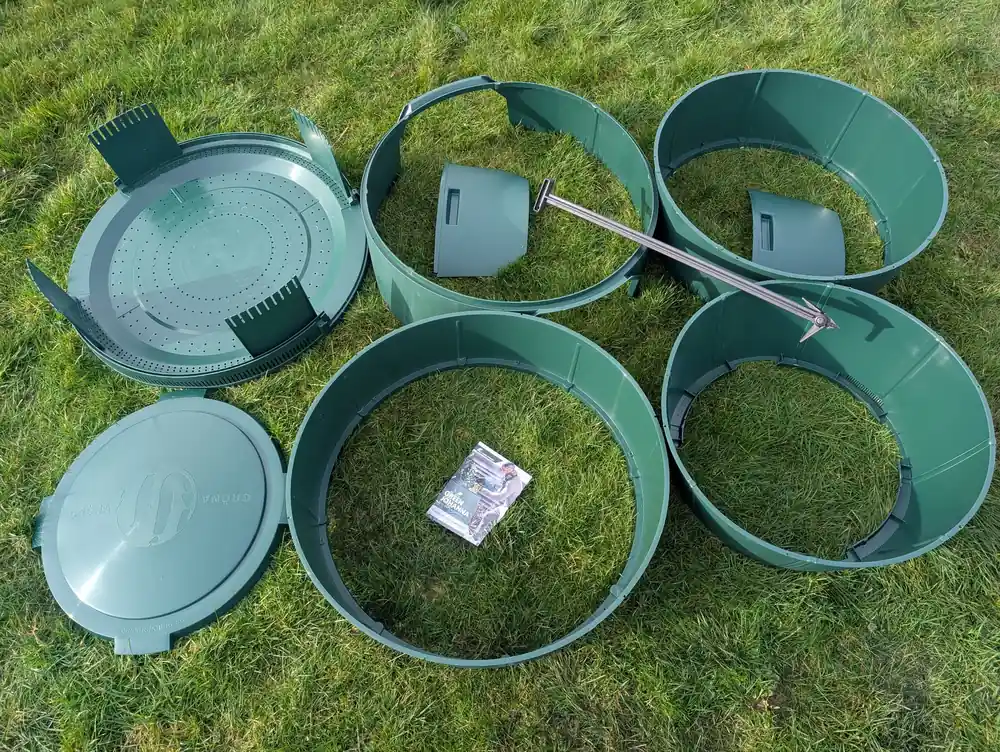
That thinness may be because of where it was designed! The bin was created in Sweden, well known for its bitter winters, and the HDPE plastic used allows for more flex in the cold. It’s also UV-stabilised to ensure the plastic doesn’t become brittle after prolonged exposure to the sun.
The bin is built in the shape of a cone. This is deliberate – the Swedish designers utilised the conical design to avoid cool spots and any areas where material could stick to the walls, and ensure that material sinks down towards the center where the compost bacteria are typically at their highest numbers.
The base of the bin is perforated with small holes to allow micro-organisms such as worms to enter the bin while excluding rodents. Some air should enter through these holes, with additional airflow entering through four inward-facing air vents.
Additional air vents at the top of the bin ensure that air can be drawn through the compost, aiding the aerobic process and reducing the need for manual aeration.
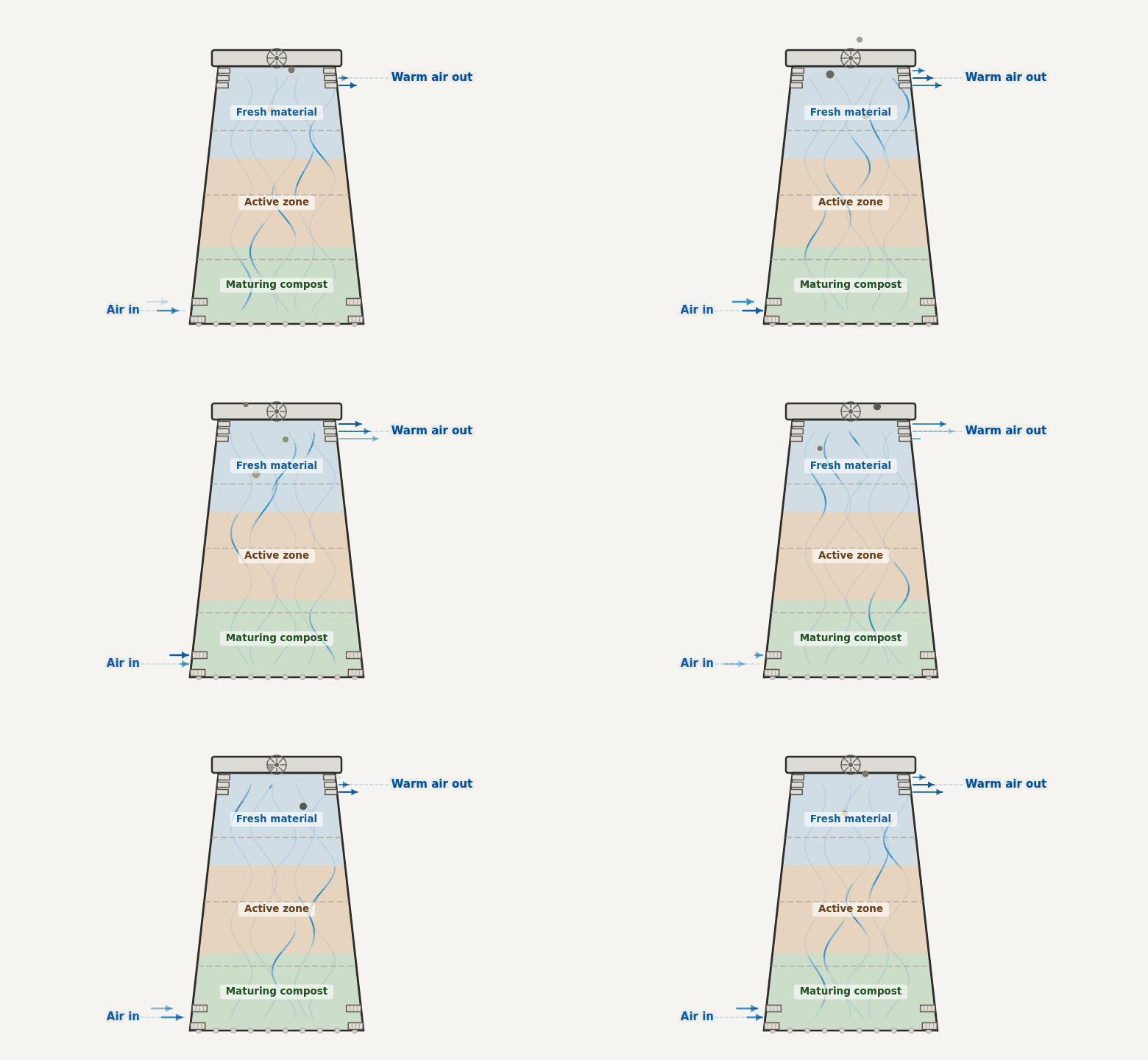
I like that you can adjust this by simply twisting the bin lid, although in practice I imagine I will have set it to maximum most of the time.
One other plus to the ring design – if you ever damage one of the rings, you can replace them. I’ve found replacement rings available at Great Green Systems – they seem pricey, but still much cheaper than buying a whole bin.
Putting the Green Johanna together
The Johanna appears to come with plenty of parts but I found the actual construction to be a relatively simple affair. All the sections slipped easily together, helped in large part by the large writing with the piece letter and alignment direction.
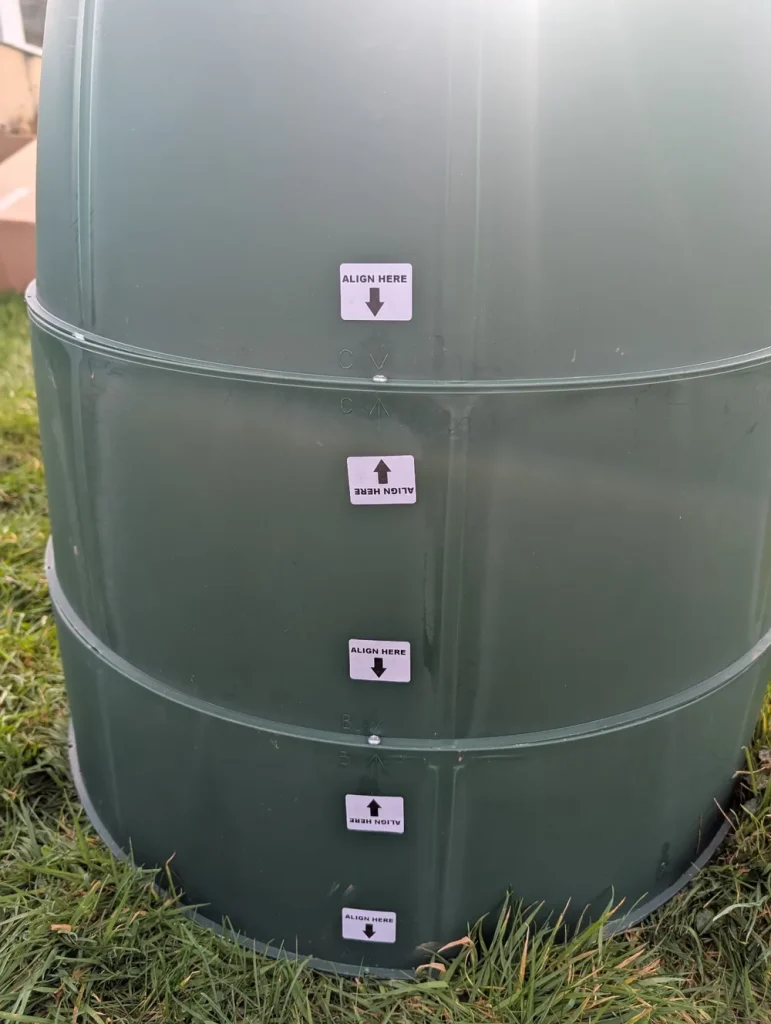
You do need a Phillips screwdriver, but that’s about all. I estimate it would take about 15 minutes to put together without assistance – assuming you aren’t, as I was, stopping to take notes!
Day-to-day use
First, it’s worth noting that you screw the door onto the aperture at the base of the composter. When I put this together, the fit seemed tight enough that it wouldn’t need screws, even if you wanted it to be rat proof.
I did screw it in, but this means when I want to retrieve compost I will have to fetch a screwdriver. Still, with that tight fit, that extra screw feels optional.
(I have heard of other Green Johanna users complaining of the doors opening on their own. The fit on mine is tight enough that I can’t see that happening, even without the screws, so maybe this was an earlier model?)
The Green Johanna is nice and light when empty, and I initially had no trouble manhandling it around the garden. Now I’ve got actual compost material in it, it’s much harder to move around, but of course that will go for any
The bin lid screws off easily. I prefer this design to a hinged lid as it stops the wind from blowing it open. With my HotBin composter, for example, I have to place a heavy stone on the top whenever there’s a storm.
You do need to align the bin lid correctly when you replace it, which sometimes takes me a few seconds of fiddling to get right. Once you’ve done that, it’s easy enough to screw it shut.
The Johanna has a nice large aperture which makes it easy to add material. The 330 litre capacity is pretty good for a
I’d personally prefer the opening where you retrieve compost to be a bit larger. I often find this to be a pain with bought compost bins, when compared to my pallet bin, but the Green Johanna does give you the option of removing the green rings and essentially dismantling the bin from around the compost.
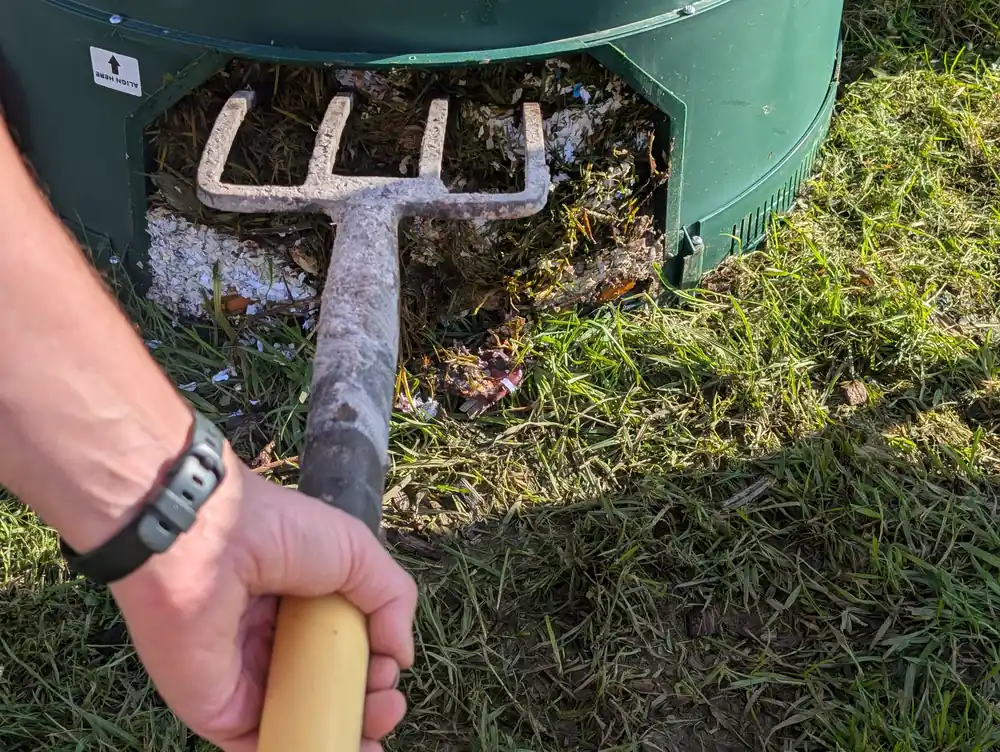
With the screws, mind, I can’t see myself bothering to do that – I’ll probably just wiggle a fork around inside until the compost falls down and I can retrieve it!
Hot composting
I had absolutely no problems getting hot composting going in this bin, with temperatures reaching 60°C two days after adding a mixture of chicken manure, weeds, grass and shredded paper. That’s easily hot enough to compost cooked food.
Now bear in mind that most bins will get hot if the weather is right and you add the right material. Conversely, if you don’t get the material right in the bin, the compost won’t get hot. However, a well-designed bin like the Green Johanna can certainly help.
I did have quite a lot of condensation forming on the side of the bin to start with. However, that was at least partly due to user error, as I had left the airflow vents closed. As soon as I realised I could vary the airflow, I opened it to max, reducing the amount of condensation.
For context, we’re in late winter but the weather is mild for the time of year. While I was composting, daylight temperatures were around 10°C (50°F) – 12°C (53.6°F).
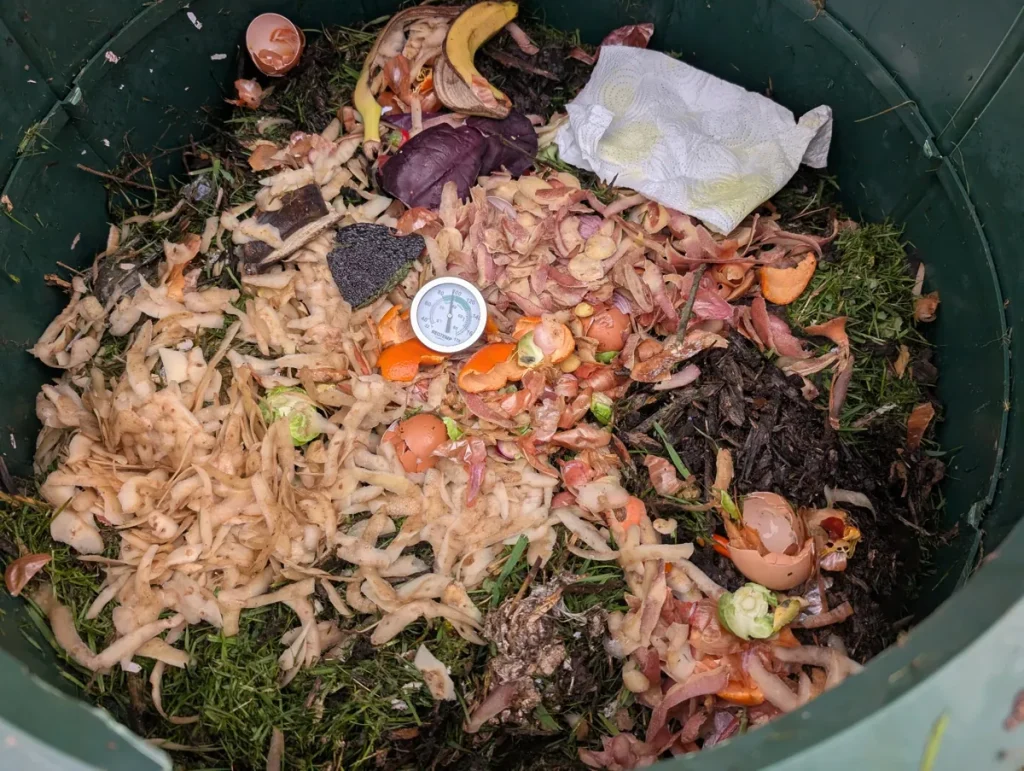
The Green Johanna instructions recommend using the winter jacket when temperatures drop below 10°C – and with the jacket on, it reportedly hot composts down to -23°C (-10°F), which is genuinely impressive.
It is a little annoying that it’s sold separately rather than built in, though the upside is you can leave it off in summer and only add it when conditions demand.
Whether you need it at all depends on your winters – and on whether you’ll have enough material to hot compost in the cold months anyway, since garden waste drops off sharply as temperatures fall.
Plastic aerator could be better
The Green Johanna comes with a plastic aerator with an arrowhead on the end. The idea is that you stick this in your compost, the arrowheads open and pull up the compost, making it easy to introduce oxygen and speed up the composting process.
According to early manuals, the aerator (which they called a stirring stick) was wooden with metal blades. Perhaps this worked better, but I found the current version difficult to push into the compost material, and soon gave up trying to use it – choosing to use my metal corkscrew aerator instead.
Is it truly rodent proof?
The Green Johanna is supposed to be rodent proof thanks to the perforated base plate. As mentioned, these comes with holes which are designed to exclude rats and mice.
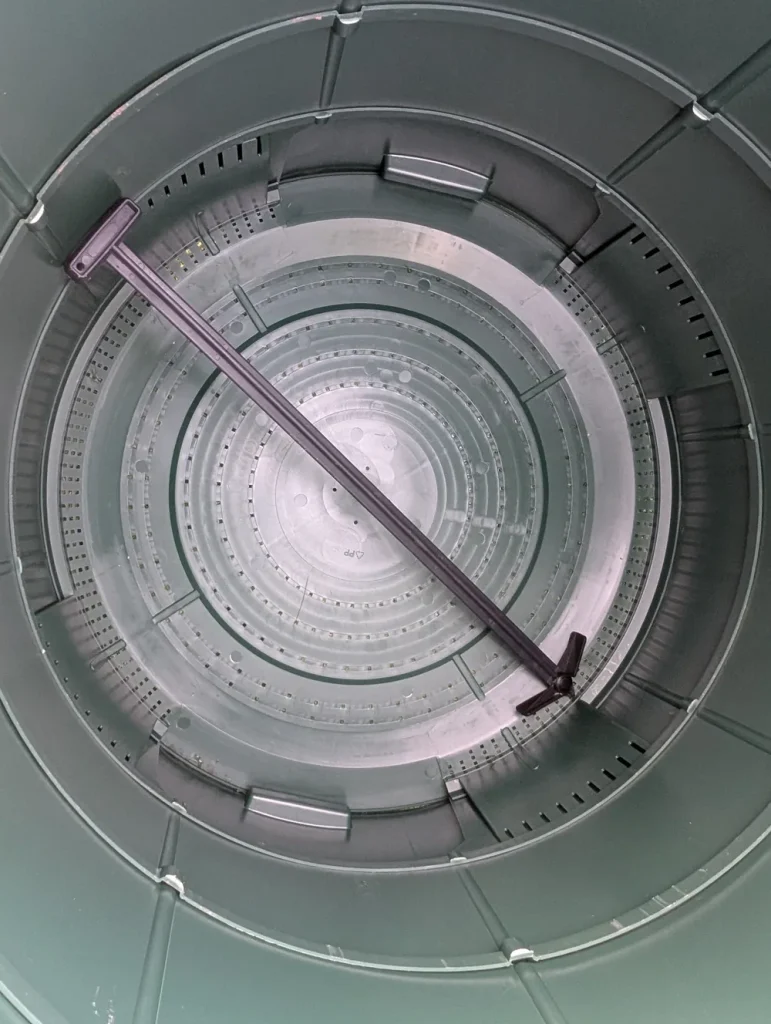
The bin is certainly well sealed, but I am well aware that hungry rats can chew through very challenging material.
As I want to give this a good test, I wanted to increase the attraction to rats. As it happened, the wind recently blew the top of my feed bin off in a storm, and a mixture of grain and chicken food was spoiled by the rain. It’s smelly and very rodent-friendly, so I’ve put this in the bottom of the bin to see if it attracts rats.
As I write I’ve been using this bin for three weeks, and there are no signs of rats, but I’ll continue to monitor as we go forward and update this review accordingly.
Verdict
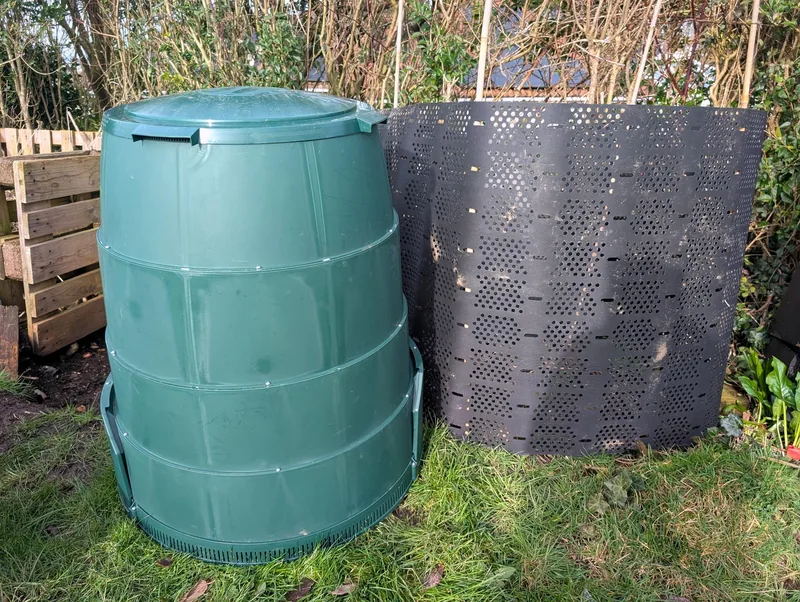
The Green Johanna has a few quirks. I’d particularly like to see a larger opening to retrieve the compost when it’s finished, and it’s certainly not worth letting that plastic aerator factor into your buying decision.
But if you’re looking for a well-designed bin capable of reaching 60°C in a couple of days, the Green Johanna delivers. And if you face harsh winters, all the better – this bin is designed not only to withstand freezing conditions but to hot compost through them with the optional jacket.
So don’t worry about those thin walls. For anyone with a medium sized garden, this is an excellent choice.
Pros & Cons
Click to expand full specifications and testing notes
Capacity: 330 litres / 87 gallons
Dimensions: 800mm diameter
Material: 100% recycled HDPE plastic, UV-stabilised
Made: UK (designed in Sweden)
Warranty: 5 years; expected lifespan 10+ years
Target composting temperature: 40–60°C; above 70°C is too hot for the micro-organisms
Time to first batch: 6–8 months in year one; 4–6 months after that
Household size: Designed for up to 5 people
Base plate holes: 4.5mm – sized to let worms through while deterring vermin
Accepts: Food waste including cooked food, meat, fish, and dairy, plus garden waste
Assembly time: ~15 minutes, screwdriver required
What’s included: Green Johanna outer, lid, base plate, aerator stick, assembly kit, composting handbook
Testing period: 3 weeks, late winter. Ambient temperatures 10–12°C during testing.
Related Guides
Best Compost Bins — Our complete guide to every type of composting system — outdoor bins, kitchen bins, tumblers, and worm composters — across all price points. The starting point if you’re still weighing up your options.
Best Outdoor Compost Bins — Our full comparison of tested outdoor bins, including static bins, hot composters, and tumblers. See how the Green Johanna ranks against everything else we’ve tested.
GeoBin Compost Bin Review — If the Green Johanna’s price gives you pause, the GeoBin offers plenty of capacity at a fraction of the cost. No hot composting capability, but hard to beat for straightforward cold composting on a budget.
How to Stop Rats Getting Into Your Compost — The Green Johanna’s 4.5mm base plate is designed to deter rodents, but no bin is completely rat-proof. This guide covers what actually works if you’re in a high-pressure area.
Hot vs Cold Composting — Worth reading before you decide whether the Green Johanna’s hot composting capability matters for your situation – and what you actually need to do to achieve it