The Australian Brush Turkey (Alectura lathami), known to the Yuwaalaraay people as Gweela, is not considered a particularly intelligent bird.
However, it has mastered something that many of think is difficult even for people – hot composting.
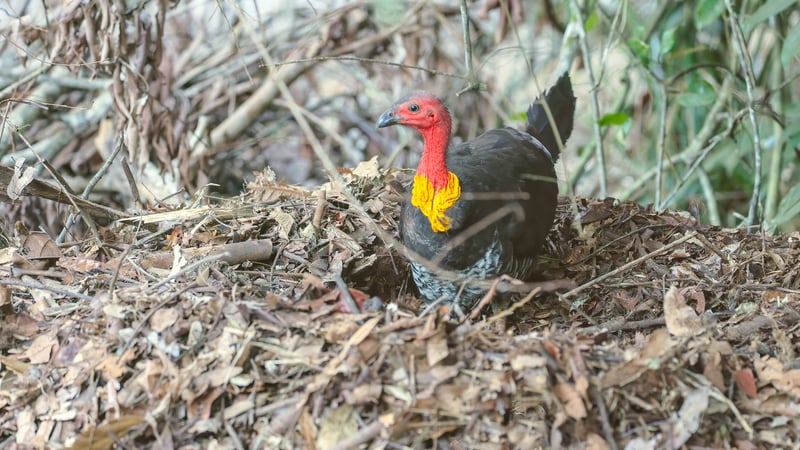
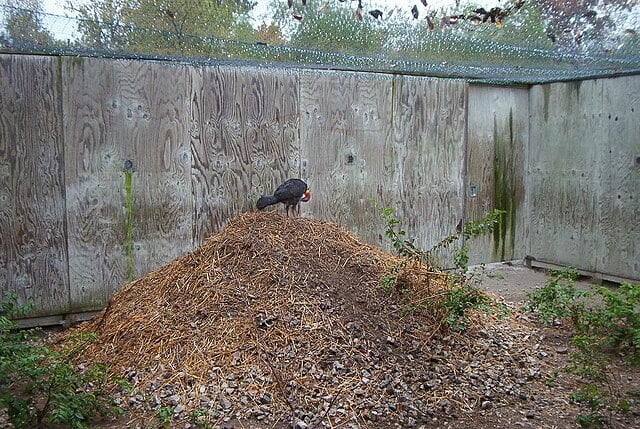
The bird gathers organic material and piles it into a large mound before laying its eggs inside.
The size of the mound varies depending on the location, with larger mounds built in places where material takes longer to break down, but they can weigh up to 6,800 kilograms.
As the material in the mound decomposes, it releases heat. The warmth is around 33°C (92°F) – a whole 15°C warmer than the air around it.
In total, researchers estimate the heat generated is equivalent to a bright incandescent light bulb, much more than a bird could generate on its own.
That leads to a considerable evolutionary payoff. Not only does it eliminate the need to speed valuable foraging time sitting on eggs, it can also incubate more eggs – up to 15 at a time!
Clever Composting
Like many keen human composters, the bird monitors the temperature of its heap – although using heat-sensitive bills rather than thermometers. It then adds or remove organic material as needed in order to increase or decrease the heat level. They also occasionally mix the materials together.
Researchers have also found that the birds maintain a very precise moisture level. This reduces microbial activity, which stops decomposition from taking place too quickly and helps retain heat for longer.
This maintenance doesn’t go on continuously – once the heap reaches the ideal temperature, it can maintain heat for several weeks without needing attention. The exact duration depends on the size of the mound.
It’s Not the Only Bird That Composts…
The The Brush Turkey is one 19 ‘Megapodes’ (mound builders), varying from the Nicobar Megapode in Nicobar to the Polynesian Megapodes in the Pacific Islands.
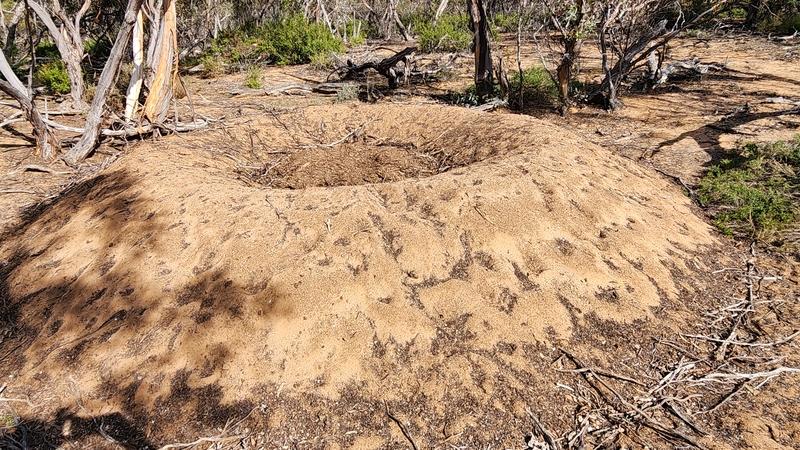
But they don’t all compost in the same way. For example, the Mallee Fowl is a bit of a pit composter, as the bird starts by digging a large hole which it fills with organic matter.
This bird also appears to be a more active composter than the Brush Turkey, as it adjusts the size of the mound depending on both microbial activity and the heat of the sun.
In summer, the birds pile sand over the mound to prevent overheating. Then, as temperatures cool down in autumn, they spread the sand to heat up during the day and pile it over the mound at night to keep it warm.
Lesson from the Mound
While the Mallee Fowl is a hard-working composter, the Australian Brush Turkey is better at achieving decomposition with little effort.
Their heap requires less material and less work because it is well insulated, and they are careful to structure their heap to avoid compaction.
They also control heat and oxygen retention by maintaining water levels.
There’s some good lessons for us composters!
- Using good composting techniques to avoid the need for constant turning (for example, by using bulking materials or passive aeration)
- Using insulation to maintain heat – perhaps with one of the 17 insulating methods we cover on this website
- And keeping moisture levels correct…
we too can achieve great compost results with minimal effort.
Related Posts
Sources
The image of the Brush Turkey on its mound was taken by D. Cowell at Kansas Zoo.
