After 15 years of composting, it’s fair to say I’ve used more than my fair share of kitchen compost bins, ranging from basic plastic boxes to high-tech electric composters. My wife, who does most of the cooking, has been a (mostly) willing testing partner throughout.
In that time, I’ve had my share of disasters (tip: don’t rely on your teenage son to empty your
That experience has taught me there’s no single “best” kitchen
With that in mind, I’ve put together a selection of kitchen compost bins to suit different budgets, needs, and living situations – all based on hands-on use rather than marketing claims.
Need an outdoor bin,
Our top 3 picks
|
Best Value

|
Best Overall

|
The (Very) Premium Pick

|
|
Our Rating:
4.5
|
Our Rating:
4.6
|
Our Rating:
4.4
|
|
Good value, plus we love the always open lid. |
Solid stainless steel countertop compost bin with excellent odor control. |
Expensive, hight tech option - but looks great and creates actual compost. |
|
$26.95
|
$29.98
|
$499.00
|
Good value, plus we love the always open lid.
Solid stainless steel countertop compost bin with excellent odor control.
Expensive, hight tech option - but looks great and creates actual compost.
In-depth reviews
1. Our Favorite Overall: Epica Kitchen Compost Bin
Solid stainless steel countertop compost bin with excellent odor control, a clean, attractive design, and an effective charcoal filter that copes well even with cooked food scraps.
Full Review
We originally featured the Utopia Kitchen
The Epica bin gets the fundamentals right without cutting corners. It’s solid, well made, and has excellent odor control – even when used to store cooked food scraps.
The stainless steel construction feels noticeably sturdier than many budget metal bins, and the thick carbon filter continues to perform well with regular use. It’s true that it only has one filter (the Utopia has two) but our stainless steel bin passed the dishwasher test where the Epica failed.
Size-wise, it strikes a good balance. It’s large enough that you don’t need to empty it constantly, but compact enough to sit comfortably on the counter. When full, it feels similar to carrying a reasonably full grocery bag – noticeable, but very manageable.
Finally, there’s the design. This is one of the few compost bins we’ve tested that actually looks good left out in the open. If you want a single, reliable kitchen
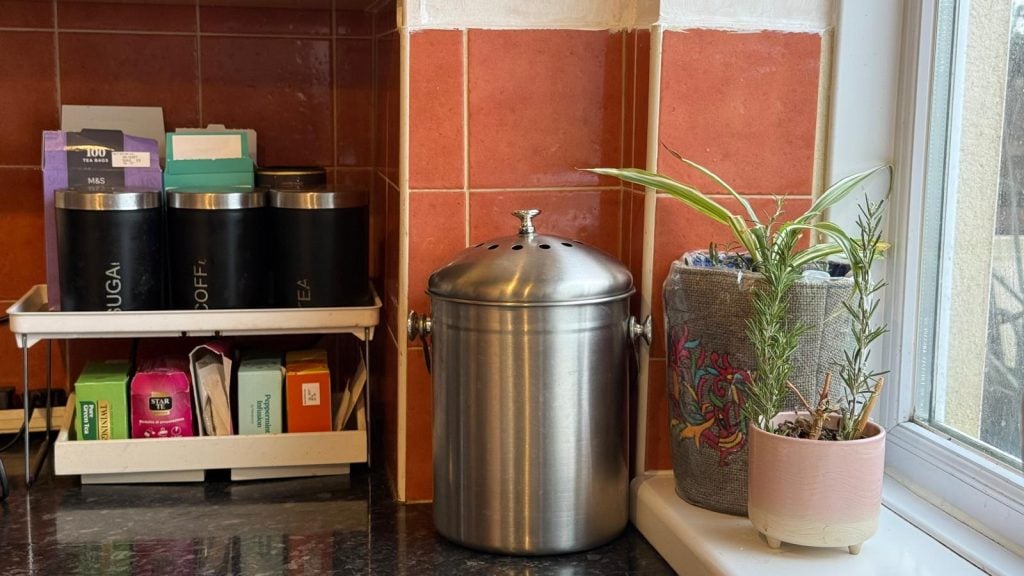
You’ll love this if: You want the best overall balance of odor control, durability, and looks.
Alternatives: If you value a stay-open lid during food prep more than odor control or design, the OXO Good Grips Easy-Clean Compost Bin is a better fit.
2. Best for in-kitchen composting: The Reencle Food Waste Composter
Unlike most electric composters, the Reencle produces real compost rather than just drying food waste. It’s a good fit for anyone who wants to compost indoors.
Full Review
Read our complete Reencle review
For a long time, I was skeptical of electric composters. To be honest, I still am in most cases, as many don’t actually make compost – they simply grind and dehydrate food.
However, my experience with the Reencle was much more positive. Unlike other devices, it uses a combination of warmth, bacteria, and heat to produce actual compost. Once set up, it’s incredibly easy to use – just wave your hand over the front, and the lid pops open. I was also surprised by how much compost it generates – not enough to mulch a vegetable garden, but certainly plenty for pot plants.
That said, I wouldn’t recommend it for everyone. First, it’s significantly more expensive than the other bins mentioned here. Second, you need to balance the food waste you add with brown materials like shredded paper. If you don’t, you might end up with an acidic, vinegary smell. (Here’s a tip: use the dry and purify functions on the device to help counter this.)
Lastly, despite the marketing hype from electric composting companies, the finished compost isn’t quite ready to use. Like all compost, it needs time to mature before being added to your plants.
All things considered, I think the Reencle is a fantastic option for apartment owners who want to make real compost but lack garden space. For those with a garden, I’d recommend sticking with a regular outdoor
To learn more, check out our full, in-depth review, or visit Reencle to buy now.

You’ll love this if: You live in an apartment or don’t have garden space and want to make real compost indoors rather than just storing food scraps.
Alternatives: If you just need a simple way to collect kitchen waste before taking it outside, a traditional countertop bin like the Epica Compost Bin will be cheaper and easier.
3. Best Bang for Your Buck: OXO Good Grips Easy-Clean Compost Bin
It's not fancy, but after weeks of testing, that stay-open lid has won me over. Just be aware it has no charcoal filter - empty daily in summer.
Full Review
Read our complete OXO Good Grips review
OXO is a brand I’ve trusted in the kitchen for years, and after using this
In terms of design, it’s clean and understated, and it blends into most kitchens without drawing attention to itself. That said, I personally prefer the look of the stainless steel Utopia bin, which feels a little more premium. The OXO is still attractive – just in a more practical, no-frills way.
Day to day, it’s very easy to use. The stay-open lid is genuinely helpful during food prep, and the removable inner bucket makes emptying and cleaning straightforward. One thing worth noting is that it doesn’t include a charcoal filter, so while odors are manageable if you empty it regularly, it doesn’t offer the same level of smell control as the Utopia.
Where the OXO does stand out is in its balance of usability, build quality, and price. Add in the fact that OXO donates one percent of its annual sales to environmental causes through the 1% for the Planet initiative, and it’s a bin you can feel good about using – even if it isn’t the most premium-looking option on the list.
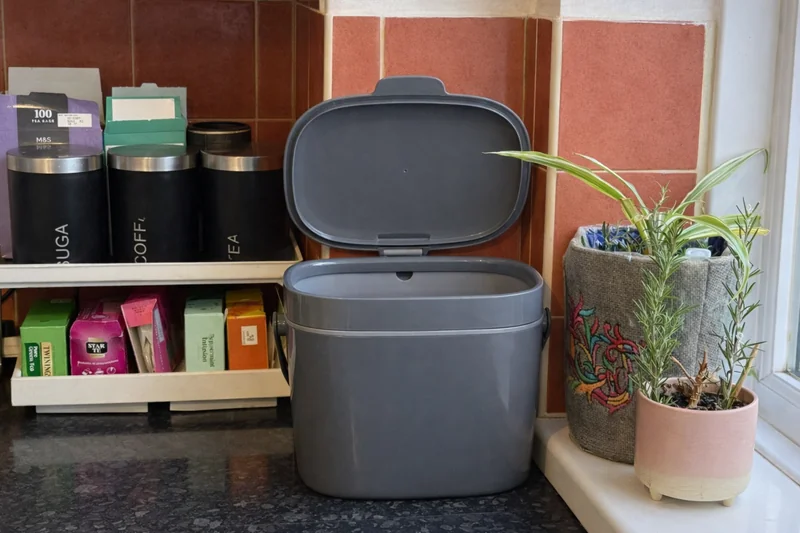
You’ll love this if: You want a solid, easy-to-use kitchen
Alternatives: If odor control and stunning looks matter more than the stay-open lid, the Epica Compost Bin is the better choice.
4. Unique Design: Full Circle Fresh Air Odor-Free Kitchen Compost Bin
Neat bin which uses airflow to minimise the risk of odors and eliminates the need for charcoal filters. My wife likes the always open lid, although I personally prefer bins which don't require bags.

Full Review
The Full Circle Fresh Air takes a different approach to odor control – instead of charcoal filters, it uses small ventilation holes in the sides and base to keep air circulating around your scraps. It works well, and at 1.5 gallons it’s one of the larger countertop options we’ve tested. My wife liked it immediately: her first comment was that it “looked smart.”
The trade-off is that the airflow holes in the base mean you must always use a compostable liner – you can’t collect scraps bare and tip them straight into a bin or
That said, if filter costs and hassle bother you, this is a genuinely clever solution. Read our full review of the Full Circle Fresh Air →
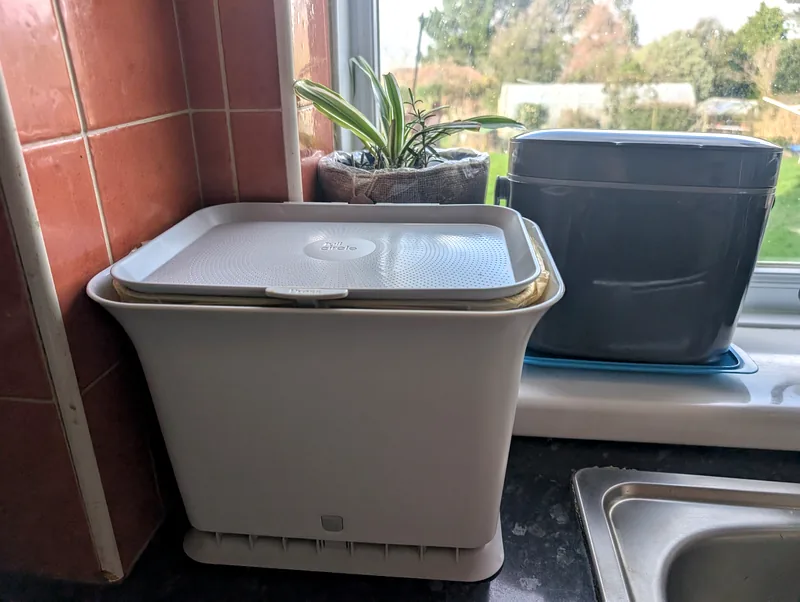
You’ll love this if: you want a larger-capacity bin and hate replacing charcoal filters – provided you’re happy to always use compostable liners.
Alternatives: the Oxo Good Grips or Utopia/Epica stainless steel bins if you want liner-free capability.
5. Best Hanging Option: mBillion Hanging Kitchen Compost Bin
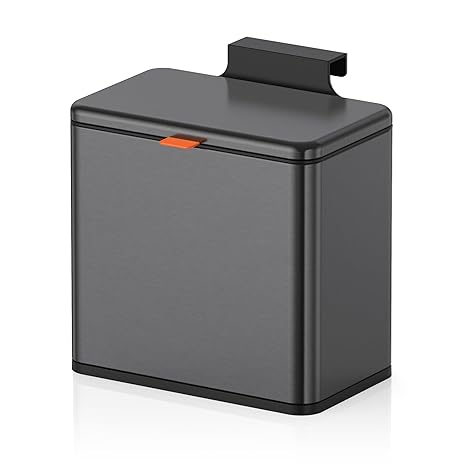
For the price, this is an excellent hanging compost bin. We particularly liked the neat lid design and the one hand operation. Doesn't come with filters, so best for regular emptiers.
Full Review
This hanging compost caddy arrived at the same time as the simplehuman, and at nearly half the price and a bit chunkier than its sleek and elegant competitor, we weren’t expecting much – but it’s won us over.
Hanging off a cupboard door, it does a great job at maximising counter space, and we really liked the one-handed operation of the lid.
There’s no charcoal filter, so odour control depends on emptying frequency. In our testing (emptying daily) we had no issues. But if you tend to leave your caddy for several days between empties, you’ll likely notice smells, and the Epica or OXO would serve you better. The inner bin is dishwasher safe, though we found it wiped clean easily enough without one.
One flag worth raising: Amazon lists the mBillion as having a higher-than-average return rate. Our unit performed fine throughout testing, but we can’t say with confidence why returns are elevated, and it gives us some pause. If you’re unsure, the bins higher up this list are safer choices – or if the hanging format is what’s drawing you, read our full mBillion review before deciding.
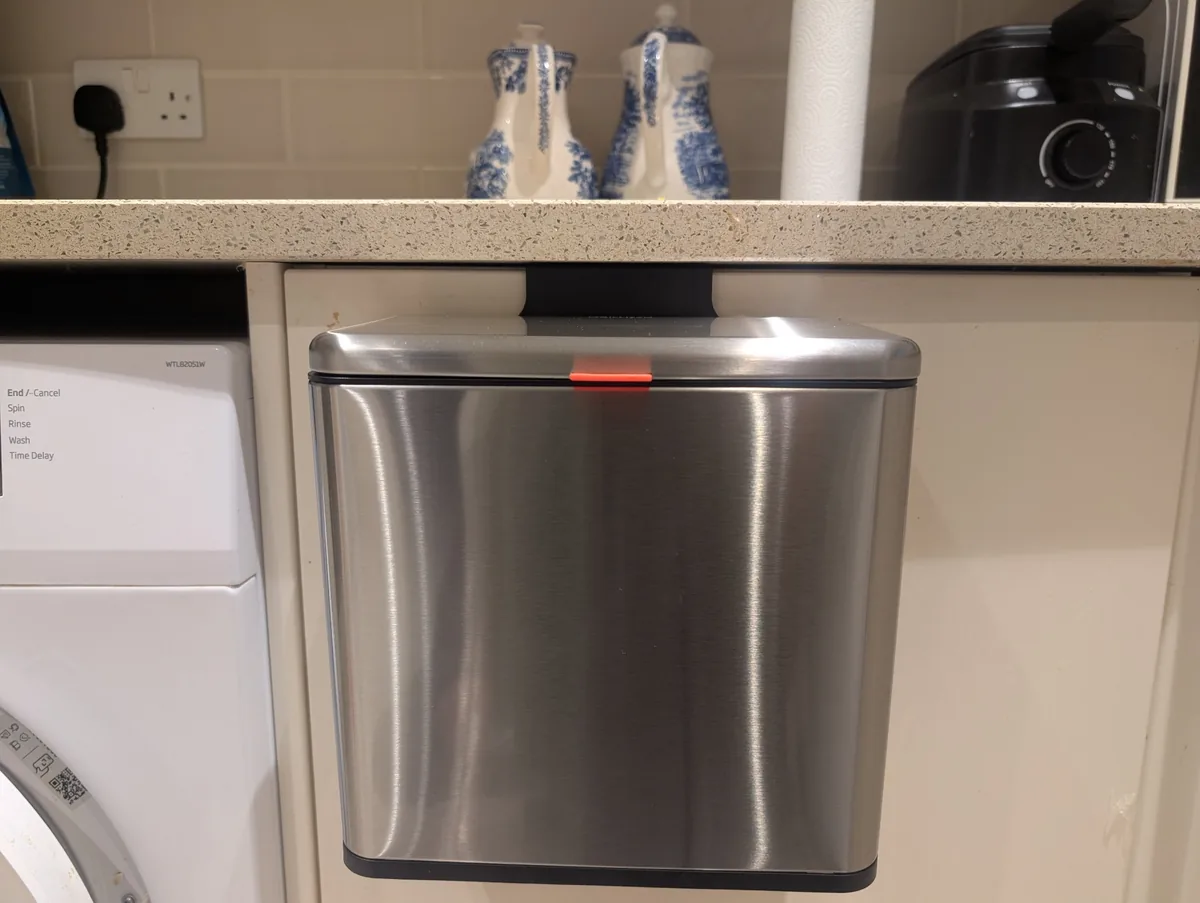
You’ll love this if: Counter space is genuinely at a premium, you have a well-placed cupboard door near your prep area, and you’re happy to empty the bin every day or two.
Alternatives: For a more proven countertop option at a similar price, the Utopia is worth a look. For stronger odour control, the Epica is the better pick. If you do want the hanging format but need more capacity, the 2.1-gallon mBillion gives you more breathing room between empties.
6. Our Favorite Design: Norpro Ceramic Compost Keeper
A stylish ceramic compost bin that blends into kitchen decor while still offering decent odor control. Devilishly hard to get hold of in the UK.

Full Review
Few people would step into your kitchen and guess that this stylish, simple canister is actually a functioning food composter.
The clean design and bright white finish make it an attractive addition to any style of home décor. You can also find this compost crock in black, floral blue and white, or red, giving you plenty of options to match your kitchen.
Not only is the design appealing, but it’s also strong and durable, making it a beautiful piece to display on your countertop. The composter includes an odor-preventing filter in the lid, which can last up to six months, depending on usage.
On the downside, while the stainless-steel handle makes this ceramic
You’ll love this if: You want a kitchen
Alternatives: If you want stronger odor control and a more secure lid, the Epica Compost Bin is a better everyday option, while the OXO Good Grips is lighter and easier to handle if you’re emptying it often.
What we’ve recently dropped:
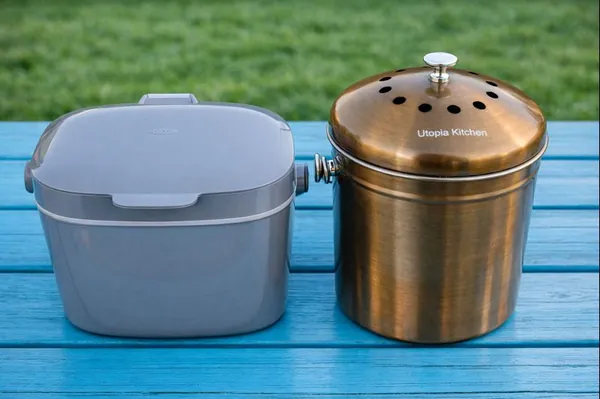
The Utopia Kitchen
The BioBag Compost Caddy: We previously had this flagged as a
What we’ve recently considered:
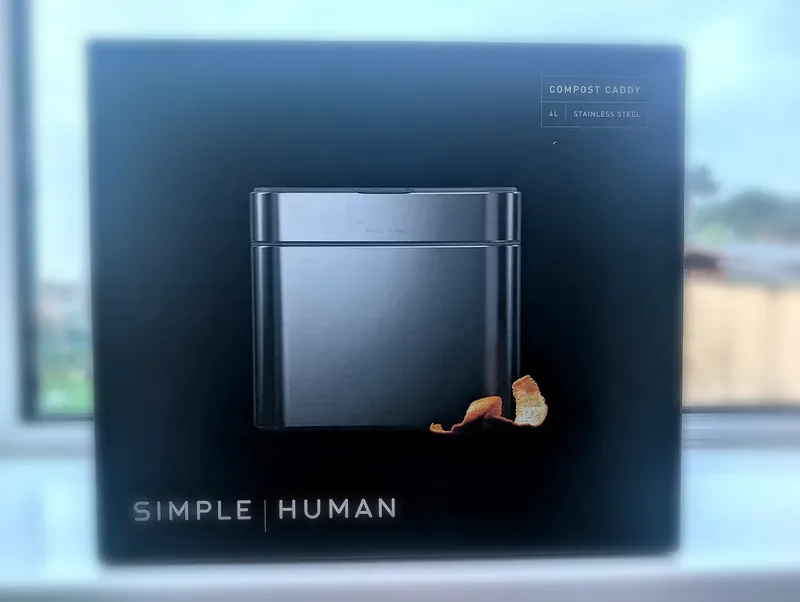
SimpleHuman Compost Caddy: The simplehuman looks simply gorgeous. However, it’s a bit on the pricey side and the aperture is a little small for throwing waste in when you are cooking at speed. Might still be worth considering if you are in the simplehuman eco system or have a designer kitchen. See full review.
Navaris Hanging
How to choose a kitchen composter
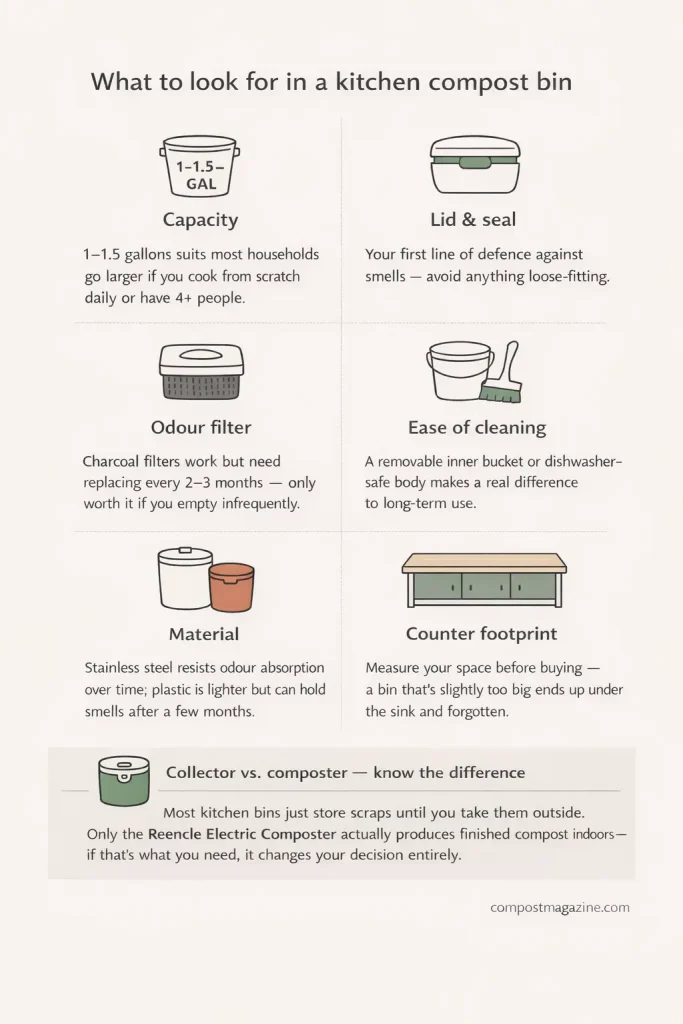
After testing dozens of bins over the years, here’s what I’ve come think about when choosing a
Odor control
My wife Siska has the world’s most sensitive nose, which makes her a perfect kitchen bin co-tester. And even with that sensitive nose, her verdict is clear — if you empty daily, at least in our mild climate, almost any container will do fine.
It’s only in hotter climates, or when the bin sits for several days before being emptied, that fancy seals and charcoal filters start to earn their keep. That said, if you don’t empty regularly, odor control becomes more important, and it is then worth considering a charcoal filter.
Counter bins need to earn their place visually – which is why I’ve gravitated toward stainless steel. It ages better, looks better next to decent kitchen kit, and doesn’t hold onto smells the way plastic does after a few months of use. That said, see below for my thoughts on ease of opening.
If you’re thinking under the sink: it works, but you’ll empty it less often, and that’s usually where smells start.
Lids: more important than you might think
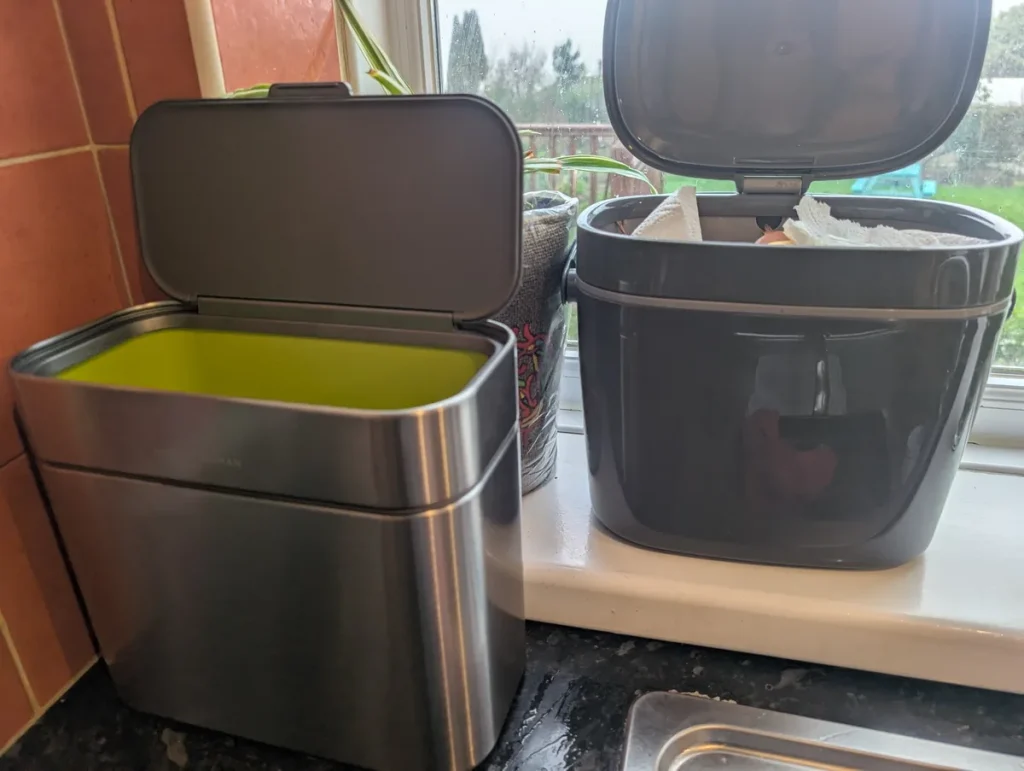
The opening mechanism is crucial. A button sounds like a great idea, until you’re holding scraps in one hand and the lid in the other — and the button still needs pressing. When cooking, both Siska and I prefer bins we can flip open with one hand, allowing us to quickly throw in peelings, egg shells, etc. without getting in the way of the flow of cooking.
My ideal lid stays open but attached to the bin while you throw waste in. That means you don’t have to take it off and replace it when you’ve finished preparing food — you just flick it closed. It’s even better when, if you have an inner bin, you can remove it without having to take the lid off first.
Opening size
Then there’s the aperture.
Some bins are beautiful, all chrome and angles – but with an opening so narrow they’re clearly designed for kitchens where the most demanding task is slicing avocado.
And if that describes your kitchen, you don’t need to worry about it. However, if you work in a busy kitchen full of chopping and crushing and the occasional flying onion skin, you need an opening wide enough to actually catch what you’re throwing at it.
How to keep fruit flies out of your kitchen compost bin
Almost always caused by the same thing: scraps sitting too long, especially fruit peelings. Empty more frequently in summer, make sure your lid seals well, and rinse the bin when you do. For persistent problems, we’ve got a full guide: How to keep fruit flies out of your compost bin.
Washability
If you are planning to put your bin in the dishwasher, check that it’s dishwasher-safe — when we put the Utopia kitchen bin through the dishwasher, the paint flake.
Note also that while most bins can go in the dishwasher, charcoal filters should be removed from lids first, as the dishwasher can affect their ability to absorb smells.
Inner bins can be great for reducing the amount of cleaning you need to do, the outer bin stays clean for longer, and often the inner bin only needs a quick wipe down.
What about liners?
If you are saving scraps for the compost heap, you don’t need a liner. In fact, you are better off without one.
My testing of compost liners has found that not all break down in the compost heap — and official tests have confirmed that some are not suitable for home composting. Compost liners simply add expense to what should be a money-saving process.
If, however, you are saving food waste for collection, liners may be mandatory. In our kitchen we have a bin for kitchen scraps, a bin for compostable scraps, and a bin for collected food waste. We only use liners for the third.
In here I put things like tea bags (which can sometimes contain plastic) and, depending on whether I have hot compost on the go, things like meat bones and fish remains.
Space
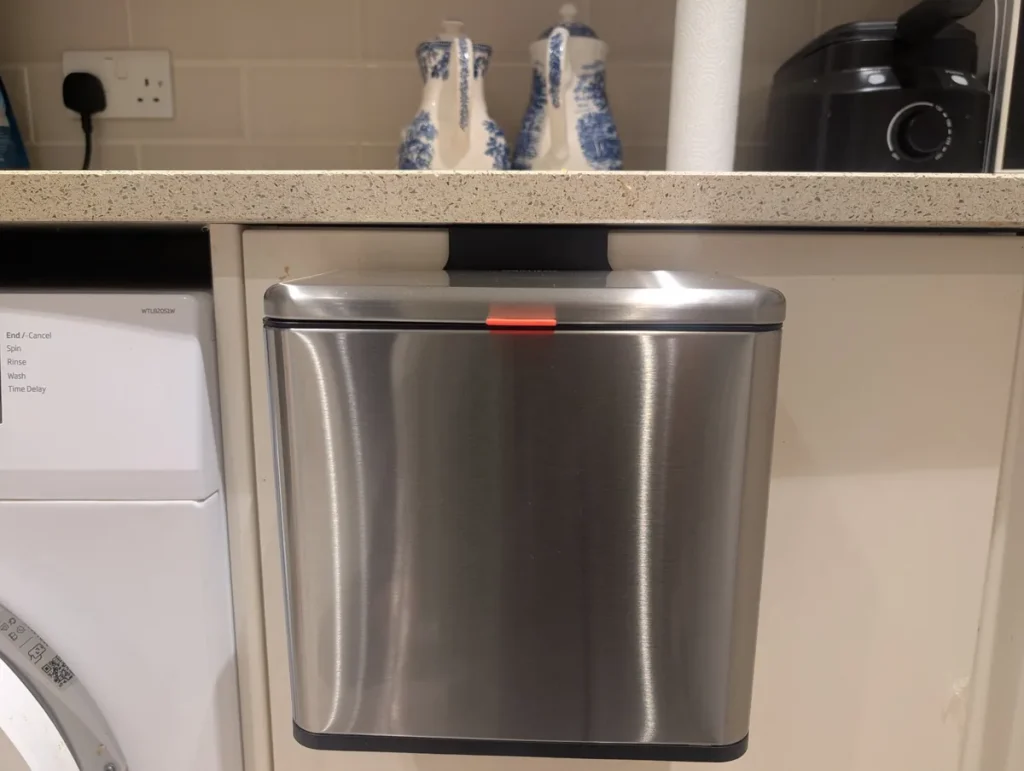
Unless you have a huge kitchen, every bin is a balance between capacity and how much space it takes up. Ideally, measure where you want the bin to go before you buy. (I know — we don’t either. Just because you should doesn’t mean you do!)
Siska particularly likes a hanging
Do you want to store scraps or make compost?

The term “kitchen
To learn more, see our Reencle review.
What can you put in a kitchen compost caddy?
Strictly speaking, you can compost almost anything that’s recently been alive. In practice, unless you are an experienced composter with a hot bin on the go, or you’re practising deep trench composting, it’s best to keep out foods that could attract vermin — including meat, cake, bread, and fish.
For a full breakdown, see What can you compost?