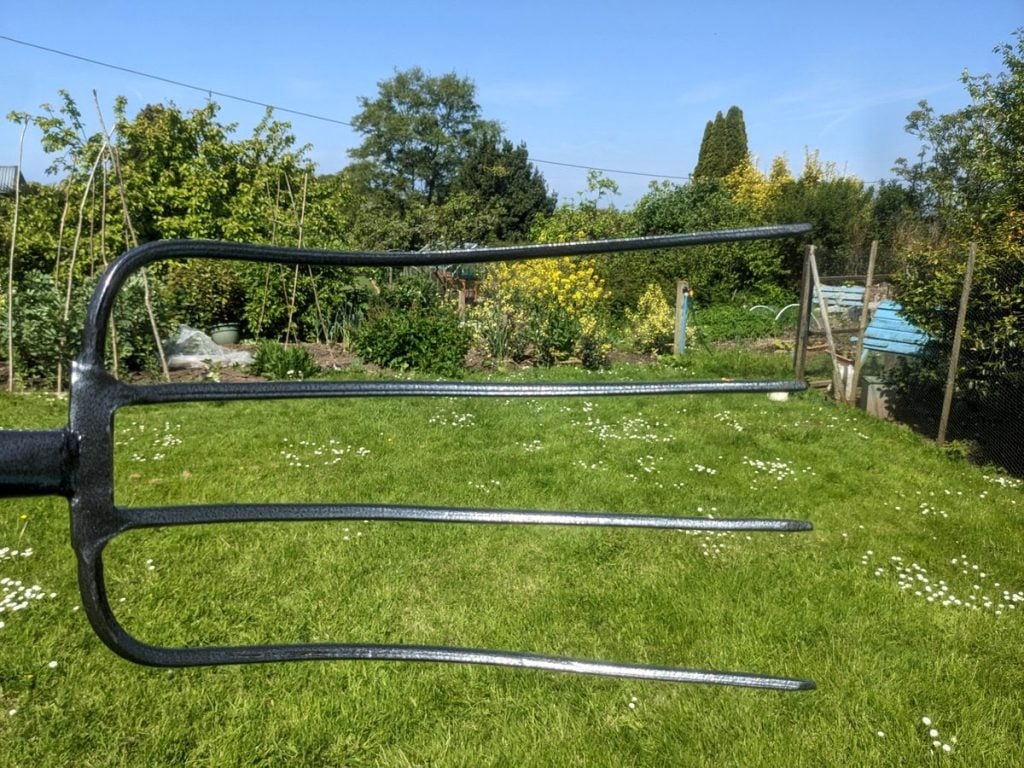
In fifteen years of composting, I’ve turned over my fair share of heaps.
As an exercise, it’s hard to beat, but when you have half a ton of semi-decomposed compost to turn and an aching back, it’s a blessing to have the right tool to do the job.
So having used a mixture of garden forks, pitch forks and (finally) compost forks, here’s my top recommendations for compost forks in 2026.
Why use a compost fork?
Turning compost is the most labor-intensive part of the composting process, and using the wrong tool makes it harder. Digging forks are often too heavy, with thick, flat tines that create high resistance when pushed into a pile.
Conversely, standard manure forks can be flimsy or have too many tines, causing heavy, wet material to get stuck.
A true compost fork strikes the perfect balance: tines thin enough to pierce the pile effortlessly, yet forged strong enough to lift heavy, matted organic matter without bending or snapping.
Our top compost fork recommendations
Best for straw-heavy, leafy, and manure-based compost, with six thin tines that lift bulky material cleanly and make frequent turning easier.
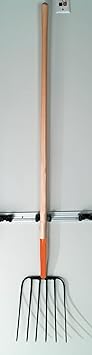
Six thin tines penetrate straw, leaves, and bulky compost easily.
Holds loose, crumbly compost better than 3–4 tine forks.
D-grip ash handle provides excellent control for lifting, shaking, and aerating compost.
Well suited to hot composting and regular pile management.
Forged steel construction built for strength and durability.
Less effective in very wet, sludgy kitchen-scrap compost.
Handle needs some care if left outdoors.
Tines are scooped rather than flat, which some users may prefer differently depending on the task.
Why we chose this fork
The A.M. Leonard Forged 6 Tine Manure Fork is purpose-built for managing straw-heavy, leafy, and manure-based compost piles. Its six thin tines are spaced closely enough to lift loose, crumbly material without letting it slip through, yet they penetrate bulky material with minimal effort – particularly useful when dealing with layers of straw bedding or autumn leaves that tend to mat together.
The forged steel construction feels robust without being excessively heavy, and the D-grip ash handle gives you solid control when shaking out material or aerating different sections of the pile. It’s the kind of fork that handles regular turning sessions comfortably, especially if you’re running a hot composting system where you need to aerate frequently.
The scooped tine design does make it slightly less effective in very wet, sludgy kitchen-scrap compost where material can stick in the curves, but for most garden composting setups – particularly those built around carbon-rich browns – it strikes an excellent balance between penetration, lift capacity, and durability. If you compost with lots of bedding or yard waste and want a fork that won’t let half your pile slip back through the tines, this is a dependable choice.
You’ll love this if: You compost with lots of straw, leaves, or bedding and want a fork that lifts bulky material cleanly.
Alternatives: Choose the Ames Razor-Back for more strength and control, or the Fiskars Ergonomic Compost Fork for better comfort and reduced strain.
The Fiskars Ergonomic Compost Fork is easy on the back and comfortable to use, even when turning a pile regularly. Its angled, lightweight design makes composting less tiring than with a standard fork, though it does come at a higher price than basic garden tools.

Ergonomic design is easier to use than a traditional garden fork
Long handle and 40° lifting angle reduce strain on your back
Lightweight construction makes it easy to carry and manoeuvre
Durable build designed to last for years of regular use
More expensive than standard garden forks
Not suitable for heavy-duty jobs like digging out roots or rocks
Why we chose this fork
The Fiskars Ergonomic Compost Fork is one of those tools you appreciate more the longer you use it. If you turn compost regularly, the angled handle and lighter weight make a noticeable difference, especially during longer sessions when a standard fork starts to feel punishing on your back and shoulders.
The tines are strong enough to pull apart compacted, half-finished material without feeling clumsy, and it’s easy to work right through the pile rather than just skimming the surface. It’s also light enough to manoeuvre comfortably, which matters more than you’d think once you’ve been turning a heap for 20 minutes or more.
It’s not a cheap tool, and it’s not something you’d use for general digging, but for composting specifically, it’s a fork that’s clearly designed to be used often – and to still feel comfortable at the end of the job.
You’ll love this if: You turn compost regularly and want the most comfortable fork for longer sessions.
Alternatives: Choose the True Temper 6-Tine Manure Fork for straw-heavy or bulky compost, or the Ames Razor-Back for tougher, denser piles.
Check price: Amazon US | Amazon UK
A forged, five-tine compost fork built for strength, offering excellent control when turning dense, wet, or compacted compost piles.

Forged steel head is extremely strong and handles dense, wet compost with ease.
Five oval tines balance easy penetration with good material hold.
D-grip handle gives excellent control for lifting, shaking, and aerating compost.
Feels like a true workhorse for regular turning of mid-to-large piles.
Shorter handle means more bending than long-handled forks.
Heavier than pitchfork-style options during longer turning sessions.
Why we chose this fork
The Ames Razor-Back 2827200 is a solid, heavy-duty compost fork designed for situations where lighter tools start to struggle. Its forged steel head and five oval tines make it particularly effective at working through dense, wet, or compacted compost, slicing in more easily than a traditional garden fork while holding onto material better than wider pitchfork designs.
The D-grip handle gives you excellent control when lifting, shaking, and aerating compost, which is especially useful in mid-to-large bins where material can mat together. It feels noticeably more robust than long-handled pitchfork-style forks and inspires confidence when turning heavier piles built from grass clippings, leaves, or mixed yard waste.
That strength does come with a trade-off. The shorter handle means more bending compared to long-handled compost forks, and it’s heavier in use during longer sessions. If you want maximum reach and minimum strain, a long-handled ergonomic fork may suit you better. But if your compost tends to be dense or stubborn, and you value control and durability over reach, the Ames Razor-Back is a dependable, no-nonsense workhorse.
You’ll love this if: Your compost gets dense or wet and you want a strong, controlled fork that won’t flex under load.
Alternatives: Choose the Fiskars Ergonomic Compost Fork for less bending and better comfort, or the True Temper 6-Tine Manure Fork for lighter, straw-heavy compost.
Compost Fork Buying Guide
Choosing the Right Material
The first step is choosing a material that will work best for your needs. Metal forks are strong and durable but can be more difficult to use in tight spaces due to their weight and size.
Plastic forks are lightweight and easy to manoeuvre but may not last as long as metal forks. Plus, their construction can sometimes make it harder to pierce compost heaps when they are at an early stage and contain tougher compost materials which have yet to break down.
Wooden forks have been around for centuries and can be surprisingly effective despite their old-fashioned look. They are also lighter than metal or plastic forks, making them easier to use in tight spaces or on uneven ground.
Tines
The length of the tines also matters when selecting a compost fork. The length of tines can range from 23 cm (9 in) to 45 cm (17.7 in). Longer tines allow you to reach further into compost piles and make it easier to turn them over without having to bend down as much.
Length
The motion of lifting and turning compost is different from bending over and digging. When looking for a compost fork, choose one with a longer shaft than a regular digging fork. For those with larger frames, a longer shaft of around 90 cm (35.5 in) is recommended. For more petite frames, look for a shaft of 660mm (26 inches) or less.
Weight
The weight of your compost fork should also be taken into account. If you typically spend your days building muscle in the gym, a heavier compost fork may well do you! If you struggle with heavy weights, look for a lightweight alternative.
Caring for Your Fork
Full disclosure – my first compost fork snapped mid-compost turn. It was my own fault, though, as I’d left it out in the rain instead of putting away in the shed.
Don’t make my mistake – always store your fork in a dry place where it won’t be exposed to moisture or extreme temperatures.
It’s also a good idea to it clean by using a soft cloth or brush after each use, especially if you’ve been working with wet materials like manure or leaves. For best performance, sharpen dull tines regularly with a file or stone so they stay sharp and don’t slip when digging into tough compost materials with a high wood or lignin.
Related Posts
- My Top 3 Compost Aerator Picks After 4 Years of Testing
- 11 Ways to Aerate Your Compost (10 Don’t Involve Turning!)
- How Often Should You Turn Compost?
- Compost Tools for Better, Faster Compost
- Best Compost Thermometer – tried and tested
- Optimizing Oxygen: Understanding the Role of Air in Making Compost